HomeBlogPlanning a Mobile Medical Unit Programme: Routes, Equipment and Impact
Deep Dive29 September 20266 min read
Planning a Mobile Medical Unit Programme: Routes, Equipment and Impact
The vehicle is the easy part. Routes, equipment, staffing and data decide whether an MMU programme works.
CCClinics On Cloud TeamPublished from Pune, India
Mobile Medical Units
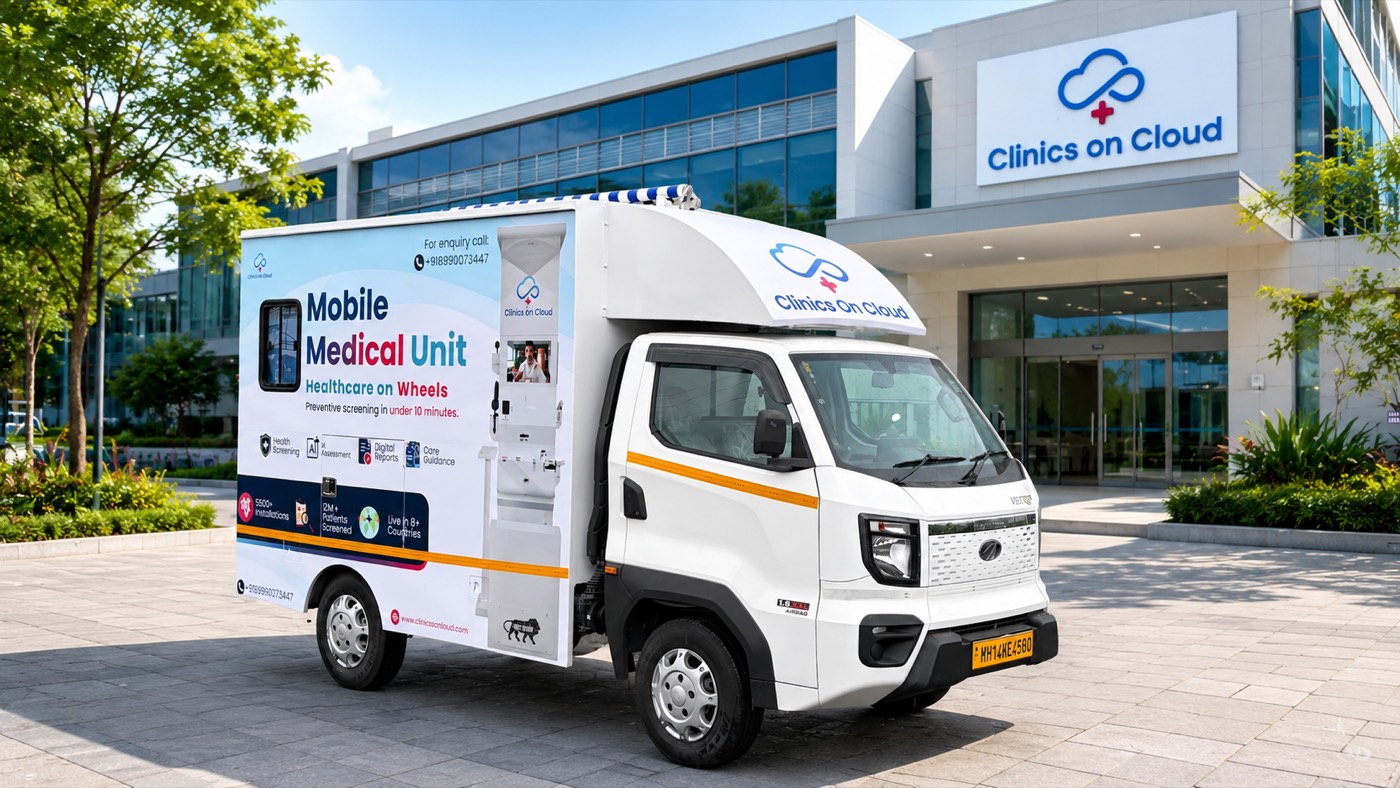
A mobile medical unit (MMU) is a vehicle fitted to deliver diagnostics, doctor consultations and preventive care wherever it parks. If you are new to the concept, start with our guide, What is a Mobile Medical Unit? This post is for teams that have decided to run an MMU and now need to plan it well.
The vehicle is the easy part. What decides whether an MMU programme succeeds is the route, the equipment inside, the people who run it and the data it produces.
1. Define who you are serving
Before buying a vehicle, map your population:
Villages with no primary health centre within easy reach
Worksites such as plants, mines, construction sites or plantations
Urban settlements where people skip care because of lost wages
Schools that need periodic student health checks
For each group, note the likely health risks. Rural adults may need diabetes, hypertension and anaemia screening. Worksites may add pulmonary function and hearing tests. Schools may focus on vision, dental and nutrition.
2. Design routes that bring people back
One visit finds a problem. Regular visits manage it. Plan routes so each location sees the MMU on a fixed, predictable day, for example every second Tuesday. Predictability builds trust and turns first-time screening into ongoing follow-up.
Practical tips:
Park where people already gather: markets, panchayat offices, factory gates
Inform the community a day ahead through local leaders or ASHA workers
Keep a buffer in each day for travel delays and high turnout
3. Equip the unit for screening, not just consultation
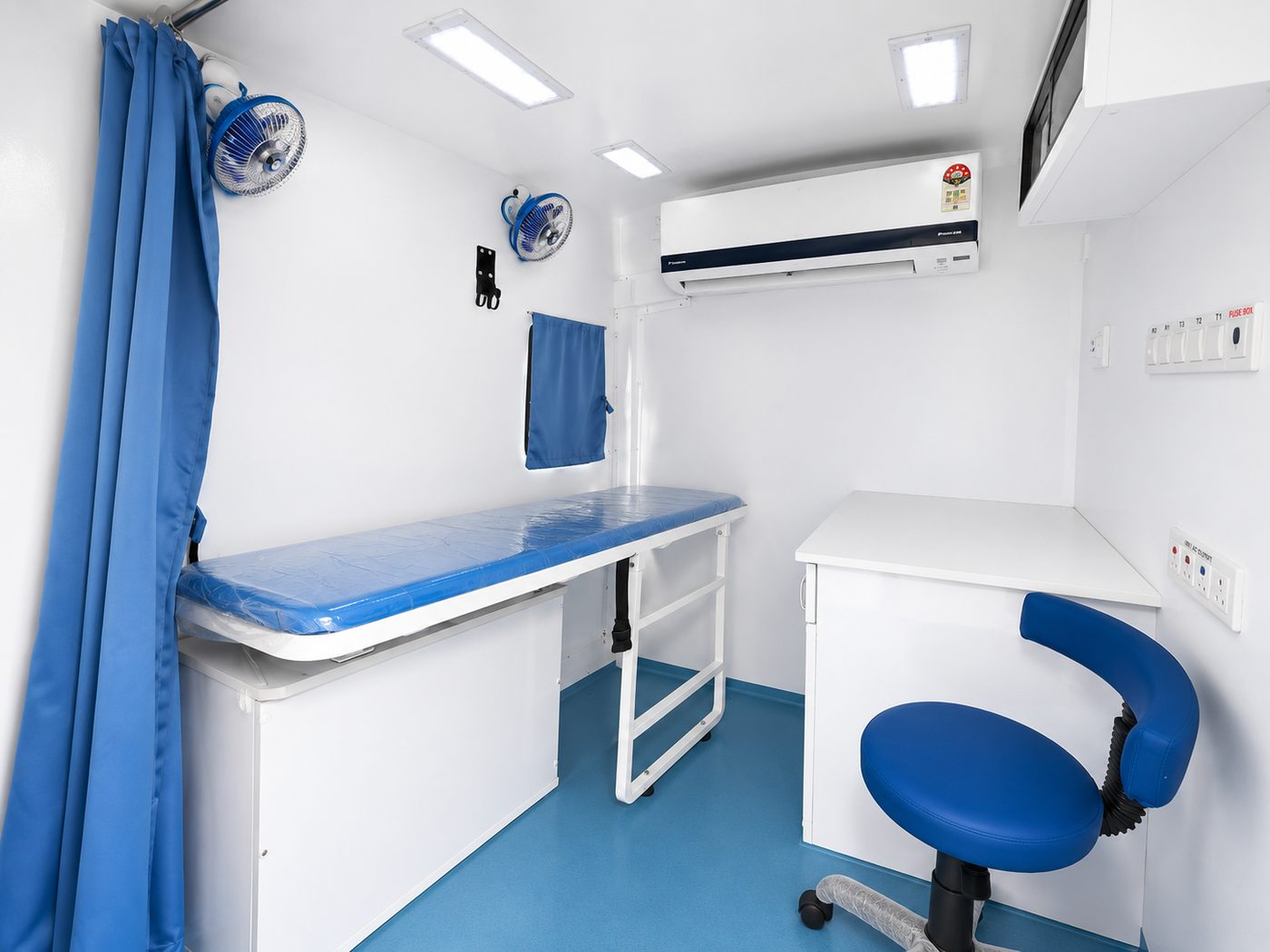
An MMU with only a doctor and a stethoscope can do little more than a basic check. An MMU with connected diagnostics can run a full screening on the spot.
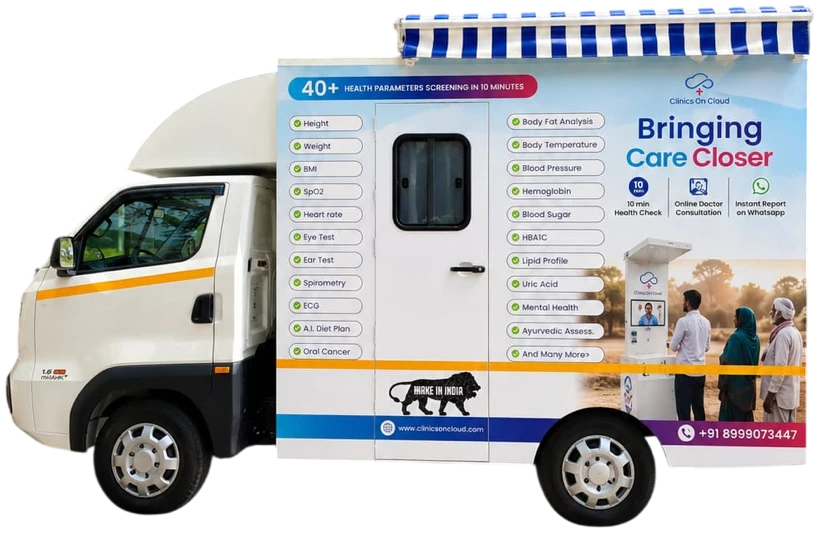
The Clinics On Cloud Mobile Medical Unit carries the same AI-powered platform as our Health ATM, engineered for 65+ clinical parameters across 14 specialities, including ECG, HbA1c, haemoglobin, urine analysis and rapid infectious disease tests. Results are generated in minutes, with risk scores and a doctor teleconsult built in.
4. Plan staffing around the technology
Traditional MMUs need a doctor, a nurse, a lab technician, a pharmacist and a driver on board every day. That is hard to sustain, especially in remote districts where doctors are scarce.
With voice-guided screening and built-in teleconsultation, an MMU can run with a smaller field team, while qualified doctors consult remotely from anywhere. This lets one doctor support several units in a day.
5. Make every visit a digital record
Paper registers get lost and cannot show trends. Each MMU visit should create a digital health record that:
Reaches the patient instantly on WhatsApp
Links to the patient's history on the next visit
Integrates with HMIS, EMR or the national digital health stack
Stays secure, with ISO 27001 and HIPAA-compliant data handling
6. Measure impact the way funders ask for it
CSR committees and government departments want evidence. Track:
Metric
Why it matters
People screened per month
Shows reach
Abnormalities detected
Shows early detection
Referrals made and completed
Shows people reached care
Repeat visits per patient
Shows chronic disease follow-up
Cost per person screened
Shows value for money
Clinics On Cloud dashboards produce this reporting automatically, in the format a CSR audit asks for.
Mobile medical unit, Box Clinic or Health ATM?
An MMU suits programmes covering many locations. If you need to reach places a vehicle cannot, a portable Box Clinic may fit better. If a site has steady daily footfall, a fixed Health ATM is more cost-effective. Many programmes combine all three. Our notes on improving rural healthcare show how the mix works in practice, and the MMU specs and cost checklist covers procurement.
From vehicle fit-out to dashboards, Clinics On Cloud helps governments, CSR teams and hospitals run mobile medical units that deliver measurable results. Book a demo, call +91 8999 073 447 or email sales@clinicsoncloud.com.
Mobile Medical UnitCSRRural HealthProgramme Planning
Join the conversation
Leave a comment.
Add your comment
Your email is never published. Comments appear after a quick review.
A Mobile Medical Unit is two products welded together. One is a vehicle body. The other is a regulated diagnostic and software payload that must keep producing trustworthy results after two years of heat, dust and 40,000 kilometres of Indian road.
Mobile medical unit specifications, cost structure and a procurement checklist you can lift into an RFP. Compare vehicle, power, payload and running costs.
There is no single best mobile medical unit in India. Compare van, bus and coach formats by route, terrain and use case, then match a unit to your plan.
It depends on distances and turnout. Most programmes plan fixed weekly or fortnightly circuits.
Does an MMU need a doctor on board?
Not necessarily. With teleconsultation, doctors can consult remotely while a trained field team runs screening.
Can an MMU work in areas with no internet?
Yes. Clinics On Cloud systems screen offline and sync records when connectivity returns.
Get In Touch
Healthcare is a right. Not a privilege.
We started Clinics on Cloud with a simple belief - that the quality of your healthcare should not depend on your postcode. Whether you're a government, corporate, NGO or entrepreneur - we built this for you.
Call us
+91 8999 073 447
Mon - Sat · 9 AM to 6 PM IST
Write to us
sales@clinicsoncloud.com
Partnerships · Deployments · Support
Visit us online
www.clinicsoncloud.com
Products · Case Studies · News
Find us
Nighoje, Chakan MIDC
Pune, Maharashtra - 410501, India
Built for every kind of health partner.
Government Body Corporate / HR Team NGO / CSR Partner Hospital or Clinic Defence Organisation International Partner Investor / Distributor Rural Entrepreneur
 Entry · MM-24Mobile Medical Units