Cardiac Tests Explained: ECG, Blood Pressure, and Lipid Profile
Cardiac Tests Explained: ECG, Blood Pressure, and Lipid Profile Introduction Cardiovascular diseases (CVD) remain a leading cause of death globally,
Read story 4 min
Infectious diseases remain a major public health challenge worldwide, especially in regions with high population density and limited access to diagnostic facilities. Rapid and accurate detection is vital for timely treatment, containment, and preventing outbreaks. The Clinics On Cloud Health Kiosk offers a comprehensive panel of infectious disease rapid tests, providing quick, reliable results at
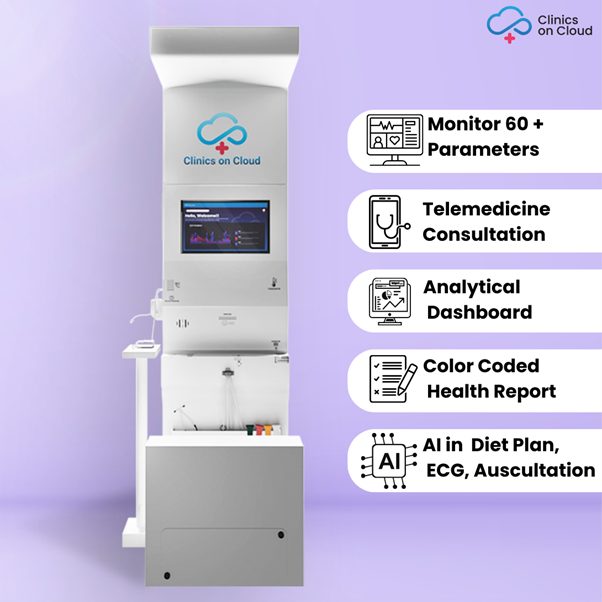
A rapid test is a point-of-care screening test that indicates whether markers of an infection are present in a sample, and every reactive result requires confirmatory laboratory testing before any conclusion is drawn. Clinics On Cloud screens 10 rapid tests within a checkup covering 65+ clinical parameters across 14 specialties.
A rapid test, also called a rapid diagnostic test or RDT, is a point-of-care screening test that detects specific antigens or antibodies in a small sample, usually a finger-prick drop of blood, and returns a visible result at the testing site within minutes.
Rapid tests are screening tests. A rapid test result indicates that markers were or were not detected in that sample, at that moment, under those conditions. It is not a diagnosis, and it is not a substitute for a laboratory.
Every reactive rapid test result on this panel requires confirmatory laboratory testing and clinical review by a qualified physician before any conclusion is reached. That applies to all 10 tests, without exception. A non-reactive result also has limits, because early infection can precede detectable markers, which is why timing and clinical judgement matter.
Clinics On Cloud is India’s first CDSCO-licensed Health ATM and Health Kiosk manufacturer, based at Nighoje, Chakan MIDC, Pune. Clinics On Cloud is not a diagnostic laboratory and does not replace one.
| # | Test | What is screened for | Sample | Status of the result | Next step for a reactive or abnormal result |
|---|---|---|---|---|---|
| 1 | Dengue | Markers associated with dengue infection | Finger-prick blood | Screening only | Confirmatory laboratory testing and prompt review by a qualified physician |
| 2 | Malaria | Malaria antigen markers | Finger-prick blood | Screening only | Confirmatory laboratory testing, including microscopy where indicated, and physician review |
| 3 | COVID-19 antigen | SARS-CoV-2 antigen | Nasal or nasopharyngeal swab as per kit instructions | Screening only | Confirmatory laboratory testing per prevailing national guidance and physician review |
| 4 | HIV I & II | HIV antibodies | Finger-prick blood | Screening only, and a reactive result is never a diagnosis | Counselling and confirmatory testing under the national testing framework, through an authorised facility |
| 5 | Typhoid | Markers associated with typhoid infection | Finger-prick blood | Screening only | Confirmatory laboratory testing and physician review |
| 6 | Chikungunya | Markers associated with chikungunya infection | Finger-prick blood | Screening only | Confirmatory laboratory testing and physician review |
| 7 | Hepatitis B | Hepatitis B surface antigen | Finger-prick blood | Screening only | Confirmatory laboratory testing and referral to a qualified physician |
| 8 | Hepatitis C | Hepatitis C antibodies | Finger-prick blood | Screening only | Confirmatory laboratory testing and referral to a qualified physician |
| 9 | Syphilis | Syphilis antibodies | Finger-prick blood | Screening only | Confirmatory laboratory testing and referral to a qualified physician |
| 10 | Blood grouping | ABO and Rh blood type | Finger-prick blood | Typing test, not an infection screen; grouped with the same point-of-care module | Laboratory confirmation before any clinical or transfusion use |
Blood grouping sits inside this module because it uses the same point-of-care workflow, not because it screens for infection. Blood typing for any clinical purpose, and for transfusion above all, must be confirmed by a laboratory. Never rely on a kiosk blood group result for a transfusion decision.
No sensitivity or specificity figures appear in this table. Those figures are specific to each kit and each manufacturer’s instructions for use, and quoting an unattributed number in health content is worse than quoting none. Ask your supplier for the current instructions for use and CDSCO approval status of every kit supplied with your unit.
Clinics On Cloud states device accuracy of 90 to 95 percent depending on test and device, under correct usage, calibration and patient preparation. The platform carries CDSCO licensing, ISO 13485, US FDA, CE, ISO 27001, HIPAA and GDPR credentials and is VAPT tested.
Consumables discipline makes or breaks a rapid test programme: in-date kits, correct storage temperature, one lancet and one cassette per person, biomedical waste handling per the applicable rules, and a trained operator. Budget for all of it before the first camp.
HIV screening is handled differently from every other test on this panel, and it should be.
A reactive HIV rapid test result is not a diagnosis of HIV infection. It indicates that antibodies were detected in that sample by a screening test. HIV status is established through confirmatory testing under the national testing framework, performed at an authorised facility, and communicated by a trained counsellor or clinician.
India’s HIV testing policy and counselling framework is set by the National AIDS Control Organisation. Any deployment offering HIV screening must follow it: informed consent, pre-test and post-test counselling by trained personnel, strict confidentiality, and referral to an authorised testing and care facility. Confirm current requirements with NACO guidance and your state AIDS control society, and do not run HIV screening without trained counselling support in place.
Three rules for any employer, CSR sponsor or camp organiser:
The same principle applies to hepatitis B, hepatitis C and syphilis screening, which carry stigma and need the same care.
Rapid test panels are not for indiscriminate use. Screening should be targeted, consented and clinically justified, ideally under a protocol set by a qualified physician or a public health programme.
Two groups should not be screened at a kiosk in place of medical care: anyone seriously unwell, and anyone with warning signs such as high fever with severe pain, bleeding, breathlessness, persistent vomiting or reduced consciousness. They need a qualified physician immediately, not a queue at a camp.
A non-reactive result indicates the test did not detect the marker it looks for in that sample at that time. It does not prove the absence of infection, since markers can take time to become detectable after exposure. If symptoms are present or exposure is suspected, see a qualified physician regardless.
A reactive result indicates the marker was detected by a screening test and that confirmatory laboratory testing and clinical review are required. It is not a diagnosis. It does not tell you how long an infection has been present, how active it is, or what should be done about it.
An invalid result indicates a test problem, usually sample, timing or storage, and should be repeated properly rather than interpreted.
Do not take any medicine on the basis of a screening result. This page names no treatment for any condition on the panel, deliberately. Antimicrobial and antiviral decisions belong to a qualified physician working from confirmed results. Across the Clinics On Cloud network, 2 lakh+ abnormalities have been detected and routed for early intervention, and the value in that figure is the routing, not the flag.
Rapid tests trade depth for reach. They work at a village camp with no power, in a plant gate cabin and on a mobile unit at a panchayat office, returning an answer while the person is still standing there. The trade is that a rapid test looks for one marker in one small sample under field conditions, while laboratory methods quantify, differentiate, repeat and confirm. Clinical decisions belong on the laboratory side of that line.
A programme that hands out reactive results with no confirmation pathway causes distress that may prove unfounded, can create false reassurance, and discredits itself locally. Contract the laboratory partner before you contract the kiosk. For the wider parameter set alongside the panel, see clinical parameters and tests offered by a health kiosk, diabetes screening with random blood sugar and HbA1c and cardiac tests explained: ECG, blood pressure and lipid profile.
| Setting | Why the panel fits | Recommended product | Operational note |
|---|---|---|---|
| Rural and tribal health camps | Nearest laboratory may be a district away | Box Clinic, offline with 3 to 4 days of battery backup | Confirm cold chain and kit storage first |
| District and block-level drives | Volume screening under a public health protocol | Mobile Medical Unit | Run under the National Health Mission or state protocol |
| Labour camps and construction sites | Workforce with little laboratory access | Mobile Medical Unit or Box Clinic | Voluntary participation and confidentiality must be explicit |
| Corporate occupational health | Seasonal vector-borne illness screening for staff | Clinics On Cloud Health Kiosk | Individual results to the individual; aggregate reporting only to the employer |
| Hospital and clinic OPD | Triage ahead of laboratory workup | Health Kiosk | In-house confirmation shortens the pathway |
| CSR programmes | Reach into underserved districts | Box Clinic or Mobile Medical Unit | Report confirmation and follow-up rates, not screening counts |
Camps often pair the panel with skin, hair and nail imaging for teledermatology, since both use the same teleconsultation pathway.
To plan a screening camp, an outbreak response deployment or a district-level drive, call +91 8999 073 447, Monday to Saturday, 9:00 to 18:00 IST, or email sales@clinicsoncloud.com. Bring your clinical protocol, your laboratory confirmation partner and your counselling arrangement for HIV and hepatitis, because those three decide whether the screening produces care or only produces results.
Clinics On Cloud provides preventive health screening and is not a diagnostic laboratory. Screening results are indicative and are not a diagnosis. Always consult a qualified physician before acting on any health information.
Your email is never published. Comments appear after a quick review.
Cardiac Tests Explained: ECG, Blood Pressure, and Lipid Profile Introduction Cardiovascular diseases (CVD) remain a leading cause of death globally,
 Entry · PC-31Preventive Care
This in-depth guide explores everything you need to know about full body checkup machines, spotlighting why Clinics On Cloud deserves
 Entry · PC-04Preventive Care
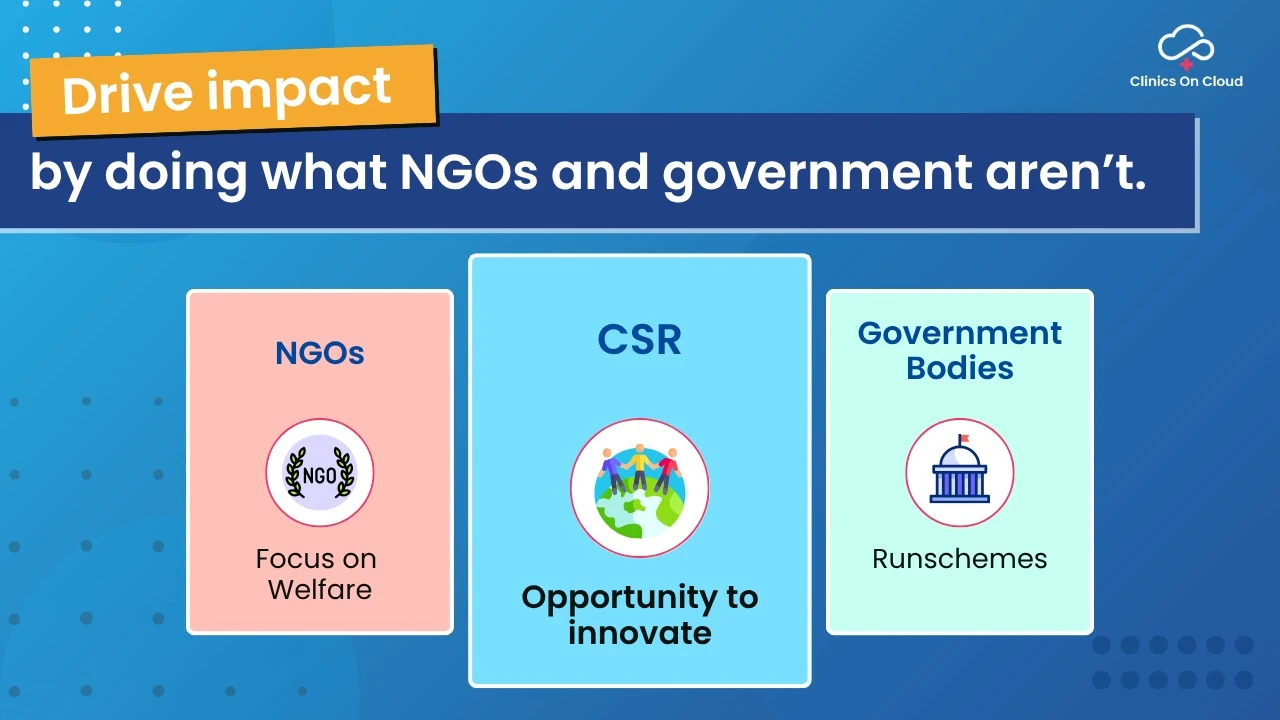
How to Make Your CSR Initiative Stand Out and Deliver Real Impact In today’s socially aware and hyper-connected world, CSR
Clinics On Cloud kiosks carry a 10-test point-of-care panel: dengue, malaria, COVID-19 antigen, HIV I and II, typhoid, chikungunya, hepatitis B, hepatitis C, syphilis and blood grouping. All are screening tests. Every reactive or abnormal result requires confirmatory laboratory testing and review by a qualified physician before any conclusion is drawn.
No. A rapid test is a screening test that indicates whether specific markers were detected in a sample at that moment. It is not a diagnosis for any condition on the panel. Confirmatory laboratory testing and clinical review by a qualified physician are required, and no medicine should be taken on the basis of a screening result.
It means a screening test detected HIV antibodies in that sample. It is not a diagnosis of HIV infection. HIV status is established through confirmatory testing at an authorised facility under the national testing framework set by NACO, with pre-test and post-test counselling and strict confidentiality. Anyone with a reactive result needs a supported referral, not a piece of paper.
Yes, for every test on the panel without exception, including blood grouping before any clinical or transfusion use. Rapid tests are built for reach and speed at the point of care. Laboratory methods confirm, quantify and differentiate. Contract your laboratory partner before you deploy screening, because a programme without a confirmation pathway does more harm than good.
Read times are set by each kit manufacturer’s instructions for use and differ by test, so results appear within minutes rather than at a fixed interval. Reading a cassette outside the stated window invalidates it. The full Clinics On Cloud checkup, covering 65+ clinical parameters across 14 specialties, takes 10 minutes.
It must be. Results are stored on an ISO 27001 certified, HIPAA compliant and GDPR compliant platform that is VAPT tested, and individual results go to the individual and the treating clinician only. For workplace and CSR programmes, write into the contract that no sponsor or employer receives individual results and that participation is voluntary and never a condition of employment.
Indicative Health ATM pricing starts from ₹6,00,000, varying by configuration. For rapid testing, the recurring cost matters as much as the capital cost: test cassettes, lancets, gloves, storage and biomedical waste handling are per-screening expenses. Ask the Clinics On Cloud team at +91 8999 073 447 for both capital and per-screening costing.
Clinics On Cloud, the brand of SehatPro Technologies Pvt Ltd, manufactures screening kiosks at Nighoje, Chakan MIDC, Pune and is India’s first CDSCO-licensed Health ATM and Health Kiosk manufacturer. Deployments include defence, state government and National Health Mission programmes, with 3,500+ installations across 200+ cities and 8+ countries.
We started Clinics on Cloud with a simple belief - that the quality of your healthcare should not depend on your postcode. Whether you're a government, corporate, NGO or entrepreneur - we built this for you.
+91 8999 073 447
Mon - Sat · 9 AM to 6 PM IST
sales@clinicsoncloud.com
Partnerships · Deployments · Support
www.clinicsoncloud.com
Products · Case Studies · News
Nighoje, Chakan MIDC
Pune, Maharashtra - 410501, India