 Entry · PC-72Preventive Care
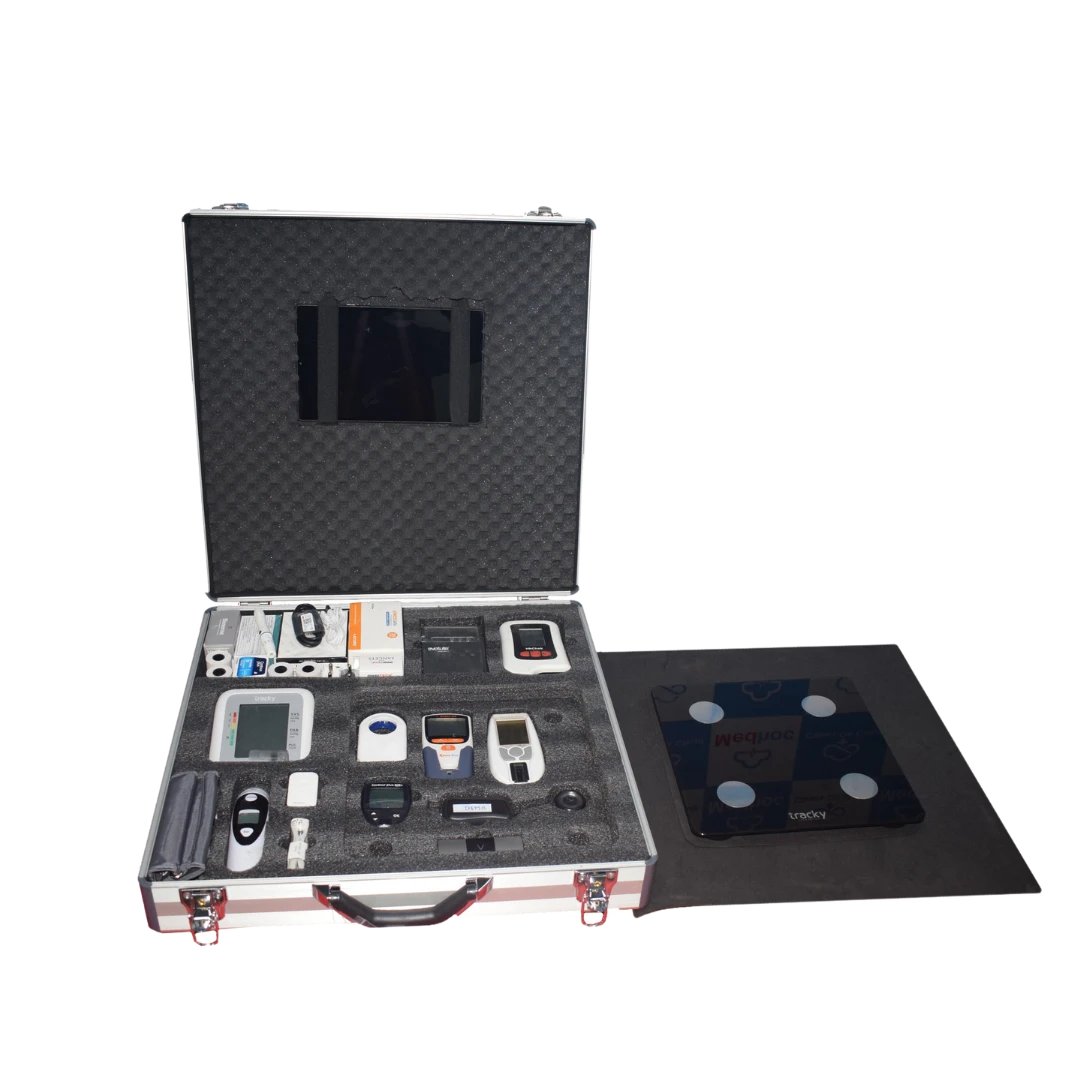
What is a Full Body Checkup Machine?
Clinics on Cloud – Your Trusted Full Body Checkup Machine Provider Looking for a reliable and accurate full body checkup
Read story 2 min
How to Make Your CSR Initiative Stand Out and Deliver Real Impact
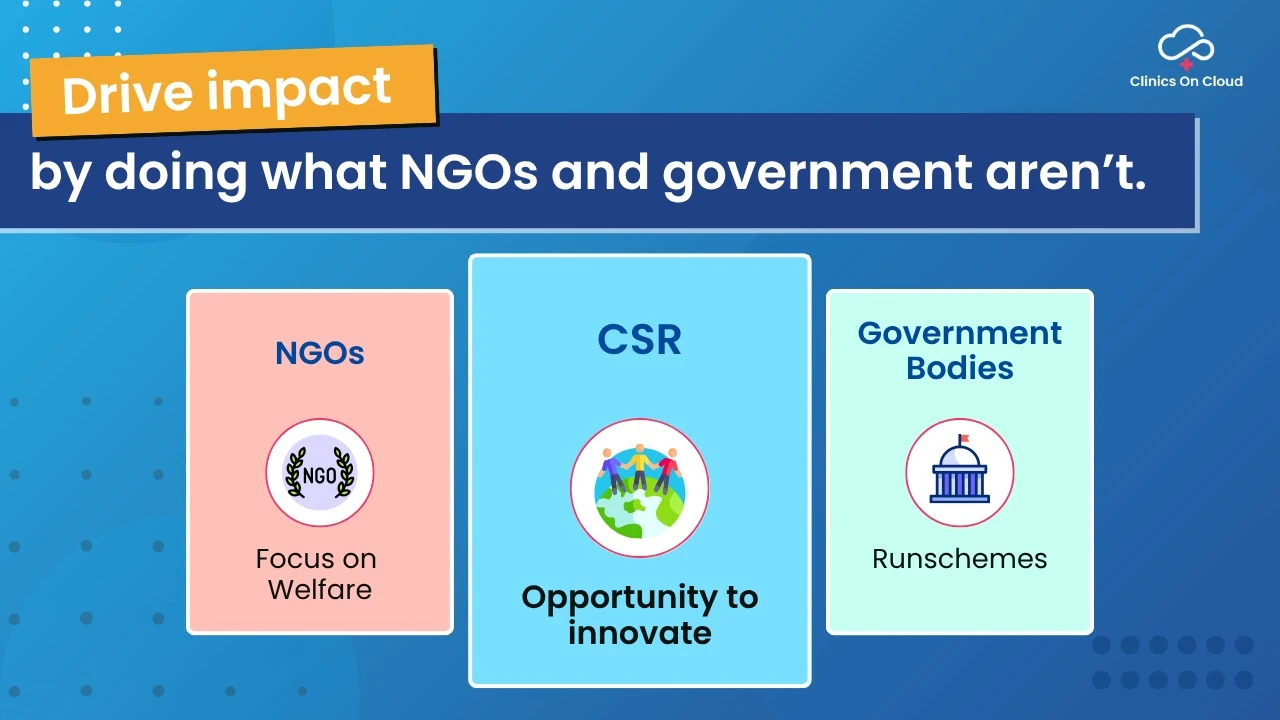
CSR impact measurement is the practice of defining, baselining and repeatedly measuring what a programme changes, rather than counting what it does. A health CSR programme becomes measurable when it fixes a beneficiary population, records a baseline, re-measures the same people on a schedule, and reports referral completion alongside reach. Clinics On Cloud has screened 12M+ patients.
Most CSR impact reports measure activity and label it impact. The distinction is simple and worth stating once, cleanly.
Activity is what the programme did: sessions held, people seen, sites covered, money spent. Output is what the activity produced: reports issued, referrals made, kits distributed. Outcome is what changed for the beneficiary: a person who did not know they had an abnormal reading now knows, and did something about it. Impact is the aggregate, durable change in the population.
Almost every CSR health report published stops at activity, occasionally reaches output, and then uses the word impact in the title. This is not dishonesty so much as an absence of design. Outcomes cannot be measured retrospectively. If the programme did not record a baseline and did not plan to re-measure, the outcome data does not exist and cannot be reconstructed later.
That is the central practical point of this page. Measurement is a design decision made before the programme starts, not a reporting exercise done afterwards.
Begin with a single sentence in this form: “Among [population], we intend that [specific measurable thing] changes, from [baseline] over [period], because [mechanism].”
Write it before choosing a vendor, a site or a technology. If you cannot complete the sentence, you do not yet have a programme; you have a budget and an intention.
Three tests apply to that sentence:
For a screening programme, a defensible sentence usually concerns detection and referral completion rather than disease burden. For example: among the contract workforce at three sites, we intend that the proportion who have had a documented health screening in the previous twelve months rises from a measured baseline, and that a defined share of those with flagged results complete a referral consultation. That is modest, true and measurable. It will survive an auditor.
The most common design error in CSR health programming is choosing a population that cannot be re-measured.
An open public camp in a market reaches whoever is passing. Those people cannot be found again, so no outcome can ever be measured, so the programme is permanently stuck at activity metrics. This is a structural ceiling imposed on day one by the choice of population.
Populations that support measurement share three properties: they are enumerable (you can list them), stable (they are still there in six months), and reachable (you have a legitimate way to contact them again).
| Population type | Enumerable | Stable over 6–12 months | Practical notes |
|---|---|---|---|
| Own employees | Yes | Usually | Easiest to measure; weakest CSR eligibility position, since employee-only benefit is generally not treated as CSR. Check with your advisors. |
| Contract and gig workforce at your sites | Partly | Variable | High need, moderate churn. Enumerate through the contractor, and expect attrition between rounds. |
| A defined village or panchayat | Yes | Yes | Strong for measurement. Requires local partner and community consent. |
| Students at named schools | Yes | Yes, by cohort | Excellent stability. Consent runs through the institution and guardians. |
| Patients at a partner health facility | Yes | Partly | Already inside a care pathway, which strengthens referral completion. |
| Open public footfall | No | No | Good reach, no measurable outcome. Use for access, not for impact claims. |
Choosing the last row is a legitimate decision. Just do not then promise outcome measurement in the proposal.
A baseline is the measurement of your indicators in the target population before the programme changes anything. Without it, every later number is an isolated figure with no comparison.
Three practical rules:
Where a true pre-programme baseline is impossible, say so explicitly in the report and describe what you used instead, such as first-round measurements treated as the reference point. Declaring a methodological limitation is far stronger than quietly presenting round one as a baseline it is not.
This is the failure mode that quietly destroys the most CSR health programmes, and it is entirely avoidable.
Screening at scale identifies people who need clinical attention. If nobody has agreed in advance to receive them, the programme creates identified need with no resolution. Beneficiaries learn they may have a problem and are given nowhere to take it. That is worse than not screening, and it damages community trust in the next programme too.
A referral pathway is not a phone number. It is:
That last item is the one that turns referral from an output into a measurable outcome. Programmes that track referral completion have something real to report. Programmes that track referrals made have a number that means very little.
Decide the interval at design stage and publish it in the programme document.
For screening programmes, a six-month or twelve-month re-measurement cycle is common, and the correct interval depends on what you are measuring and how stable the population is. What matters more than the specific interval is that it is fixed in advance and applied consistently, because a schedule chosen after the fact invites the accusation that measurement rounds were timed to flatter the result.
Two things to plan for:
Attrition. Some proportion of the baseline cohort will not be re-measured, through migration, job change or non-participation. Report the attrition rate honestly. A programme reporting “we re-measured 61% of the baseline cohort” is more credible than one that silently reports only on those who returned.
Continuity of identity. Repeat measurement requires linking a person’s second record to their first. This is why digital records with longitudinal tracking matter operationally, and why paper-based camps almost never achieve outcome measurement. In India, integration with ABHA under the Ayushman Bharat Digital Mission supports that continuity where beneficiaries have or can obtain an account.
The table below defines metrics. It deliberately contains no benchmarks, targets or industry averages, because no verified benchmark set exists that would apply across programmes, populations and geographies. Anyone offering you one should be asked for their source. Set your own targets against your own baseline.
| Metric | Definition | Type | Common failure in use |
|---|---|---|---|
| Sessions completed | Count of screening sessions finished, by site and period | Activity | Reported as “lives impacted” |
| Unique beneficiaries | Distinct individuals screened at least once in the period | Activity | Repeat visits double-counted as new beneficiaries |
| Coverage rate | Unique beneficiaries as a proportion of the defined target population | Activity | Denominator left undefined or quietly changed between reports |
| Repeat screening rate | Proportion of baseline cohort screened again in the following cycle | Output | Not measured at all, because the population was not enumerable |
| Abnormality flag rate | Proportion of sessions producing at least one result flagged as outside expected range | Output | Presented as disease prevalence, which it is not |
| Referrals generated | Count of flagged cases for which a referral was issued | Output | Reported as though it were referral completion |
| Referral completion rate | Proportion of issued referrals where the beneficiary is confirmed to have attended | Outcome | The single most valuable metric, and the one most often absent |
| Teleconsultations completed | Count of doctor consultations delivered on flagged results | Output | Counted as clinical outcomes |
| Time to consultation | Median interval between a flagged result and a completed consultation | Outcome | Rarely tracked; strong indicator of pathway health |
| Cohort attrition rate | Proportion of the baseline cohort not re-measured in a later cycle | Methodology | Omitted, which inflates apparent improvement |
| Cost per unique beneficiary | Total programme cost in period divided by unique beneficiaries | Efficiency | Capital cost excluded, or consumables and staffing excluded |
| Cost per completed referral | Total programme cost divided by completed referrals | Efficiency | Rarely calculated; the most honest efficiency measure available |
| Asset utilisation | Sessions completed against the site’s practical capacity | Operational | Ignored, which hides poor site selection |
| Data consent rate | Proportion of beneficiaries who gave recorded, informed consent for data use | Governance | Assumed rather than recorded |
Use this table as the metrics annexe of your programme document. Which of these you can populate depends on what your screening platform records, and that is a question to ask a vendor before procurement rather than after. What a screening station can measure clinically is set out in clinical parameters and tests offered by a health kiosk.
Four audiences read a CSR health report, and they want different things. Writing one document for all four is why most CSR reports satisfy none of them.
The board and CSR committee want reach, spend, compliance position and risk. Lead with coverage, cost per beneficiary and any governance issues. Keep it to a page.
The statutory and internal auditors want traceability. They want to know how each number was produced, from which system, over which period, and whether it can be re-derived. Give them method notes and date ranges, not narrative.
The beneficiary community and the implementing partner want to know what happened to the people who were flagged, and what happens next year. This is the audience most often ignored, and the one whose trust determines whether round two has participation.
The public and ESG raters want comparability and honesty. Report your indicators against your own baseline, disclose your methodology and your attrition, and map to a recognised framework such as United Nations Sustainable Development Goal 3 where that is genuinely applicable.
Across all four, one rule holds: report the metric you defined at the start, even when it is unflattering. Changing the headline metric between reporting periods is the clearest signal to a sophisticated reader that a programme is managing its narrative rather than its outcomes.
1. The one-off camp with no follow-up. Shows up as: a large beneficiary number in year one and a completely different, unrelated number in year two. Fix: fix the population and the site, and commit to a second round before the first one runs.
2. No referral pathway. Shows up as: a healthy abnormality flag rate and no referral completion data at all. Fix: name and sign up the receiving facility before the first screening.
3. No repeat measurement. Shows up as: every report contains only activity metrics, and the word “impact” appears only in the title. Fix: choose an enumerable population and set the cycle at design stage.
4. Vanity metrics. Shows up as: photographs, social media reach, event attendance, kits distributed and, most commonly, “lives impacted” with no definition. Fix: require every headline number to have a written definition and a source system. If it has neither, it does not go in the report.
5. Capital-only budgeting. Shows up as: a strong first year followed by a site that quietly stops operating in month fourteen. Fix: budget consumables, the site operator and multi-year service alongside the capital purchase. This is covered in the partnership and execution model for a kiosk-based CSR programme.
6. Overclaiming the mechanism. Shows up as: a report stating the programme reduced disease prevalence, prevented illness or improved health outcomes, on the basis of screening data alone. Fix: claim detection and referral. Screening does not prevent, diagnose, treat or cure. A claim the data cannot support is the fastest way to lose credibility with an auditor or a rater.
Before the budget is approved:
A programme that clears all ten will report something true. Most programmes clear four.
Note on legal position: CSR obligations for qualifying Indian companies arise under the Companies Act 2013, with permitted activity categories set out in Schedule VII. This page describes the framework in general terms only and does not give legal advice. Confirm eligibility, asset treatment and reporting obligations with your own legal counsel and CSR advisors.
If you want the case for choosing preventive screening as the intervention in the first place, it is set out in why preventive screening suits a CSR healthcare project. For site and deployment context in Indian programmes, see health kiosk deployment across India, and for vendor credentials see Clinics On Cloud as a Health ATM manufacturer.
To discuss what a screening platform can and cannot record for your metrics annexe, write to sales@clinicsoncloud.com or call +91 8999 073 447 (Mon–Sat, 9:00–18:00 IST).
Clinics On Cloud provides preventive health screening and is not a diagnostic laboratory. Screening results are indicative and are not a diagnosis. Always consult a qualified physician before acting on any health information.
Your email is never published. Comments appear after a quick review.
Entry · PC-72Preventive CareClinics on Cloud – Your Trusted Full Body Checkup Machine Provider Looking for a reliable and accurate full body checkup
 Entry · PC-49Preventive Care
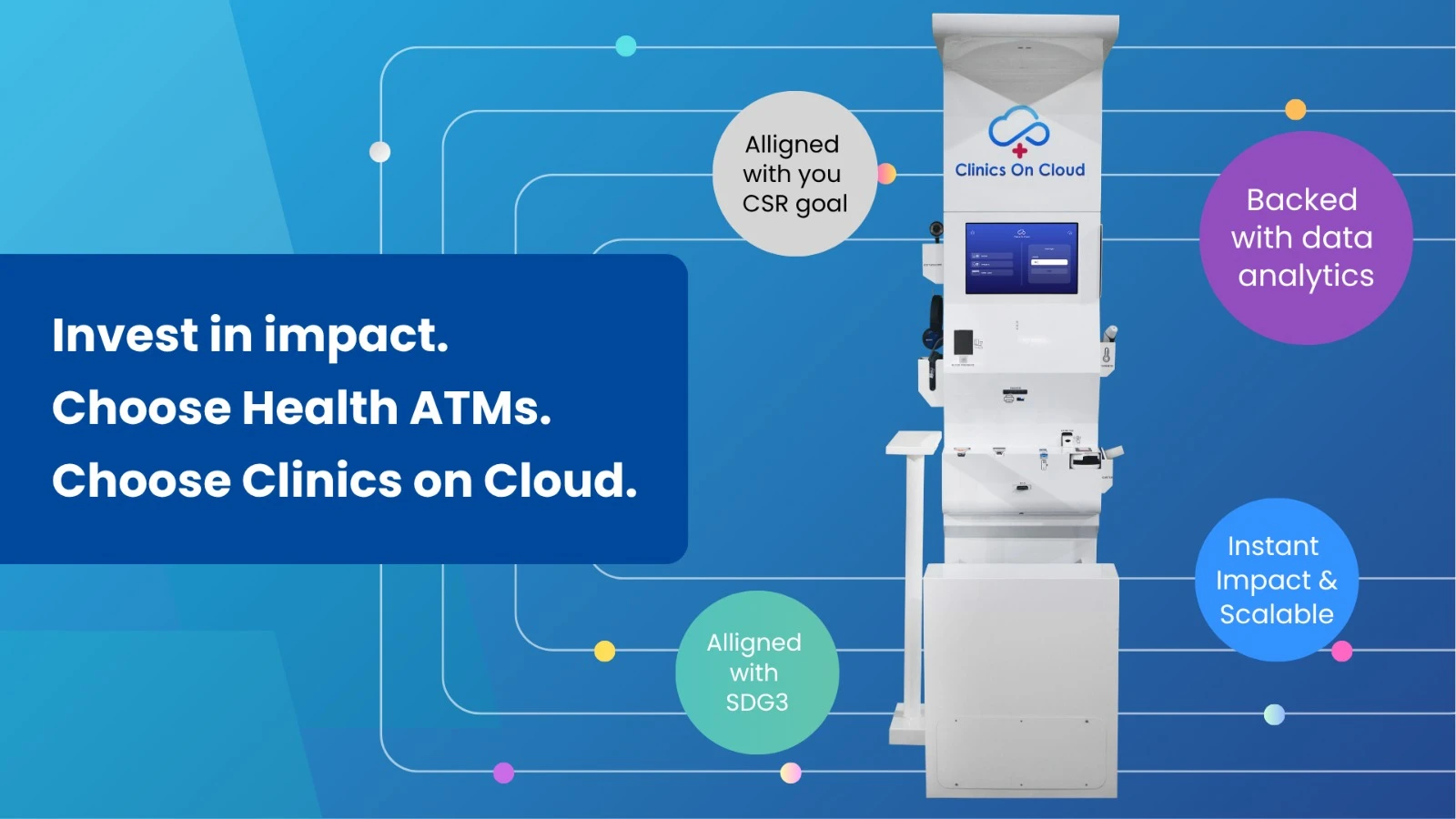
Transforming Lives Through SDG3 Aligned Healthcare In today’s evolving corporate landscape, Corporate Social Responsibility (CSR) is no longer just a
 Entry · PC-57Preventive Care
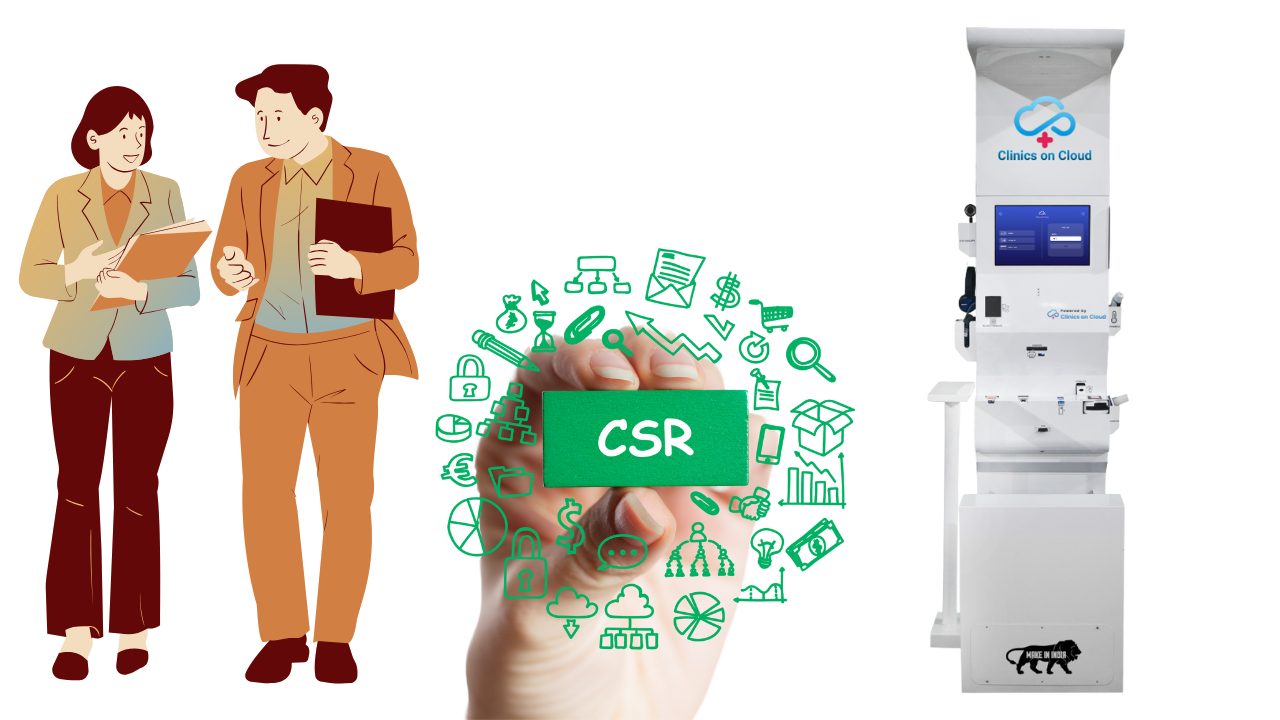
Transforming Healthcare Access Through CSR: A Partnership for a Healthier Society Introduction Corporate Social Responsibility (CSR) initiatives have played a
Define the intended change before the programme starts, record a baseline in a population you can find again, re-measure the same people on a fixed schedule, and report referral completion alongside reach. Impact cannot be measured retrospectively: if no baseline was recorded and no repeat measurement was planned, outcome data does not exist and cannot be reconstructed.
A baseline is the measurement of your chosen indicators in your target population before the programme changes anything. It must use the same indicator you will later report, cover the same population you will re-measure, and be documented with its date and method. Without a baseline, every subsequent number is an isolated figure with nothing to compare against.
Vanity metrics are numbers that look large and mean little: social media reach, event attendance, kits distributed, photographs taken and undefined “lives impacted” figures. The test is simple. If a headline number has no written definition and no source system behind it, it is a vanity metric and it should not appear in the report.
Choose a population that is enumerable, stable over six to twelve months and reachable for a second round. Defined villages, named schools, contract workforces at your own sites and partner-facility patient groups all qualify. Open public footfall reaches many people but cannot be re-measured, which permanently caps that programme at activity metrics.
Because the design forecloses it. An open camp reaches an unenumerable population, records paper data that cannot be linked to a second visit, and usually has no agreed referral pathway. Those three choices make outcome measurement impossible on day one, regardless of how well the camp is run or how many people attend.
A referral pathway is a named receiving facility that has agreed in writing to accept referrals, a protocol for which flags trigger which action, a transport and cost plan, a named person responsible for follow-up, and a record of whether each referral was completed. Without one, screening identifies need and resolves none of it.
Six or twelve months is common for screening programmes, but the specific interval matters less than fixing it in advance and applying it consistently. A schedule chosen after results are known invites the reasonable suspicion that measurement rounds were timed to flatter the outcome. Publish the interval in the programme document.
Four audiences, and they need different documents. The board wants reach, spend and risk. Auditors want traceability and method notes. The beneficiary community and implementing partner want to know what happened to flagged cases. Public and ESG readers want comparability, disclosed methodology and honest attrition figures.
No. Screening detects and refers; it does not prevent, diagnose, treat or cure. A CSR report claiming reduced disease prevalence on the basis of screening data alone is making a claim the data cannot support, which is the quickest way to lose credibility with an auditor or an ESG rater. Claim detection and referral completion instead.
Ask which metrics from your annexe the platform records natively, whether records can be linked across visits for the same beneficiary, what the export and audit trail looks like, whether consent capture is recorded, and what the reporting output actually looks like. Ask for a sample dashboard export before the budget is approved, not after installation.
We started Clinics on Cloud with a simple belief - that the quality of your healthcare should not depend on your postcode. Whether you're a government, corporate, NGO or entrepreneur - we built this for you.
+91 8999 073 447
Mon - Sat · 9 AM to 6 PM IST
sales@clinicsoncloud.com
Partnerships · Deployments · Support
www.clinicsoncloud.com
Products · Case Studies · News
Nighoje, Chakan MIDC
Pune, Maharashtra - 410501, India