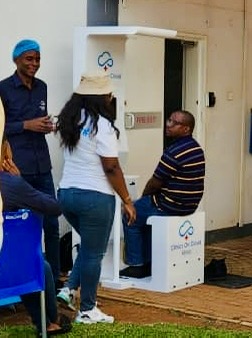
 Entry · HA-89Health ATM
Health kiosks in Africa and Across all 54 countries of Africa.
“Clinics on the cloud” is making primary health care more affordable by offering healthcare services with their health kiosks in
Read story 13 min
health kiosks in Asia, home to over 4.7 billion people, faces unique healthcare challenges, ranging from overcrowded hospitals to a shortage of healthcare professionals. Many countries struggle with affordability, accessibility, and efficiency in healthcare delivery. Health kiosks are emerging as a revolutionary solution, providing instant access to medical consultations, diagnostic tests, and hea
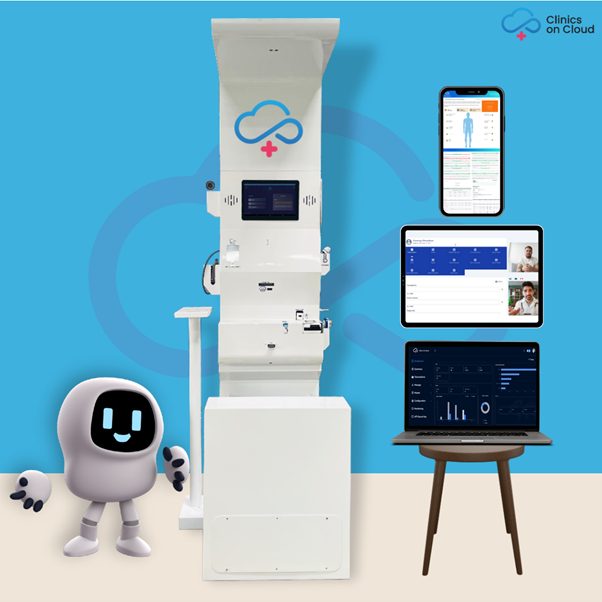
A health kiosk is a self-service screening station that captures 65+ clinical parameters across 14 specialties without a skilled operator and routes abnormal results to a doctor on video. Across Asia, Clinics On Cloud kiosks are bought for three problems: ageing populations in East Asia, hospital overcrowding in dense Southeast Asian cities, and workforce screening in the Gulf.
A distributor who pitches the same deck in Tokyo, Jakarta and Dammam will lose all three.
The Africa opportunity is largely a coverage problem: reaching people no clinician reaches, offline, on battery. Asia is different. Most Asian markets have clinicians, hospitals and money. What they lack is throughput, early detection at scale, and a way to screen populations that never present until they are ill.
Three distinct purchase rationales dominate, and they map roughly onto sub-regions:
For the contrasting picture where coverage rather than throughput is the constraint, see the region-by-region guide to health kiosks in Africa.
East Asian buyers are not usually short of diagnostic capacity. They are short of ways to check on a large older population often enough to catch change early.
That reframes the product requirement. The parameters that matter most are the repeatable ones: blood pressure, ECG, blood glucose and HbA1c, lipid profile, body composition, pulmonary function, vision and hearing, and standard mental-health questionnaires such as PHQ-9 and GAD-7. Frequency beats depth. A measurement taken monthly at a community centre is worth more than an annual panel nobody returns for.
Three design points follow for an older user:
Buyers in this segment are typically municipal and community health bodies, senior-living and eldercare operators, insurers, pharmacy chains and large employers running retiree programmes. Deeper background on this use case is in geriatric screening and healthy ageing.
Southeast Asia buys on throughput. A kiosk in a dense city earns its place by reducing the number of people who sit in an outpatient queue in order to have their blood pressure taken.
The highest-value sites are the ones with existing footfall: pharmacy chains, retail malls, transit interchanges, polyclinics and primary care networks, university campuses, and factory and industrial-estate clinics. In these locations a kiosk is a filter. It measures everyone and escalates the fraction that needs a clinician.
Island and archipelagic geography introduces a second, different requirement. Where a population is spread across islands, the fixed-site logic breaks and a circuit model works better, either a Mobile Medical Unit or a portable Box Clinic carried between sites. Freight, spares logistics and consumable buffers dominate the cost model in these deployments, and they should be priced at the start.
Southeast Asian buyers also tend to be the most price-sensitive per unit while buying the largest volumes, which makes configuration discipline important. Order the specialties the market will actually pay for rather than the full 14.
In the Gulf states, the dominant kiosk buyer is an employer or a contractor managing a large workforce across dispersed sites: construction, logistics, ports, facilities management, oil and gas services, hospitality and manufacturing.
The problem is consistency. A workforce of tens of thousands, employed across many contractors and many sites, gets screened inconsistently or not at all between statutory checks. Language is a barrier, time off site is expensive, and results end up in incompatible formats.
A kiosk answers that specifically:
One boundary must be stated in every Gulf proposal: a Clinics On Cloud screening session is an awareness and early-detection measure. It is not a statutory or pre-employment medical examination and must never be presented as satisfying one. Statutory examinations are defined by national law and performed by approved medical centres.
The Health Lounge configuration is the one most often requested by Gulf corporate and headquarters buyers, where presentation and employee experience carry weight alongside the clinical function.
India is the reference market and the manufacturing base. Clinics On Cloud is India’s first CDSCO-licensed Health ATM and Health Kiosk manufacturer, with 3,500+ installations across India and abroad, 200+ cities covered and 12M+ patients screened across the network. Indian buying patterns are covered in detail in health kiosk deployment across India.
For the rest of South Asia and for Central Asia, the buying logic sits between the African and Southeast Asian models: substantial public-sector and donor-funded procurement, meaningful private hospital and pharmacy demand in cities, and terrain or distance constraints outside them. Power and connectivity planning matters more here than in East Asia and less than in Central Africa.
| Sub-region | Dominant buying rationale | Buyer types | Best-fit sites | Configuration emphasis |
|---|---|---|---|---|
| East Asia | Ageing populations, repeat monitoring | Municipal and community health bodies, eldercare operators, insurers, pharmacy chains, large employers | Community centres, senior-living facilities, pharmacies, workplace clinics | Cardiac, diabetes, body composition, pulmonary, vision, hearing, mental health; longitudinal records |
| Southeast Asia | Urban density and outpatient overcrowding | Pharmacy and retail chains, polyclinic networks, hospital groups, industrial-estate employers, island health services | Malls, transit hubs, polyclinics, campuses, factory clinics; circuit models across islands | High-throughput core panel; freight and consumable buffers; MMU or Box Clinic for archipelagos |
| Gulf and West Asia | Workforce and migrant health screening | Construction, logistics, ports, facilities management, oil and gas services, hospitality, HR and occupational health functions | Labour accommodation, site offices, corporate HQ, staff wellness suites | Multilingual UI, occupational panel, centralised multi-site dashboard, Health Lounge presentation |
| South Asia | Volume screening and public health coverage | Government health missions, hospital chains, CSR programmes, insurers, pharmacy retail | Primary health centres, district hospitals, corporate campuses, pharmacies | Full 14-specialty range; ABHA and eSanjeevani integration in India |
| Central Asia | Modernising primary care, distance | Ministries, public hospital systems, extractive-industry employers | District facilities, company towns, remote work sites | Battery backup, offline operation, Russian and local language sets |
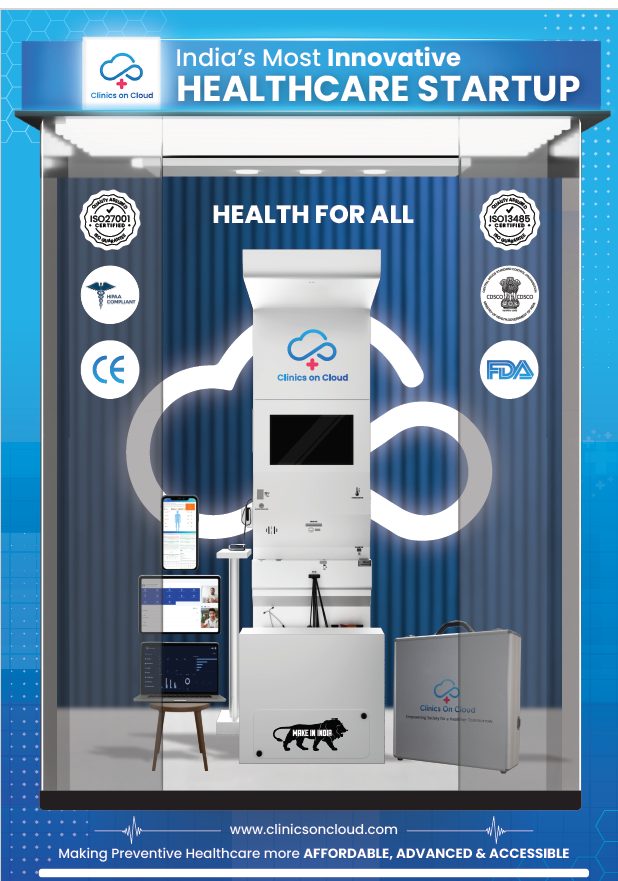
Clinics On Cloud holds CDSCO licensing in India, ISO 13485 for medical-device quality management, US FDA and CE, plus ISO 27001, HIPAA compliance, GDPR compliance and VAPT testing.
Asian regulatory regimes vary more than African ones, and several are strict. Requirements fall into these categories, and as of 2026 registration remains national everywhere:
Two rules apply everywhere. The registration is normally held by a local entity, not by the foreign manufacturer, which makes distributor selection a regulatory decision as much as a commercial one. And where the kiosk stores identifiable records or supports teleconsultation, national data-protection law and telemedicine practice rules apply on top of device law.
Clinics On Cloud supplies technical files, ISO 13485 documentation and declarations of conformity, and does not claim registration or regulatory approval in any specific Asian country. Confirm current requirements with the national regulator and local regulatory counsel before committing to a delivery date.
Asian deployments fail on different infrastructure problems than African ones, but they still fail on infrastructure.
Connectivity. The Clinics On Cloud Health ATM is offline-capable. It completes the session, prints the report and stores the record locally, then syncs when the connection returns. Only live teleconsultation requires an active link. This matters less in Singapore than in eastern Indonesia, but it matters everywhere during outages.
Power. Battery backup of 3–4 days covers scheduled outages, monsoon disruption and generator gaps. In grid-stable markets this is a continuity feature rather than a core requirement, but it is the reason a unit does not lose a screening day after a typhoon.
Climate. Heat and humidity are the two Asian variables to plan for. Gulf sites need sheltered or air-conditioned placement rather than exposed outdoor siting. Tropical and coastal sites need attention to humidity and salt exposure. The rugged metal enclosure handles dust and public siting; it does not exempt the unit from sensible placement.
Logistics. For island and remote deployments, spares and consumables lead time is the real availability constraint. Hold a buffer locally.
Asia is the hardest localisation problem Clinics On Cloud handles, and it is worth budgeting for properly.
The interface is a multilingual touchscreen with audio-visual voice guidance, and language sets are configured per deployment rather than fixed. Three complications recur in Asian projects:
Confirm the language list at order stage. Adding a language after installation is possible but slower than specifying it upfront.
Clinics On Cloud manufactures at Chakan MIDC, Pune, India, and is deployed in 8+ countries. Distribution partners are appointed by territory.
A serious distributor conversation covers six items: territory and target segments; who files the device registration and holds it; configuration by specialty; language sets; power and climate setup; and spares, consumables, field service and operator training. The sixth item is the one that decides whether the installed base is still running in year three.
Pricing varies by configuration, so request a quotation against a defined scope rather than a list price. Write to sales@clinicsoncloud.com or call +91 8999 073 447 (Mon–Sat, 9:00–18:00 IST) with your country, buyer segment and expected first-year volume, and ask for the export technical file and distributor terms. See the Health Kiosk page for specifications, clinical parameters and tests offered by a health kiosk for the full panel, and Clinics On Cloud as a Health ATM manufacturer for manufacturer credentials.
Clinics On Cloud provides preventive health screening and is not a diagnostic laboratory. Screening results are indicative and are not a diagnosis. Always consult a qualified physician before acting on any health information.
Your email is never published. Comments appear after a quick review.
Entry · HA-89Health ATM“Clinics on the cloud” is making primary health care more affordable by offering healthcare services with their health kiosks in
 Entry · HA-29Health ATM
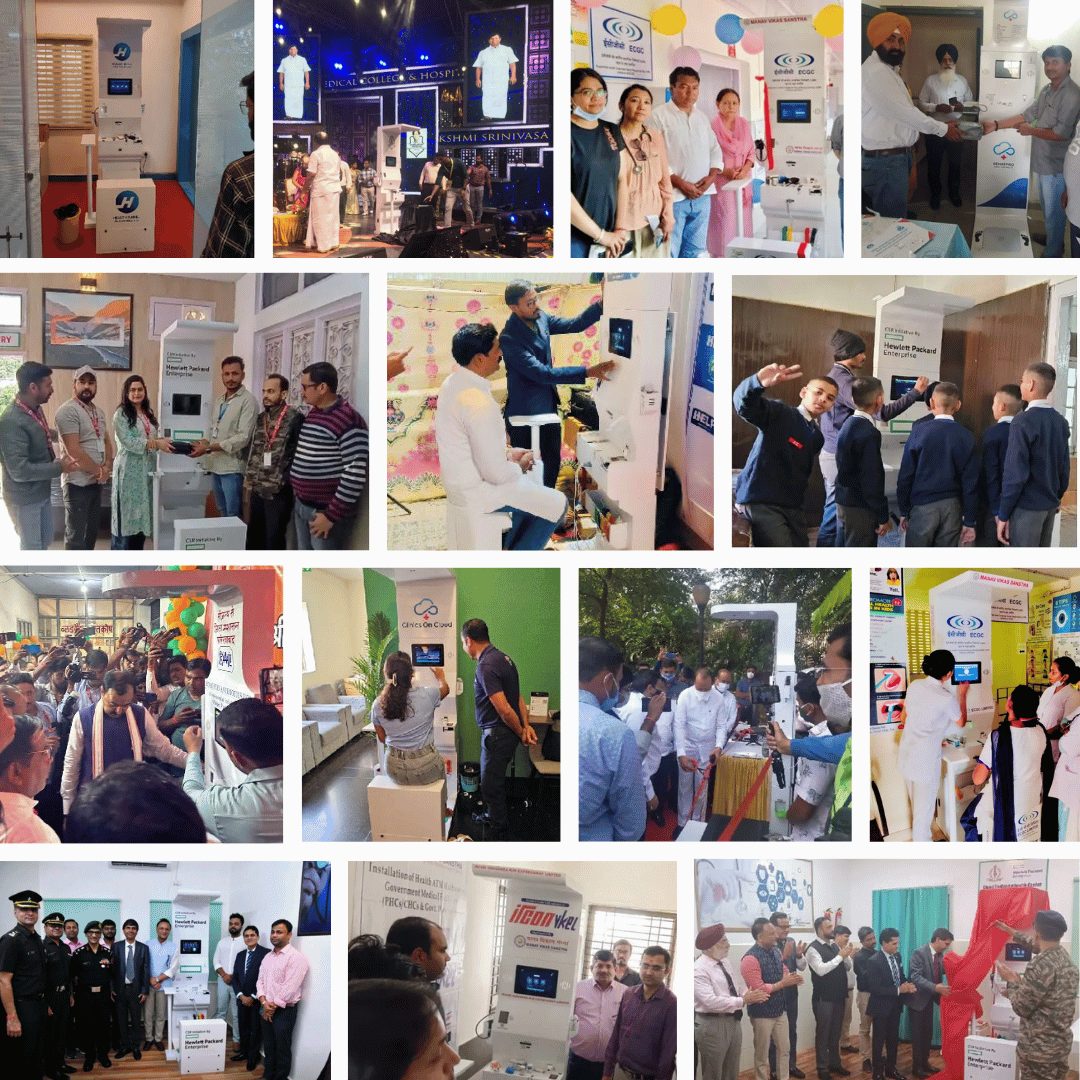
Impact Of “Clinics on cloud’s” Health Kiosks Across India The healthcare sector in India is evolving with technological advancements, and
 Entry · HA-25Health ATM
The Future of Healthcare: How AI-Powered Doctor Clinics and Care Pods are Transforming Patient Care In recent years, healthcare has
Health kiosks are deployed across Asian markets by employers, pharmacy chains, hospital groups and public health bodies. Clinics On Cloud is deployed in 8+ countries and does not publish a country-by-country installation list. For a specific market, ask sales@clinicsoncloud.com whether a territory distributor is already appointed and what the registration position is.
Each Southeast Asian country has its own national medical-device authority, but they work from a common technical dossier structure under the ASEAN Medical Device Directive. That means one well-built technical file can be adapted across several markets, though registration is still filed country by country, normally by a locally licensed authorised representative.
Yes, for awareness and early detection. Multilingual voice-guided sessions let a workforce speaking many languages complete a 10-minute screening at the accommodation or site rather than at a clinic. It is not a statutory or pre-employment medical examination and must never be presented as one, since those are defined by national law and performed by approved centres.
Yes, and repeat frequency is the reason. A 10-minute session that an older person will actually repeat produces a trend line, which is more clinically useful than an annual panel nobody returns for. Voice guidance, colour-coded reports and longitudinal digital records are the features that matter most for this user.
Landed cost depends on configuration, language sets, freight, duty and the registration route, so Clinics On Cloud quotes against a defined scope rather than publishing an export price. Ask for a quotation covering the kiosk, first-year consumables, installation, operator training and service, since consumables and service dominate cost after year one.
Contact sales@clinicsoncloud.com or +91 8999 073 447 with your country, target segments and expected first-year volume. Distribution is appointed by territory. Because the device registration is normally held by a local entity rather than by the manufacturer, regulatory capability weighs as heavily as sales reach in distributor selection.
Yes. Pharmacy floors have existing footfall, a health-related reason to visit and staff on site, which is the combination that produces steady session volumes. A kiosk measures walk-in customers in 10 minutes, flags abnormal results and routes them to a doctor by video, without consuming pharmacist time on routine measurement.
No. Clinics On Cloud is not a diagnostic laboratory. Device accuracy is 90–95% depending on the test and device, under correct usage, calibration and patient preparation. Results are indicative screening outputs intended to raise awareness and prompt appropriate medical follow-up, and a clinician re-tests or investigates before making any clinical decision.
Yes. Battery backup of 3–4 days keeps the unit screening through scheduled outages, storm disruption and generator gaps, and offline operation means sessions complete and records store locally without a network. Data synchronises and teleconsultation resumes when power and connectivity return.
We started Clinics on Cloud with a simple belief - that the quality of your healthcare should not depend on your postcode. Whether you're a government, corporate, NGO or entrepreneur - we built this for you.
+91 8999 073 447
Mon - Sat · 9 AM to 6 PM IST
sales@clinicsoncloud.com
Partnerships · Deployments · Support
www.clinicsoncloud.com
Products · Case Studies · News
Nighoje, Chakan MIDC
Pune, Maharashtra - 410501, India