HomeBlogHealth ATM Buyer’s Guide 2026: Tests, Features, ABDM Integration and How to Choose a Health Kiosk
Deep Dive10 November 20265 min read
Health ATM Buyer’s Guide 2026: Tests, Features, ABDM Integration and How to Choose a Health Kiosk
What is a health ATM, what can it test, and how do you choose one? A vendor-neutral 2026 guide for hospitals, governments and CSR teams in India.
CCClinics On Cloud TeamPublished from Pune, India
Health ATM
Quick answer: A health ATM (also called a health kiosk or smart health kiosk) is a self-service or assisted unit that measures vital signs and point-of-care health markers in minutes. It generates a digital report and can connect the user to a doctor by teleconsultation. When choosing one, compare five things: what it measures and how accurately, how well it connects to records (including ABDM/ABHA in India), teleconsultation and referral workflows, the service and maintenance model, and data security. The number of parameters on a brochure matters far less than whether the kiosk is used, maintained and connected to care.
Key takeaways
Health kiosks do several jobs. A scoping review found the most common roles were health information, clinical measurement, screening, telehealth and patient registration.
Utilisation and follow-up decide the return on any kiosk investment.
What is a health ATM?
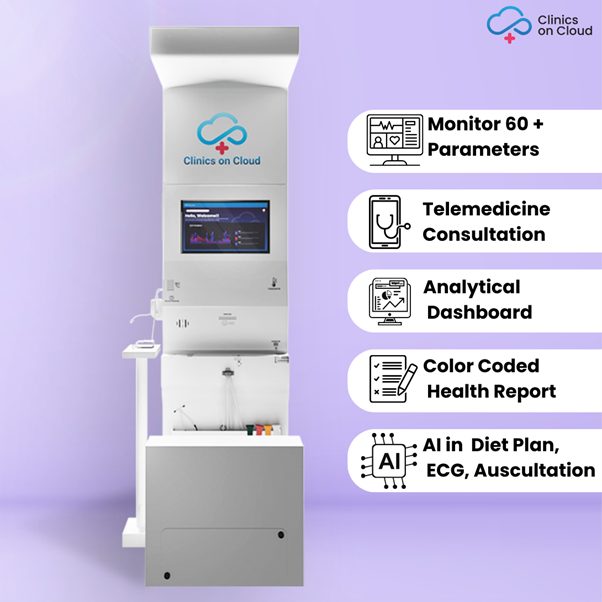
A health ATM is a kiosk-format point-of-care screening station. A typical unit combines:
Measurement devices: blood pressure, pulse, SpO₂, temperature, height, weight and BMI, and body composition. Many models add blood glucose, haemoglobin, lipid profile, ECG and other markers using point-of-care tests.
A touchscreen interface in local languages, for self-service or operator-assisted use.
A teleconsultation module (camera, microphone, screen) for live video consults with a doctor.
Digital reports and records: results sent to the user’s phone and stored for future visits, and in India linkable to the user’s ABHA.
A remote management platform to monitor uptime, consumables and usage.
What can a health ATM test? (Typical parameters)
Category
Typical parameters
Notes
Vitals
BP, pulse, SpO₂, temperature, respiration
Non-invasive, quick
Anthropometry
Height, weight, BMI, body fat, muscle mass
Used for obesity and nutrition screening
Cardiac
Single-lead or multi-lead ECG
Check whether a clinician reviews the ECG
Blood tests (point-of-care)
Glucose, HbA1c, haemoglobin, lipids, and others
Uses consumables; plan supply chain and quality control
Other screens
Eye, hearing, lung function, and others
Varies by model
Parameter lists differ by vendor and configuration. Ask for each device’s make, model and regulatory status.
Clinical scope and accuracy: Which devices are inside? What are their regulatory approvals and calibration schedules? Can the vendor show validation data?
Consumables and quality control: For blood tests, what is the cost per test, the shelf life and the QC protocol?
Interoperability: Does it create or verify ABHA, and link and share records under ABDM? Can it integrate with your HMIS or EMR?
Teleconsultation and referral: Who are the doctors? What are the hours? How are abnormal results escalated?
Usability and language support: Can a first-time, low-literacy user complete a screening?
Uptime and service: Are there SLAs, remote monitoring, a field service network and spares?
Data security and consent: Is consent captured? Are data encrypted and access-controlled? Where are the data hosted? Is it compliant with India’s data protection law?
Analytics and reporting: Are there dashboards for utilisation, abnormal-result rates and follow-up? These are vital for CSR and government reporting.
What does a health ATM cost?
Prices vary widely with configuration (number and type of devices), blood-testing capability, connectivity, software licences and the service model (outright purchase, lease, or pay-per-screening). Compare total cost of ownership over 3–5 years, including consumables, maintenance, connectivity, teleconsultation and an operator if needed. A cheaper unit that sits idle or breaks down costs more per useful screening.
Health ATM procurement checklist
Define the use case: screening, chronic disease follow-up, OPD triage or employee wellness
Define target users and expected daily footfall
List required parameters (must-have vs nice-to-have)
Ask for device-level regulatory documentation and validation data
Confirm ABDM/ABHA capability and HMIS integration
Confirm the teleconsultation model and escalation protocol
Agree SLAs for uptime, response time and consumables replenishment
Review data protection, consent and hosting
Ask for reference sites and utilisation data
Model 3–5-year total cost of ownership
Why Clinics On Cloud
Clinics On Cloud designs and deploys Health ATMs, AI-enabled Health Lounges, Health Pods, Box Clinics and Mobile Medical Units across India and international markets. Our AI-enabled Health ATM was showcased at the India AI Impact Summit 2026 as a model for preventive screening without a hospital visit. Book a demo or request our RFP checklist.
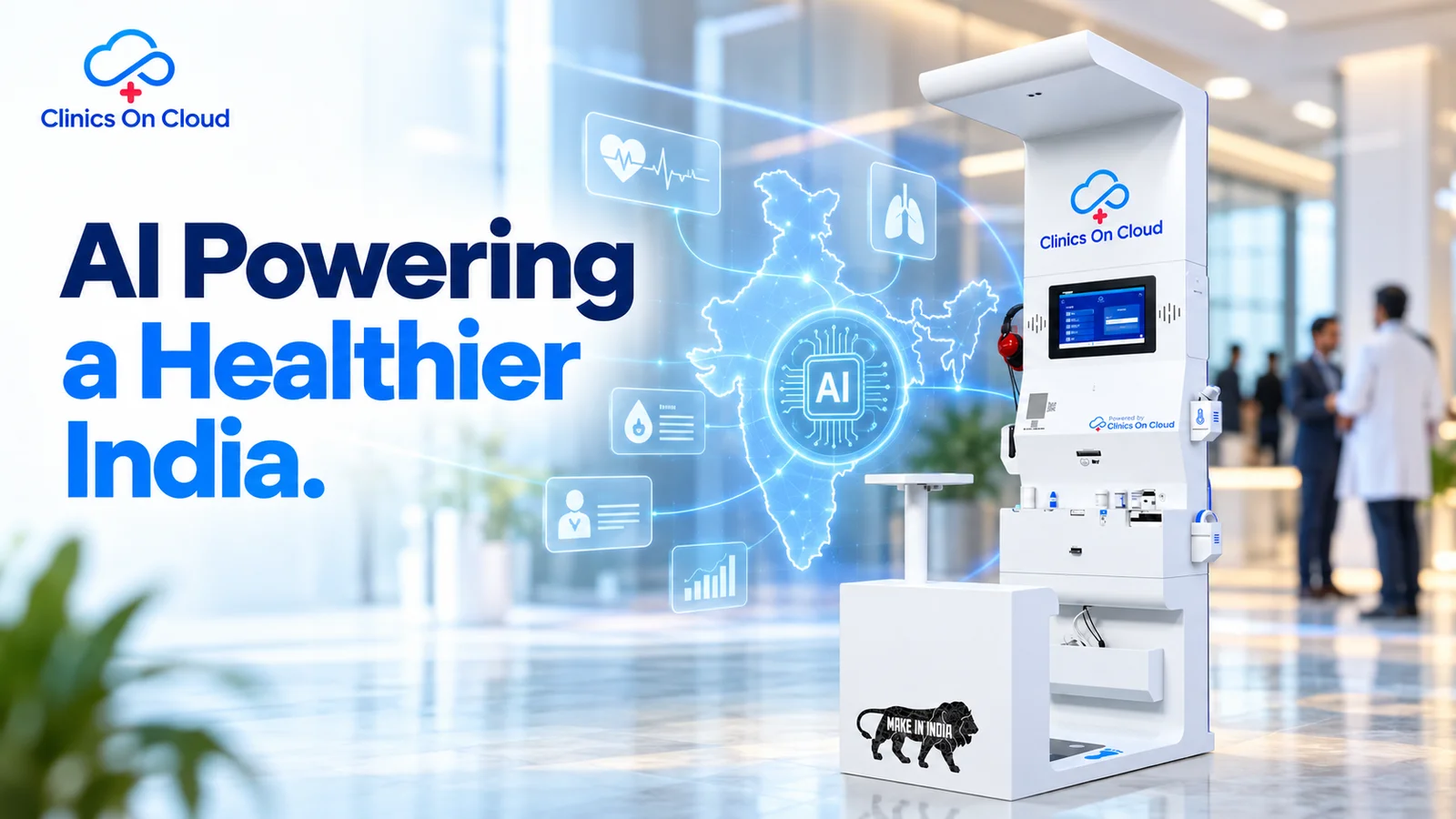
New Bain and Philips reports show AI is now part of daily care in India. See where it helps most, and how AI Health ATMs bring it to villages and offices.
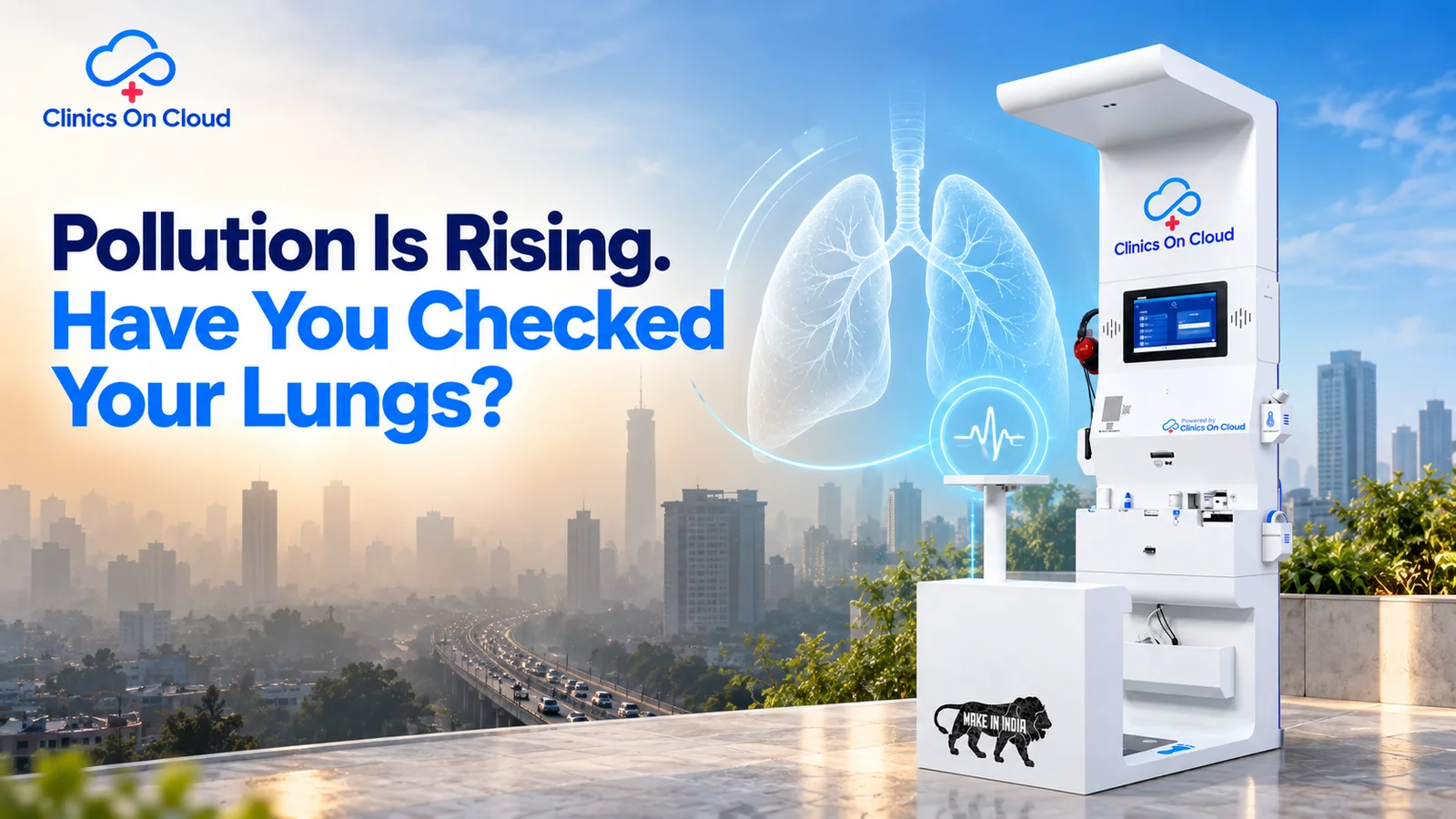
Delhi's AQI more than doubles every October. Learn how air pollution harms your lungs, the warning signs, and how a quick lung function and SpO2 check helps.
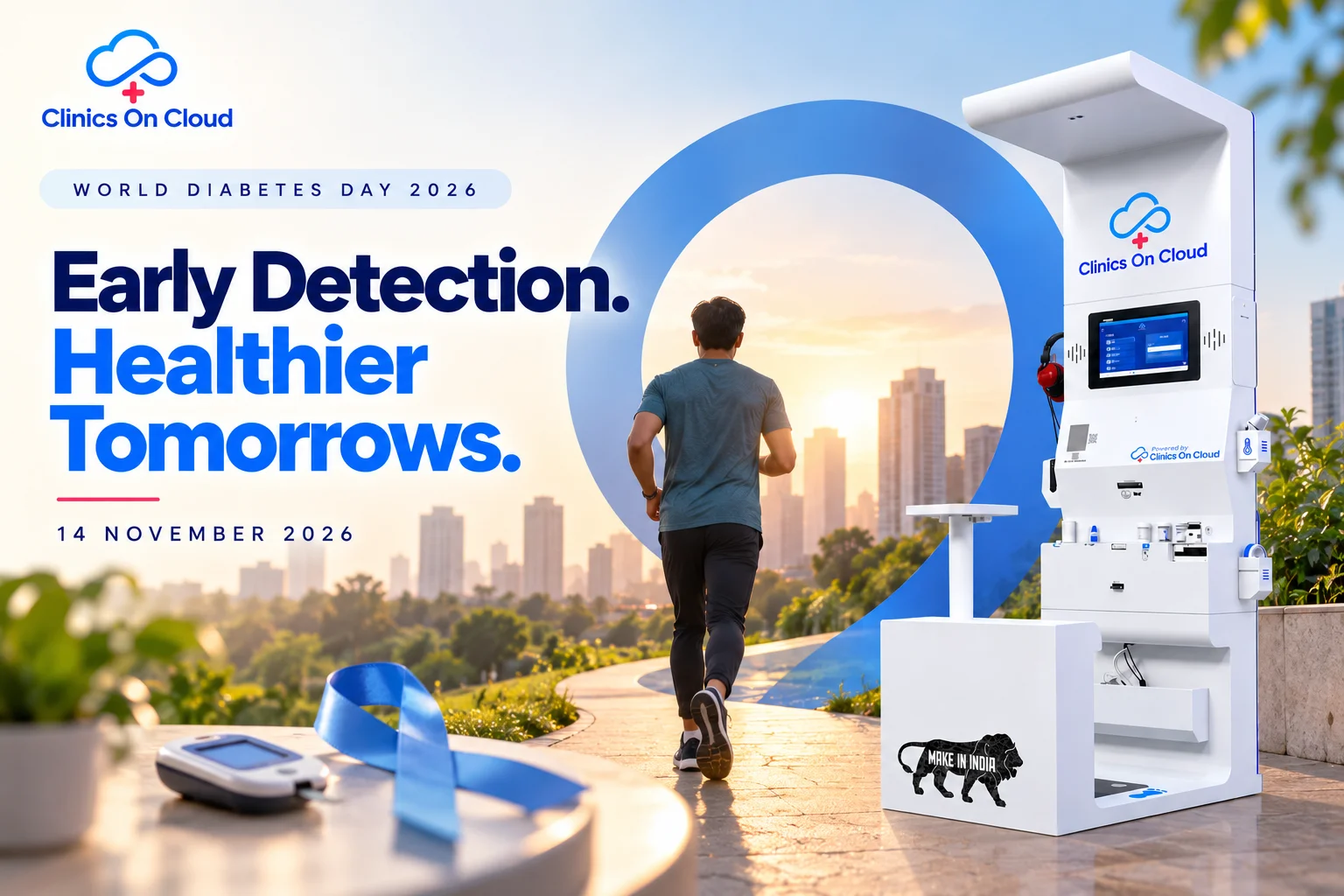
The 2026 World Diabetes Day theme is "Early action on diabetes". Learn why millions of Indians are undiagnosed and how a quick HbA1c and sugar check helps.
A health ATM is a kiosk that measures vital signs and point-of-care health markers in minutes, generates a digital report and can connect users to a doctor by teleconsultation.
What tests can a health ATM do?
Typical units measure blood pressure, pulse, SpO₂, temperature, height, weight, BMI and body composition. Many also offer ECG and point-of-care blood tests such as glucose, haemoglobin and lipids. The exact list depends on the model.
Can a health ATM replace a doctor?
No. A health ATM screens and connects. It flags abnormal results and links users to doctors through teleconsultation or referral. Diagnosis and treatment remain clinical decisions.
Is a health ATM ABDM compliant?
It depends on the vendor. Ask whether the kiosk software is integrated with ABDM to create or verify ABHA and to link health records.
What is the difference between a health ATM and a health camp?
A health camp is a one-time event. A health ATM is permanent infrastructure that allows repeat screening and keeps longitudinal digital records.
Get In Touch
Healthcare is a right. Not a privilege.
We started Clinics on Cloud with a simple belief - that the quality of your healthcare should not depend on your postcode. Whether you're a government, corporate, NGO or entrepreneur - we built this for you.
Call us
+91 8999 073 447
Mon - Sat · 9 AM to 6 PM IST
Write to us
sales@clinicsoncloud.com
Partnerships · Deployments · Support
Visit us online
www.clinicsoncloud.com
Products · Case Studies · News
Find us
Nighoje, Chakan MIDC
Pune, Maharashtra - 410501, India
Built for every kind of health partner.
Government Body Corporate / HR Team NGO / CSR Partner Hospital or Clinic Defence Organisation International Partner Investor / Distributor Rural Entrepreneur
 Entry · HA-38Health ATM