 Entry · PC-45Preventive Care
Understanding Body Fat Composition Machine
Body Fat Composition Machines Body fat composition machines have become essential tools in the quest for health and fitness. These
Read story 3 min
Elderly Health: A Comprehensive Guide to Geriatric Care and Healthy Aging

Geriatric care is the branch of medicine concerned with the health of older adults, and healthy ageing is the process of maintaining functional ability into later life. Regular preventive screening supports both by detecting changes early. Clinics On Cloud screens 65+ clinical parameters across 14 specialties on kiosks built for seated operation, large-text display and voice guidance.
Geriatric care is the branch of healthcare concerned with the health, function and wellbeing of older adults, addressing the conditions that become more common with age and the way several of them interact in the same person.
The defining feature of geriatric medicine is not any single disease. It is multimorbidity: an older adult frequently lives with more than one long-term condition at once, takes several medicines simultaneously, and experiences changes in mobility, vision, hearing and cognition that affect how care is delivered as much as what care is delivered.
Commonly managed areas include cardiovascular conditions and hypertension, diabetes, joint and bone conditions such as arthritis and osteoporosis, sensory decline in vision and hearing, cognitive change including dementia, mental health concerns including depression, anxiety and social isolation, and loss of muscle mass and strength.
Geriatric care in India is supported at policy level by the National Programme for the Health Care of the Elderly under the National Health Mission, and internationally by the World Health Organization’s work on healthy ageing.
Healthy ageing is the process of developing and maintaining the functional ability that allows wellbeing in older age. The World Health Organization frames it around function rather than the absence of disease, which is the more useful definition for anyone designing a health programme.
That framing matters practically. An older adult living with two well-managed chronic conditions who walks daily, sleeps adequately, eats well and remains socially connected may be ageing more healthily than a peer with no diagnosed condition and no mobility or social contact. Function is the outcome that changes daily life.
The recognised contributors to functional ability are consistent across guidance from bodies including the World Health Organization: regular physical activity appropriate to the individual, adequate nutrition, maintained social connection, cognitive engagement, sleep, medication review, and regular contact with health services so that changes are noticed while they are still small.
Preventive screening supports the last of those. It does not replace clinical care, and it does not treat anything. What it does is shorten the time between a change occurring and someone noticing it.
Most older adults know that regular checkups matter. The obstacle is usually the trip, not the belief.
A conventional health checkup asks an older adult to arrange transport, travel to a diagnostic centre, wait, move between rooms and counters, fast beforehand in some cases, return later for reports and then make a separate appointment to have them explained. Each of those steps is a barrier, and for someone with reduced mobility, visual impairment or no one available to accompany them, they compound.
The result is a familiar pattern. Screening gets deferred, then deferred again, and the next contact with the health system is an acute one. For someone living alone, which describes a growing number of older adults in Indian cities as adult children relocate, there may be no one to notice the interim decline at all.
Bringing screening to where older people already are removes most of that friction. A screening station in the clubhouse of a housing society, the common room of a retirement community or a mobile unit visiting a pensioner welfare group asks for ten minutes and no journey.
This section describes areas commonly given attention in older adults. It is general guidance for discussion with a physician, not a schedule, and it is not a substitute for a doctor’s judgement about any individual. What any specific person should have checked, and how often, is a clinical decision that depends on their history, conditions and medication.
| Focus area | What screening looks at | Why it is given attention in older adults |
|---|---|---|
| Blood pressure | Blood pressure measurement | Hypertension is common with age and frequently produces no symptoms until a complication occurs |
| Cardiac | 6-lead or 12-lead ECG, lipid profile including total cholesterol, triglycerides, HDL, LDL, TC:HDL ratio and non-HDL | Cardiovascular risk rises with age; rhythm and lipid findings both inform a physician’s assessment |
| Blood sugar | Random blood sugar, HbA1c | Type 2 diabetes prevalence increases with age and early stages are often asymptomatic |
| Body composition | Weight, BMI, muscle mass, bone mass, body fat, body water, protein, fat-free weight | Loss of muscle mass with age affects strength, balance and fall risk, and is invisible on a weighing scale. See what BMR, BMI and metabolic age actually measure |
| Vision | Far vision, near vision, colour vision | Sensory decline affects mobility, independence and fall risk, and often goes unreported |
| Hearing and ENT | Audiometry, otoscopic ear visualisation | Hearing loss contributes to social withdrawal and is frequently untreated |
| Anaemia and kidney | Anaemia and kidney screening | Both are relevant to fatigue and general decline and are commonly monitored in older adults |
| Urine analysis | Ten-parameter urine panel including protein, glucose, ketones, nitrite, leukocytes, blood pH, specific gravity, bilirubin, urobilinogen and microalbumin | A non-invasive panel that can flag several concerns needing a doctor’s attention |
| Pulmonary function | PEF, FVC, FEV, FEV1/FVC | Respiratory function is relevant in older adults, particularly with a history of smoking or occupational exposure |
| Mental health | PHQ-9 depression questionnaire, GAD-7 anxiety questionnaire | Depression, anxiety and isolation in older adults are recognised as under-identified. Questionnaire scores are screening indicators for a clinician, not diagnoses |
| Oxygen saturation, pulse, temperature | SpO2, pulse rate, body temperature | Baseline vitals that give context to every other reading |
Two limits on this table. First, it lists what a screening station can look at, not everything an older adult’s care should include: bone density scanning, cancer screening programmes, cognitive assessment, medication review, vaccination and fall risk assessment all sit with a clinical team and are not kiosk functions. Second, Clinics On Cloud kiosks do not measure vitamin levels, which is worth stating because older adults are a recognised risk group; see vitamin D risk factors in older adults.
The full parameter detail is in clinical parameters and tests offered by a health kiosk.
Preventive screening for older adults is most valuable where a group of people share a location and lack easy access to routine checks.
The common requirement across all of these is the same: screening has to come to the person, it has to be usable without help, and a flagged result has to lead somewhere.
A screening station that an older adult cannot operate alone is not an accessible screening station, whatever its parameter count. Clinics On Cloud kiosks are built with this population in mind.
Seated operation. Tests that do not require standing are completed while seated, which matters for anyone with reduced mobility, balance difficulty or fatigue. Standing measurements such as height and weight are brief and separate.
Large-text, high-contrast display. Interface text is sized and contrasted for users with age-related visual decline, so a resident does not need reading glasses in hand to complete a session.
Voice guidance. The kiosk speaks each instruction aloud in sequence rather than relying on written prompts alone. This helps users with low vision and users who are more comfortable listening than reading a screen.
Multilingual interface. Guidance is available in Indian languages, so an older user is not forced to operate in English. For a generation less likely to be comfortable in English than their grandchildren, this is often the difference between using the machine and walking away.
Guided, step-by-step flow with no operator required. The interface leads the user through one instruction at a time. No skilled operator is needed, though a facility attendant can assist where a resident prefers company.
Printed report as well as digital. Reports are issued by print, SMS, email and WhatsApp. A printed, colour-coded sheet an older adult can hand to their doctor or keep in a file is frequently more useful to them than a message on a phone.
Rugged build with 3 to 4 days of battery backup and offline capability. The unit keeps working through a power cut, which matters in a residential facility where the screening session may be the only routine health contact that week.
For a senior living operator, on-site screening is both a resident health measure and a service differentiator. Prospective residents and their families ask what medical support is available, and a permanent screening station with telemedicine access is a concrete answer.
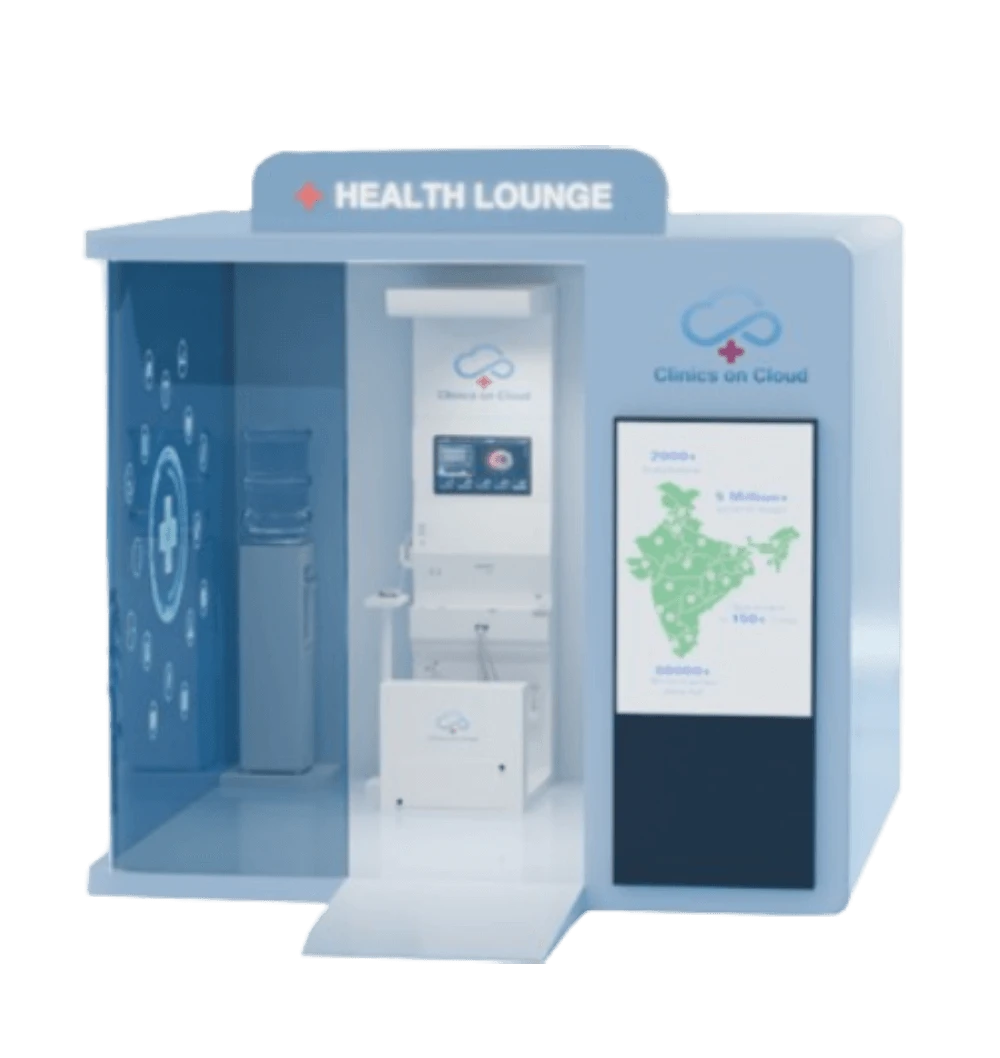
A typical deployment places a Clinics On Cloud Health Kiosk in a clubhouse, common room or on-site clinic. Residents use it on a rhythm the operator sets with its medical adviser. Each session takes 10 minutes and covers 65+ clinical parameters across 14 specialties.
Three operational points matter more than the hardware.
Clinics On Cloud has 3,500+ installations across 200+ cities in India and abroad, and is India’s first CDSCO-licensed Health ATM and Health Kiosk manufacturer, with ISO 13485 certification for medical device quality management.
Housing societies and welfare associations serve a dispersed older population that lives independently, which is a different problem from a managed facility.
Resident welfare associations typically run screening as a recurring camp in a clubhouse or community hall, or install a kiosk permanently where the resident count justifies it. The practical advantage is that residents can be reminded by the same channels the association already uses, and the walk is a few hundred metres.
Pensioner welfare associations and ex-servicemen groups already meet on a schedule, and attaching a screening session to an existing meeting removes the coordination problem entirely. A Box Clinic, the portable clinic-in-a-suitcase, works where the venue has no infrastructure.
CSR and NGO elderly welfare programmes benefit from the reporting side as much as the screening. A centralised dashboard gives a funder de-identified aggregate outcomes across sites, which is what a CSR report needs to demonstrate.
Housebound and rural older adults are reached by a Mobile Medical Unit, which delivers diagnostics and consultation to the doorstep. This is the only viable model for people who cannot leave home, and it is where the gap in geriatric care is widest.
A screening result is an indication, not a diagnosis, and the value of the whole exercise sits in what follows it.
Clinics On Cloud reports are colour-coded and issued immediately by print, SMS, email or WhatsApp. Where a reading falls outside expected parameters, the kiosk offers an integrated telemedicine consultation with a doctor there and then, rather than leaving an older adult holding a sheet of numbers they cannot interpret.
That matters particularly for this group. An older adult who receives an unexplained abnormal result and no immediate access to a clinician is more likely to worry than to act. A live consultation converts an ambiguous number into a next step.
Records persist. Digital health records with longitudinal tracking, with ABHA and eSanjeevani integration, mean a resident’s readings accumulate into a history their own physician can use. Across the Clinics On Cloud network, 12M+ patients have been screened and 2 lakh+ abnormalities have been detected and routed for early intervention as of 2026.
Screening does not diagnose, treat or prevent any condition. It shortens the interval between a change occurring and a qualified physician seeing it.
To see the full parameter detail behind the focus areas above, read clinical parameters and tests offered by a health kiosk and what a Health ATM is. To scope a retirement community, RWA or pensioner welfare deployment, call +91 8999 073 447, Monday to Saturday, 9:00 to 18:00 IST, or email sales@clinicsoncloud.com.
Clinics On Cloud provides preventive health screening and is not a diagnostic laboratory. Screening results are indicative and are not a diagnosis. Always consult a qualified physician before acting on any health information.
Your email is never published. Comments appear after a quick review.
Entry · PC-45Preventive CareBody Fat Composition Machines Body fat composition machines have become essential tools in the quest for health and fitness. These
 Entry · PC-05Preventive Care
Our body’s health can be measured in several ways. Concepts like body age, metabolic rate, BMR (Basal Metabolic Rate), and
 Entry · PC-66Preventive Care
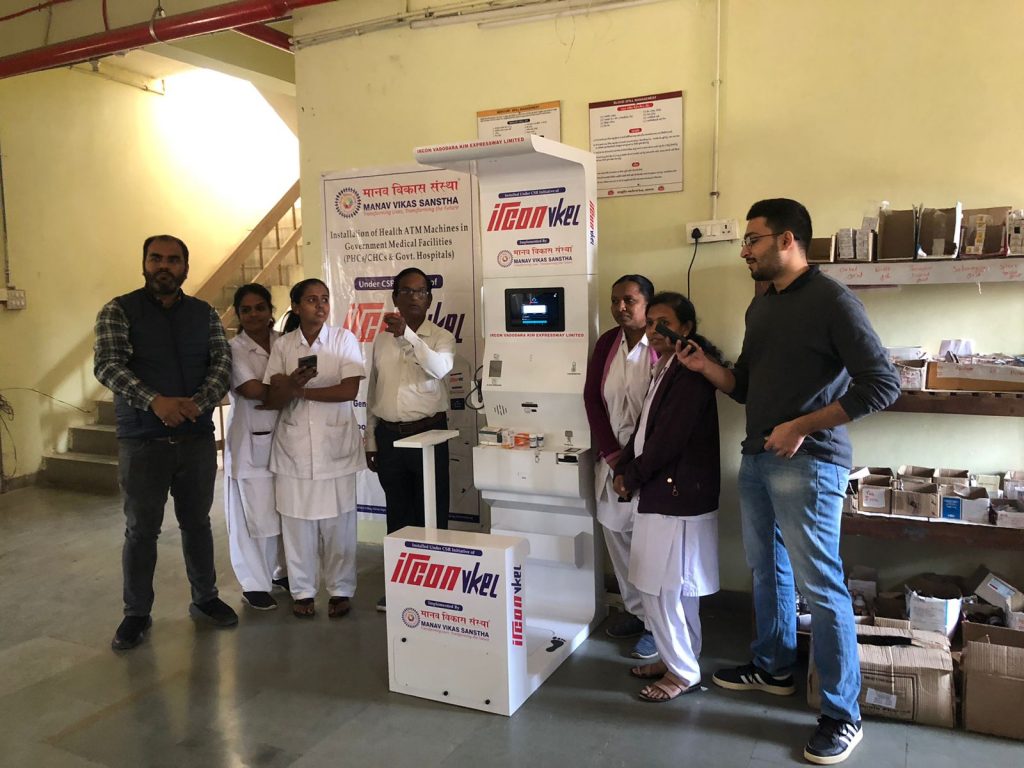
Clinics On Cloud Preventive Healthcare Solutions in Gujarat Vadodara You’ll flip when you learn about the new preventative healthcare services
Areas commonly given attention in older adults include blood pressure, cardiac parameters such as ECG and lipid profile, blood sugar, anaemia and kidney screening, vision, hearing, body composition and muscle mass, pulmonary function, urine analysis and mental health questionnaires. What any individual actually needs, and how often, is a clinical decision for their physician based on their history, conditions and medication.
Yes, in most cases. Clinics On Cloud kiosks use voice guidance in Indian languages, large-text high-contrast displays, seated operation for tests that do not require standing, and a guided step-by-step flow that needs no skilled operator. A facility attendant can assist where a resident prefers company, but the design assumes independent use.
The interface combines a large-text visual display with spoken audio guidance, so a user can follow it visually, aurally or both. Reports are issued in print as well as digitally, which many older adults find easier than reading a phone. The kiosk also screens vision and hearing, including far vision, near vision, colour vision, audiometry and otoscopic ear visualisation.
Most install a Clinics On Cloud Health Kiosk in a clubhouse, common room or on-site clinic and set a screening rhythm with their medical adviser. Each session covers 65+ clinical parameters across 14 specialties in 10 minutes, individual results go to the resident, and the operator receives de-identified aggregate reporting through a centralised analytics dashboard.
Yes. Resident welfare associations commonly run screening either as a recurring camp in the clubhouse or as a permanently installed kiosk where the resident count justifies it. Clinics On Cloud scopes both, including portable Box Clinic setups for venues without infrastructure. Contact sales@clinicsoncloud.com or call +91 8999 073 447 to plan one.
Pricing varies by configuration, parameter set, integration requirements and order volume, so Clinics On Cloud quotes per deployment rather than publishing a single figure. Talk to the team about the resident count, the site and whether you need a fixed kiosk, a portable Box Clinic or a Mobile Medical Unit before comparing costs.
Clinics On Cloud states device accuracy of 90-95%, depending on the specific test and device, under correct usage, calibration and patient preparation, on CDSCO-licensed equipment manufactured under ISO 13485. Reports are intended to raise awareness and prompt appropriate medical follow-up. They are indicative screening results, not a diagnosis, and a physician decides what confirmatory testing is required.
Clinics On Cloud is ISO 27001 certified, HIPAA compliant, GDPR compliant and VAPT tested. Individual results go to the individual, and facility operators or CSR funders receive de-identified aggregate reporting only. ABHA integration supports continuity of records into the wider Ayushman Bharat Digital Mission ecosystem with the user’s consent.
We started Clinics on Cloud with a simple belief - that the quality of your healthcare should not depend on your postcode. Whether you're a government, corporate, NGO or entrepreneur - we built this for you.
+91 8999 073 447
Mon - Sat · 9 AM to 6 PM IST
sales@clinicsoncloud.com
Partnerships · Deployments · Support
www.clinicsoncloud.com
Products · Case Studies · News
Nighoje, Chakan MIDC
Pune, Maharashtra - 410501, India