HomeBlogMedical Kiosk: An Overview Benefits, Features and Functions
Article15 November 20244 minUpdated
Medical Kiosk: An Overview Benefits, Features and Functions
Medical Kiosk: An Overview
CCClinics On Cloud TeamPublished from Pune, India
Health ATM
“
A medical kiosk is a self-service screening station that measures a defined set of clinical parameters in one guided session and issues a report the user can act on. The Clinics On Cloud medical kiosk covers 65+ clinical parameters across 14 specialties and completes a full checkup in 10 minutes, with 12M+ patients screened across the network as of 2026.
What is a medical kiosk?
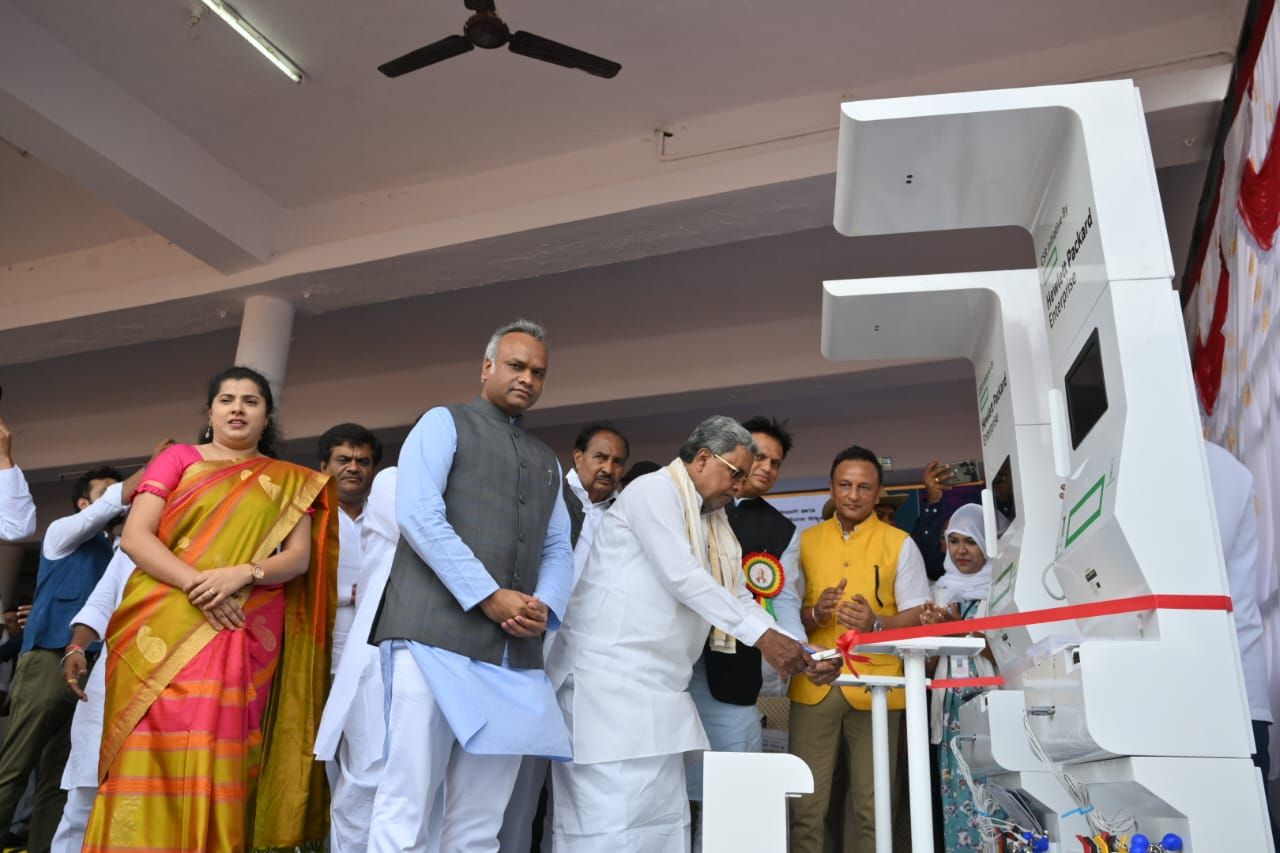
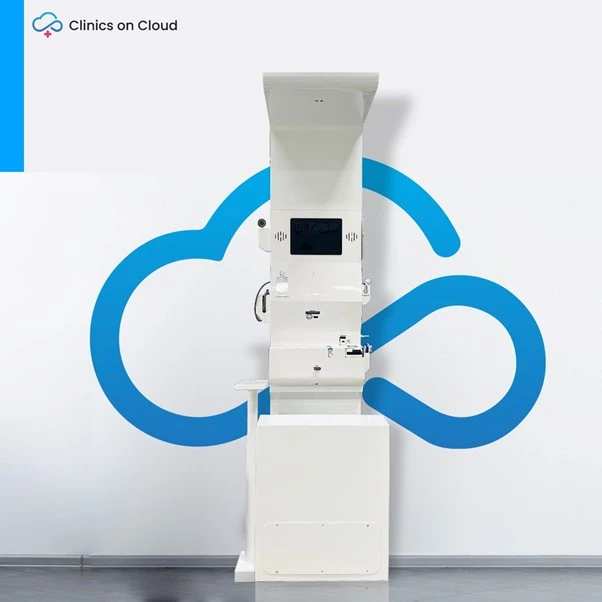
A medical kiosk is a self-service health screening station that measures a defined set of clinical parameters in one guided session, produces an instant report, and where enabled connects the user to a doctor. The terms medical kiosk, health kiosk, Health ATM, healthcare kiosk and digital dispensary describe broadly the same equipment, and the label usually reflects who is buying rather than what is inside.
Three things distinguish a medical kiosk from a collection of instruments on a table.
Guidance. A multilingual touchscreen with audio-visual instructions walks the user through the session, so no skilled operator is required.
Consolidation. Every reading lands in one colour-coded report rather than on separate printouts.
Continuity. The report reaches a digital health record, which makes the next screening comparable to this one.
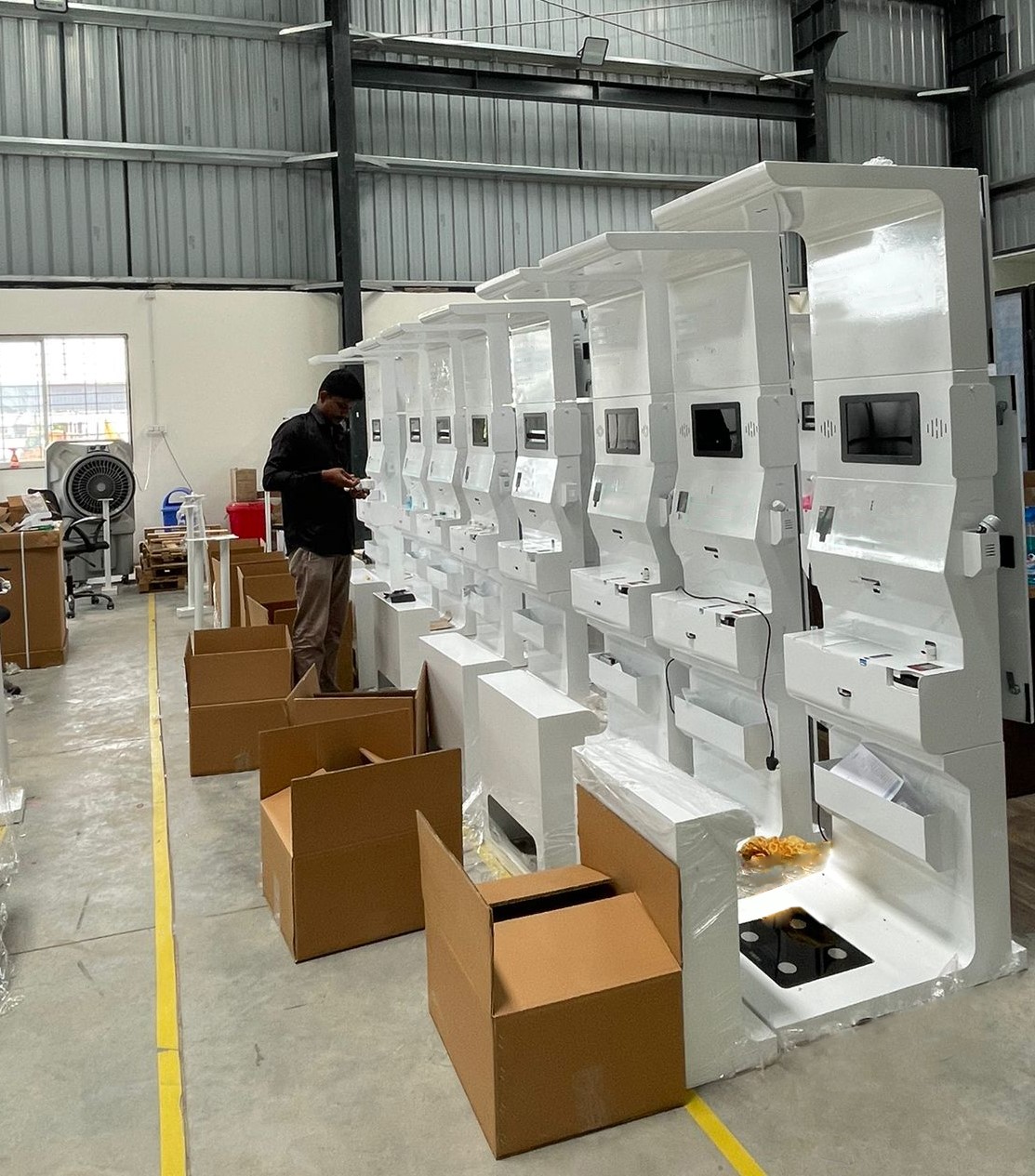
Clinics On Cloud manufactures medical kiosks at Nighoje, Chakan MIDC, Pune, and is India’s first CDSCO-licensed Health ATM and Health Kiosk manufacturer, with 3,500+ installations across 200+ cities and 8+ countries.
Features and functions of a medical kiosk
A medical kiosk’s features are hardware. Its functions are what those features let an organisation do. Buyers who only compare features end up with a machine that measures well and changes nothing.
Feature
Function it enables
Why it matters to a buyer
Multilingual touchscreen with audio-visual guidance
Unassisted self-service screening
No staffing cost, works across a mixed-language workforce
Integrated medical instruments (ECG, BP, SpO2, body composition, spirometry, urine analysis, rapid tests)
65+ clinical parameters across 14 specialties
One station replaces several separate devices
10-minute session design
High throughput at shift changes and OPD queues
Screening volume, which is the denominator of your cost model
Instant colour-coded report by print, SMS, email and WhatsApp
The user leaves with something usable
Awareness and follow-up, not just a reading
Integrated telemedicine
Live doctor consultation on abnormal results
Turns a flagged result into an action
Digital health records with longitudinal tracking
Comparison across screenings over time
Trend data, not one-off snapshots
ABHA and eSanjeevani integration
Interoperability with the Ayushman Bharat Digital Mission
Data is portable rather than stranded on a machine
AI-assisted risk flagging and diet or lifestyle guidance
Prioritisation of who needs attention first
Clinical teams work a queue, not a spreadsheet
Centralised multi-location analytics dashboard
Programme-level reporting across sites
CSR and corporate impact measurement
Rugged metal enclosure, 3 to 4 day battery backup, offline capability
Operation in factories, rural sites and public spaces
Uptime where infrastructure is unreliable
What does a medical kiosk measure?
A Clinics On Cloud medical kiosk measures 65+ clinical parameters across 14 specialties, and the configuration is selected per deployment rather than fixed. Not every buyer needs every module.
The specialty map, as of 2026:
General health (19): SpO2, pulse, body temperature, height, weight, BMI, BMR, body water, skeletal mass, muscle mass, bone mass, protein, metabolic age, fat-free weight, body fat, subcutaneous fat, visceral fat, physique rating
Cardiac (9): 6-lead or 12-lead ECG, blood pressure, lipid profile covering total cholesterol, triglycerides, HDL, LDL, TC:HDL ratio and non-HDL
These three terms are used interchangeably in the market, but they describe different centres of gravity. The comparison below is about emphasis, not about hard category boundaries.
Dimension
Medical kiosk
Health ATM
Telemedicine kiosk
Primary purpose
Multi-parameter preventive screening
Fast self-service screening at public and community points
Remote consultation with a clinician
Typical session
10 minutes, guided, unassisted
10 minutes, guided, unassisted
Length of the consultation
Instruments on board
Broad, up to 65+ parameters across 14 specialties
Broad, configured for footfall settings
Minimal, often peripherals used during the call
Operator needed
No
No
Sometimes an attendant
Output
Consolidated colour-coded report plus record
Consolidated report plus record
Consultation, prescription by the physician
Connectivity dependence
Works offline, syncs later
Works offline, syncs later
Requires live connectivity
Best fit
Hospitals, factories, campuses, PHCs
Community points, government and retail footfall
Locations with a doctor shortage but reliable bandwidth
Weak spot
Does not replace laboratory testing
Same
Produces no measurements on its own
The strongest deployments combine the first and the third. Screening without a follow-up path produces anxiety, and consultation without measurements produces guesswork. Clinics On Cloud integrates telemedicine into the Health Kiosk so an abnormal reading routes to a doctor in the same session.
What are the benefits of a medical kiosk, and who gets them?
Benefits differ sharply by buyer, and a generic benefits list is why so many kiosk deployments underperform. Match the benefit to the budget holder.
Employers and factories. Occupational screening without pulling workers off shift. Vision, audiometry and pulmonary function matter in noisy or dusty plants; metabolic parameters matter in sedentary offices.
Hospitals and clinics. Vitals captured in the OPD waiting area before the consultation, which shortens the consultation and standardises intake.
Government and public health. Distributed screening at PHCs, CHCs and community points, with ABHA linkage so results enter the national digital health record. Clinics On Cloud deployments include NHM Uttar Pradesh with 200 Health ATMs, Mathura District Hospital and the Government of West Bengal for employee screening.
CSR programmes. Measurable, reportable reach. Across the Clinics On Cloud network, 2 lakh+ abnormalities have been detected for early intervention, reported through a centralised dashboard.
Insurers and wellness providers. Longitudinal data across a covered population rather than a single annual snapshot.
Residential communities and campuses. Regular screening for older residents without a hospital visit.
Where does a medical kiosk work, and where does it not?
A medical kiosk works where people already are, and fails where footfall has to be manufactured. That single rule predicts most successful and unsuccessful deployments.
Strong settings include hospital and clinic OPD areas, factory gates and canteens, corporate campuses, PHCs and CHCs, pharmacies, universities and schools, railway stations and transport hubs, housing societies, and government offices.
Weak settings include low-footfall lobbies with no programme behind them, and any location where nobody owns the follow-up after an abnormal result. Where the population will not travel to a fixed unit, the format should change rather than the placement: a portable Box Clinic for camps and outreach where no infrastructure exists, or a Mobile Medical Unit that takes screening and consultation to the doorstep.
What a medical kiosk cannot do
A medical kiosk performs preventive screening and flags results for attention. It does not diagnose, treat, cure or prevent any disease, and it is not a diagnostic laboratory. Stating the limits plainly is what makes the benefits credible.
Specific limitations to plan around.
It does not replace laboratory testing. Confirmatory testing on a venous sample remains a laboratory function.
Results are indicative, not diagnostic. A qualified physician makes the clinical decision.
Accuracy depends on conditions. The 90 to 95 percent band assumes correct usage, calibration and patient preparation. Fasting-dependent tests need the user to have prepared.
Rapid tests are screening tests. A reactive rapid result requires confirmatory testing and counselling.
No report guarantees acceptance. Reports are intended to raise awareness and prompt appropriate medical follow-up.
A kiosk cannot own the follow-up. Somebody in your organisation has to act on flagged results, or the programme produces data and no outcome.
How much does a medical kiosk cost, and what is the ROI?
Indicative medical kiosk pricing in India starts from ₹6,00,000, and the final figure depends on configuration. A vitals and body-composition unit and a unit with ECG, lipid profile, spirometry, urine analysis and rapid infectious disease testing are different machines.
Cost is driven by the clinical parameters selected and the instruments behind them, consumables and rapid test cartridges, telemedicine licensing, software modules such as the analytics dashboard and HMIS or EMR integration, branding, installation conditions, order quantity and AMC term.
Model the return as cost per screening across five years. Add capital cost, consumables at realistic annual volume, five years of AMC and estimated downtime, then divide by expected screenings. A unit at a three-shift factory gate and the same unit in a quiet lobby produce very different answers, which is why placement is a financial decision rather than a facilities one.
The second half of the return is avoided cost and measurable outcome: earlier identification of risk in a covered population, fewer working days lost to untreated conditions, and programme-level reporting that a CSR or HR team can present. Pricing varies by configuration, so ask for a written quotation against your parameter list.
A numbered buyer’s checklist for a medical kiosk
Write the population and the parameter list first. Buying a specialty you will not use is the most common overspend.
Ask for the CDSCO manufacturing licence in the supplier’s own legal entity name.
Ask for the ISO 13485 certificate with a scope covering the exact model quoted.
Ask for ISO 27001 and a dated VAPT summary, because a medical kiosk generates health data.
Get every integrated instrument named, and ask for a field calibration record.
Check the accuracy claim carries conditions. An unconditional figure is a warning sign.
Read a real anonymised report and confirm a non-clinical reader can understand it.
Confirm the follow-up path: integrated telemedicine, and a named owner inside your organisation.
Confirm ABHA and ABDM interoperability if the deployment is public-health or insurance-linked.
Confirm offline operation and battery backup against your site’s power and connectivity reality.
Get AMC, SLA, spares and data-ownership clauses into the contract.
Model five-year cost per screening and compare shortlisted suppliers on that number.
Clinics On Cloud provides preventive health screening and is not a diagnostic laboratory. Screening results are indicative and are not a diagnosis. Always consult a qualified physician before acting on any health information.
Configure a medical kiosk for your site. Clinics On Cloud, SehatPro Technologies Pvt Ltd, Nighoje, Chakan MIDC, Pune, Maharashtra 410501. Call +91 8999 073 447 (Mon to Sat, 9:00 to 18:00 IST) or email sales@clinicsoncloud.com with your parameter list for a written quotation.
Health Kiosk Manufacturers: Revolutionizing Healthcare Access and Affordability In today’s digital world, health kiosk manufacturers are changing how people access
A medical kiosk is a self-service screening station that measures a defined set of clinical parameters in one guided session and issues a report the user can act on. The Clinics On Cloud medical kiosk covers 65+ clinical parameters across 14 specialties in a 10-minute checkup, needs no skilled operator, and can connect the user to a doctor when a result is abnormal.
What is the difference between a medical kiosk and a Health ATM?
There is no strict technical difference. Medical kiosk, health kiosk and Health ATM describe the same category of self-service screening station, and the label usually reflects the buyer. Hospitals and corporates tend to say medical kiosk; government, community and retail deployments tend to say Health ATM. Compare configurations, licences and service terms rather than names.
How much does a medical kiosk cost in India?
Indicative pricing starts from ₹6,00,000, with the final figure set by the clinical parameters selected, the instruments behind them, telemedicine and software modules, branding, installation conditions, order quantity and AMC term. Compare suppliers on five-year cost per screening including consumables. Contact Clinics On Cloud on +91 8999 073 447 for a configuration-specific written quotation.
Where can I buy a medical kiosk, and who manufactures them in India?
Clinics On Cloud manufactures medical kiosks at Nighoje, Chakan MIDC, Pune, and is India’s first CDSCO-licensed Health ATM and Health Kiosk manufacturer, with 3,500+ installations across 200+ cities. Ask any supplier for a manufacturing licence in its own name, an ISO 13485 scope statement covering your model, and a factory visit before you place an order.
Does a medical kiosk need a trained operator?
No. The Clinics On Cloud medical kiosk uses a multilingual touchscreen with audio-visual guidance so a user completes the session unassisted, which is what makes unstaffed placement viable at factory gates, campuses and community points. An attendant helps adoption in the first weeks of a deployment, but the design does not require one.
Can a medical kiosk work without internet or reliable power?
Yes. The unit is offline-capable and carries a 3 to 4 day battery backup inside a rugged metal enclosure, and screening data syncs when connectivity returns. Live telemedicine consultation is the exception, since it needs connectivity at the time of the call. Confirm both against your site conditions before ordering.
How accurate is a medical kiosk, and can a doctor rely on the report?
Device accuracy is 90 to 95 percent depending on the test and the device, under correct usage, calibration and patient preparation. A medical kiosk screens and flags; it does not diagnose. Reports are indicative and are intended to raise awareness and prompt appropriate medical follow-up. A qualified physician makes the clinical decision, usually with confirmatory laboratory testing.
What are the limitations of a medical kiosk?
It does not replace a diagnostic laboratory, does not diagnose or treat any condition, and produces indicative results whose accuracy depends on correct usage, calibration and patient preparation. Rapid tests are screening tests that need confirmation. The largest practical limitation is organisational: without a named owner for follow-up, flagged results produce data and no outcome.
Is medical kiosk data secure and who owns it?
The deploying organisation should own the data, and the contract should say so along with storage location, consent capture, encryption and breach notification. Clinics On Cloud holds ISO 27001, states HIPAA and GDPR alignment, and the platform is VAPT tested, with ABHA and eSanjeevani integration available for interoperability under the Ayushman Bharat Digital Mission.
Get In Touch
Healthcare is a right. Not a privilege.
We started Clinics on Cloud with a simple belief - that the quality of your healthcare should not depend on your postcode. Whether you're a government, corporate, NGO or entrepreneur - we built this for you.
Call us
+91 8999 073 447
Mon - Sat · 9 AM to 6 PM IST
Write to us
sales@clinicsoncloud.com
Partnerships · Deployments · Support
Visit us online
www.clinicsoncloud.com
Products · Case Studies · News
Find us
Nighoje, Chakan MIDC
Pune, Maharashtra - 410501, India
Built for every kind of health partner.
Government Body Corporate / HR Team NGO / CSR Partner Hospital or Clinic Defence Organisation International Partner Investor / Distributor Rural Entrepreneur
 Entry · HA-60Health ATM