HomeBlogHow can a HealthATM benefit rural India? MP Rajendra Agarwal inaugurated Health ATM in UP
Article13 March 20232 min
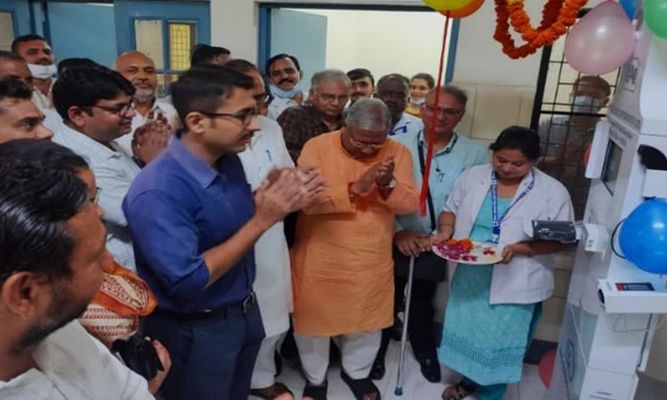
How can a HealthATM benefit rural India? MP Rajendra Agarwal inaugurated Health ATM in UP
How can a Health ATM benefit rural India? MP Rajendra Agarwal inaugurated Health ATM in UP.elementor-widget-container p a:link,.elementor-widget-container p a:visited{color:#0066cc}
CCClinics On Cloud TeamPublished from Pune, India
Health ATM
“
A Health ATM benefits rural India by moving preventive screening from a distant hospital to the village itself. A Clinics On Cloud Health ATM is a self-service screening station that measures 65+ clinical parameters across 14 specialties, works offline, and needs no skilled operator, so a flagged result reaches a doctor without a day’s travel.
What a Health ATM changes for rural access
A Health ATM is a self-service preventive screening station that measures a defined set of clinical parameters and returns an indicative report in minutes. For a rural population, the significant word in that sentence is not “screening”. It is “self-service”.
Rural preventive care does not usually fail because people refuse screening. It fails because screening requires a journey, a day of lost wages, a queue, and a facility that may be 20 or 40 kilometres away. A person with no symptoms will not make that trip, and that is a rational decision. It is also why hypertension, type 2 diabetes and anaemia are commonly identified late in rural populations, and why the National Health Mission runs population-level non-communicable disease screening at all.
Three things change when a Health ATM sits in a rural location. Screening becomes repeatable, so a trend becomes visible rather than a single reading. The output is structured data rather than a paper slip, so a district programme can see where flagged readings concentrate. And an abnormal result can reach a doctor by telemedicine at the point of screening rather than triggering another journey.
Clinics On Cloud is India’s first CDSCO-licensed Health ATM and Health Kiosk manufacturer, and its network has screened 12M+ patients and flagged 2 lakh+ abnormalities for early intervention as of 2026.
The five constraints a rural Health ATM must survive
Most rural health technology fails on logistics rather than on clinical capability. Five constraints decide the outcome.
Constraint
What goes wrong
What the device must do
Power
Supply is intermittent or absent for hours at a stretch, and a mid-session outage corrupts the reading
Run on battery backup of 3 to 4 days and resume without data loss
Connectivity
Mobile data is weak, capped or absent, so any cloud-dependent workflow stalls
Complete the full screening offline and sync records when a connection returns
Operator skill
There is no technician, and an ASHA worker or panchayat staff member already has a full workload
Guide the user by voice and touchscreen with no skilled operator required
Distance to referral
The nearest physician may be at a CHC or district hospital far from the village
Provide integrated telemedicine so an abnormal result reaches a doctor without a journey
Language and literacy
English or Hindi-only interfaces exclude a large share of the users the programme is meant to reach
Offer multilingual voice and audio-visual guidance in the local language
A sixth constraint is physical. Dust, heat, humidity and rough handling destroy office-grade equipment, which is why Clinics On Cloud units use a rugged metal enclosure.
Language is the constraint most often underestimated. A voice-guided multilingual interface is the difference between a machine an agricultural worker can use unaided and one that needs an intermediary who is not always present. If the person at the point cannot operate the device, the deployment reverts to a staffed camp with extra steps.
Which deployment models actually work in rural India
There is no single rural deployment. There are at least six, suiting different populations, funders and follow-up pathways.
Model
Where the unit sits
Best suited to
Follow-up pathway
Product fit
Primary Health Centre
Inside the PHC, alongside OPD
Districts wanting screening attached to existing clinical staff
Immediate: a medical officer is on site
Health ATM / Health Kiosk
Sub-centre
At the sub-centre serving a cluster of villages
Reaching the last mile where a PHC is still several kilometres away
Telemedicine, then referral upward to PHC or CHC
Health ATM / Health Kiosk
Gram panchayat building
Panchayat office or community hall
Villages with no health facility but a functioning civic building
Telemedicine consultation, scheduled referral
Health ATM / Health Kiosk
Rural pharmacy or retail point
Existing pharmacy with daily footfall
Continuous, low-friction screening funded as a service
The models are not mutually exclusive. A district programme commonly runs fixed units at PHCs and sub-centres for continuity, plus a Mobile Medical Unit for habitations no fixed site can serve, plus a portable Box Clinic for camps.
Two models are underrated. The pharmacy model works because the footfall already exists and the operator has a commercial reason to keep the unit running, covered in how a pharmacy becomes a microclinic. The panchayat model works because screening attaches to an existing civic habit rather than creating a new one. The largest public rural deployment Clinics On Cloud can name is NHM Uttar Pradesh, with 200 Health ATMs; see health kiosks in Uttar Pradesh.
What screening alone does not solve
This is the section most vendors omit, and it determines whether a rural programme produces a health outcome or a spreadsheet.
Screening identifies people who warrant a closer look. It does not treat them. A village where 400 people are screened and 60 are flagged has not become healthier when the reports print. It has become a village with 60 people who now need a clinician, medication and repeat measurement, and the programme either has a pathway for them or it does not.
Four gaps break rural screening programmes, and each has a design answer.
No referral capacity. If the nearest physician cannot absorb the flagged volume, screening generates anxiety and nothing else. Telemedicine and eSanjeevani access reduce the load, but a programme should still model expected flag rates against available clinician time before installing.
No recall. Value comes from the second and third reading, so a programme needs a mechanism to bring people back, usually an ASHA or ANM worker working from the flagged list.
No record continuity. Historically the result went nowhere: a paper slip lost before the next visit. Linkage to an ABHA number under the Ayushman Bharat Digital Mission is what makes a result available to a clinician who had no connection to the screening site.
No treatment supply. Detection without a reliable supply of the relevant medicines at the PHC converts a health problem into a documented health problem.
A Health ATM screens and flags. It does not diagnose, treat, cure or prevent any condition. Programmes that treat the device as the whole intervention underperform; programmes that treat it as the front end of a referral pathway do not.
Who runs rural Health ATM programmes
Rural deployments are rarely funded by the person being screened. Four buyer types dominate, each with a different definition of success: state health departments and National Health Mission programmes, measured on coverage and on flagged cases routed to care; CSR programmes, which need demonstrable outcomes across sites and use the centralised multi-location analytics dashboard for de-identified aggregate patterns; NGOs and foundations working in defined blocks or tribal areas; and rural entrepreneurs and pharmacy networks running a screening touchpoint as a paid service.
Indicative Health ATM pricing starts from ₹6,00,000 and varies by configuration; the best Health ATM manufacturer in India page covers configuration, AMC and tender considerations.
A checklist before you deploy in a rural location
Work through these six points before committing to a site. They predict success better than any specification sheet.
Who owns the unit day to day? Name the person, not the department. Unowned units stop being used.
What is the referral pathway for a flagged result? Write down the facility, the distance and the expected wait.
Is telemedicine viable here? Where connectivity is genuinely absent, plan offline screening with scheduled physician review instead of live consultation.
Which languages are needed? Confirm the local language is supported, not just the state language.
Who brings flagged people back, and on what interval? Without a recall mechanism, every screening is a first screening.
Who handles consumables, calibration and ABHA linkage? Screening quality and record continuity both decay without an owner.
To scope a rural screening programme for a district, a CSR budget or an NGO block, call Clinics On Cloud on +91 8999 073 447, Monday to Saturday, 9:00 to 18:00 IST, or email sales@clinicsoncloud.com. See the Clinics On Cloud Health Kiosk, the Box Clinic and the Mobile Medical Unit.
“
Clinics On Cloud provides preventive health screening and is not a diagnostic laboratory. Screening results are indicative and are not a diagnosis. Always consult a qualified physician before acting on any health information.
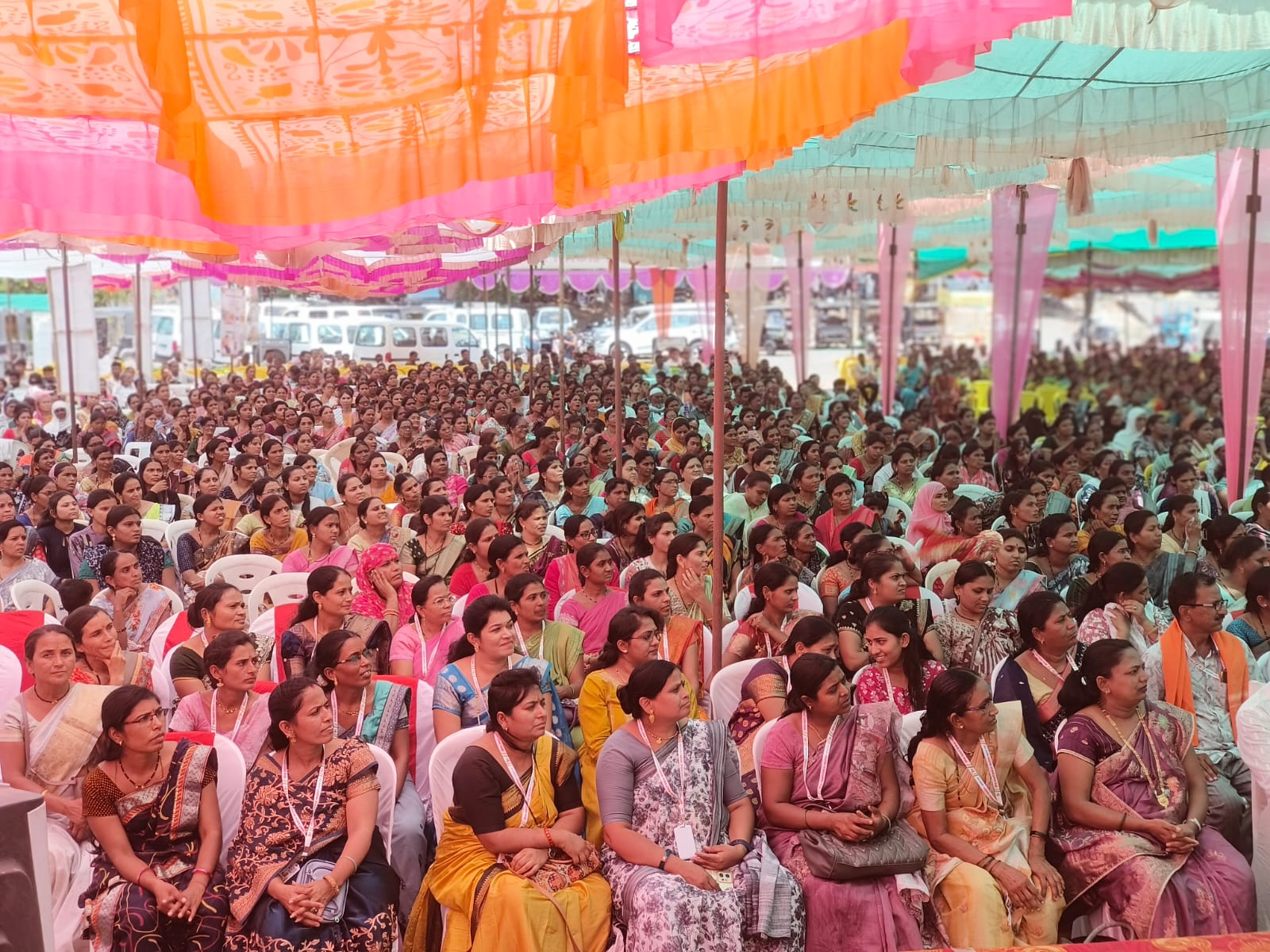
Quick answer: In rural India, women are usually the last in the family to get a health check-up and the first to notice when someone else is unwell. Health ATMs change that equation by bringing 60+ diagnostic tests, an instant AI health report and a doctor teleconsultation into the village itself — in under 10 minutes, in the local language, without a day's travel or wage loss. At the first Clinics on Cloud roadshow in Satara, over 1,000 people turned up, and women led the queue, the questions and the follow-up.
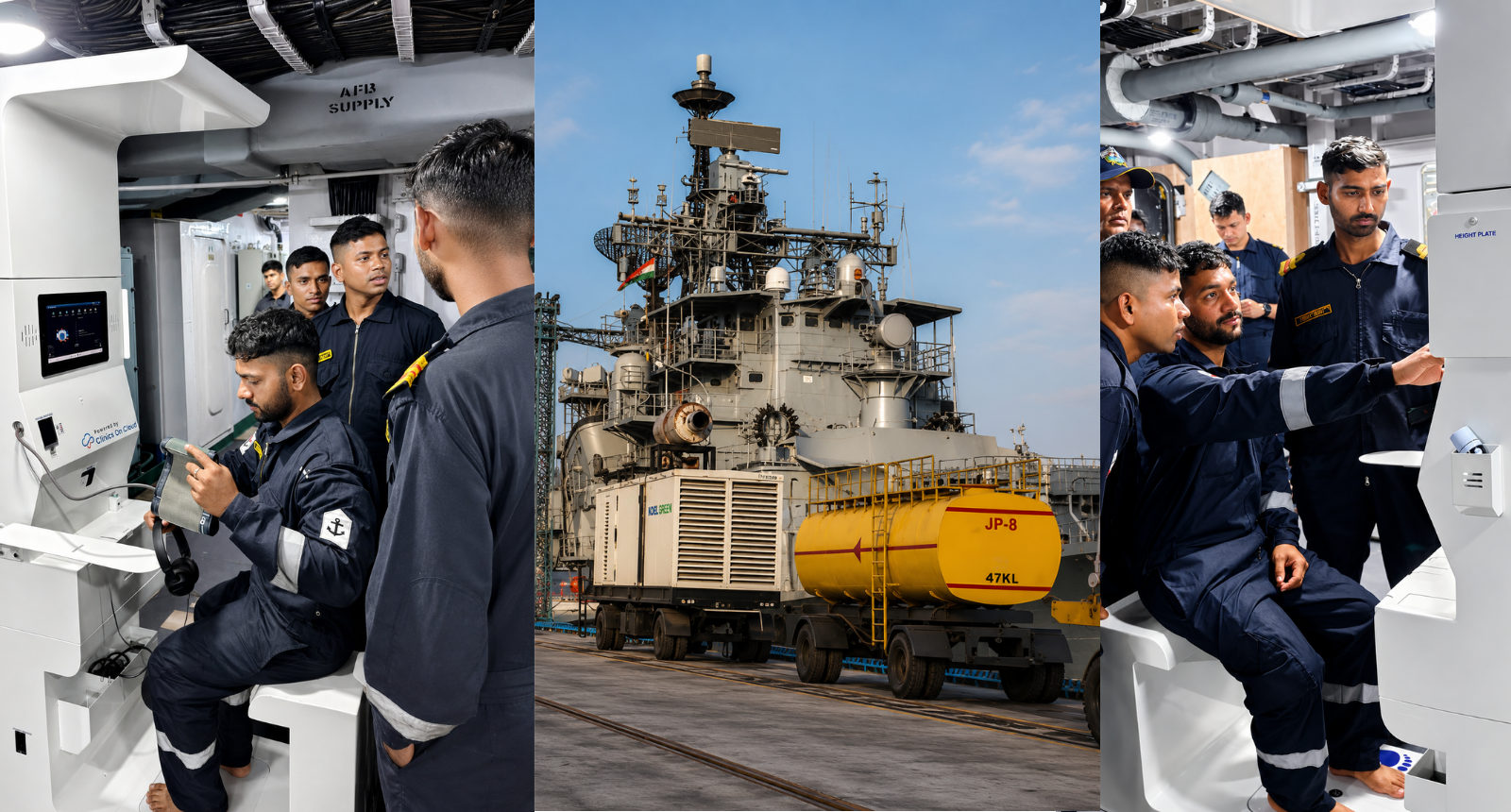
Discover how Clinics On Cloud Health Kiosks are enabling preventive screening, digital health records, telemedicine and connected healthcare for Indian Navy personnel serving at sea.
A Health ATM brings preventive screening into the village, removing the travel, wage loss and waiting that stop rural residents from getting screened. A Clinics On Cloud unit measures 65+ clinical parameters across 14 specialties in 10 minutes, works offline, needs no skilled operator, and can connect an abnormal result to a doctor by telemedicine without a further journey.
Does a Health ATM work without electricity or internet?
Clinics On Cloud Health ATMs are offline-capable and carry 3 to 4 days of battery backup, so a full screening session completes during a power cut or with no mobile data. Records sync when connectivity returns. Live telemedicine consultation does require a connection; where connectivity is absent, programmes usually schedule physician review instead.
Who operates a Health ATM in a village?
No skilled operator is required. The unit guides the user through the session with a multilingual touchscreen and audio-visual prompts. In practice most rural sites still nominate a custodian, often an ASHA or ANM worker, panchayat staff member or pharmacist, to encourage attendance, manage consumables and follow up on flagged results.
Can a Health ATM replace a doctor in a rural area?
No. A Health ATM screens and flags; it does not diagnose, treat, cure or prevent any condition. Clinics On Cloud is not a diagnostic laboratory. The unit is the front end of a referral pathway, using integrated telemedicine and eSanjeevani access to connect a flagged result to a qualified physician who makes the clinical decision.
How much does a health ATM for rural India cost?
Indicative Health ATM pricing starts from ₹6,00,000 and varies with configuration, the parameter set selected, connectivity options and service terms. Rural programmes are usually funded by a state health department, a National Health Mission programme, a CSR budget or an NGO rather than by the individual. Contact the Clinics On Cloud team for a configuration-specific quotation.
Where should a Health ATM be installed in a rural area?
The strongest sites are places villagers already visit: a Primary Health Centre, a sub-centre, a gram panchayat building or a pharmacy with daily footfall. For scattered habitations and hilly or tribal terrain, a Mobile Medical Unit covering a route works better than a fixed unit, and a portable Box Clinic suits time-bound camps with no infrastructure.
What happens after an abnormal result in a village?
The person receives a colour-coded report by print, SMS, email or WhatsApp, and an abnormal reading can trigger a telemedicine consultation at the point of screening. The result can be linked to the person’s ABHA number under the Ayushman Bharat Digital Mission so a clinician elsewhere can see it. Results are indicative and are not a diagnosis.
How accurate is a Health ATM?
Clinics On Cloud states device accuracy of 90-95%, depending on the specific test and device, under correct usage, calibration and patient preparation. Those conditions carry real weight in rural deployments, where calibration schedules and consumable handling determine whether a fleet produces usable data. Confirmatory testing remains a laboratory function.
Get In Touch
Healthcare is a right. Not a privilege.
We started Clinics on Cloud with a simple belief - that the quality of your healthcare should not depend on your postcode. Whether you're a government, corporate, NGO or entrepreneur - we built this for you.
Call us
+91 8999 073 447
Mon - Sat · 9 AM to 6 PM IST
Write to us
sales@clinicsoncloud.com
Partnerships · Deployments · Support
Visit us online
www.clinicsoncloud.com
Products · Case Studies · News
Find us
Nighoje, Chakan MIDC
Pune, Maharashtra - 410501, India
Built for every kind of health partner.
Government Body Corporate / HR Team NGO / CSR Partner Hospital or Clinic Defence Organisation International Partner Investor / Distributor Rural Entrepreneur
 Entry · HA-72Health ATM