HomeBlogWhen Women Lead, Healthcare Reaches Everyone: What Satara Taught Us About Women's Health in Rural India
Deep Dive15 September 20265 min read
When Women Lead, Healthcare Reaches Everyone: What Satara Taught Us About Women's Health in Rural India
Quick answer: In rural India, women are usually the last in the family to get a health check-up and the first to notice when someone else is unwell. Health ATMs change that equation by bringing 60+ diagnostic tests, an instant AI health report and a doctor teleconsultation into the village itself — in under 10 minutes, in the local language, without a day's travel or wage loss. At the first Clinics on Cloud roadshow in Satara, over 1,000 people turned up, and women led the queue, the questions and the follow-up.
CCClinics On Cloud TeamPublished from Pune, India
Health ATM
It had to begin in Satara
The first flag had to be planted somewhere. We chose the land of Chhatrapati Shivaji Maharaj — a region that has always stood for vision, courage and building from the ground up.
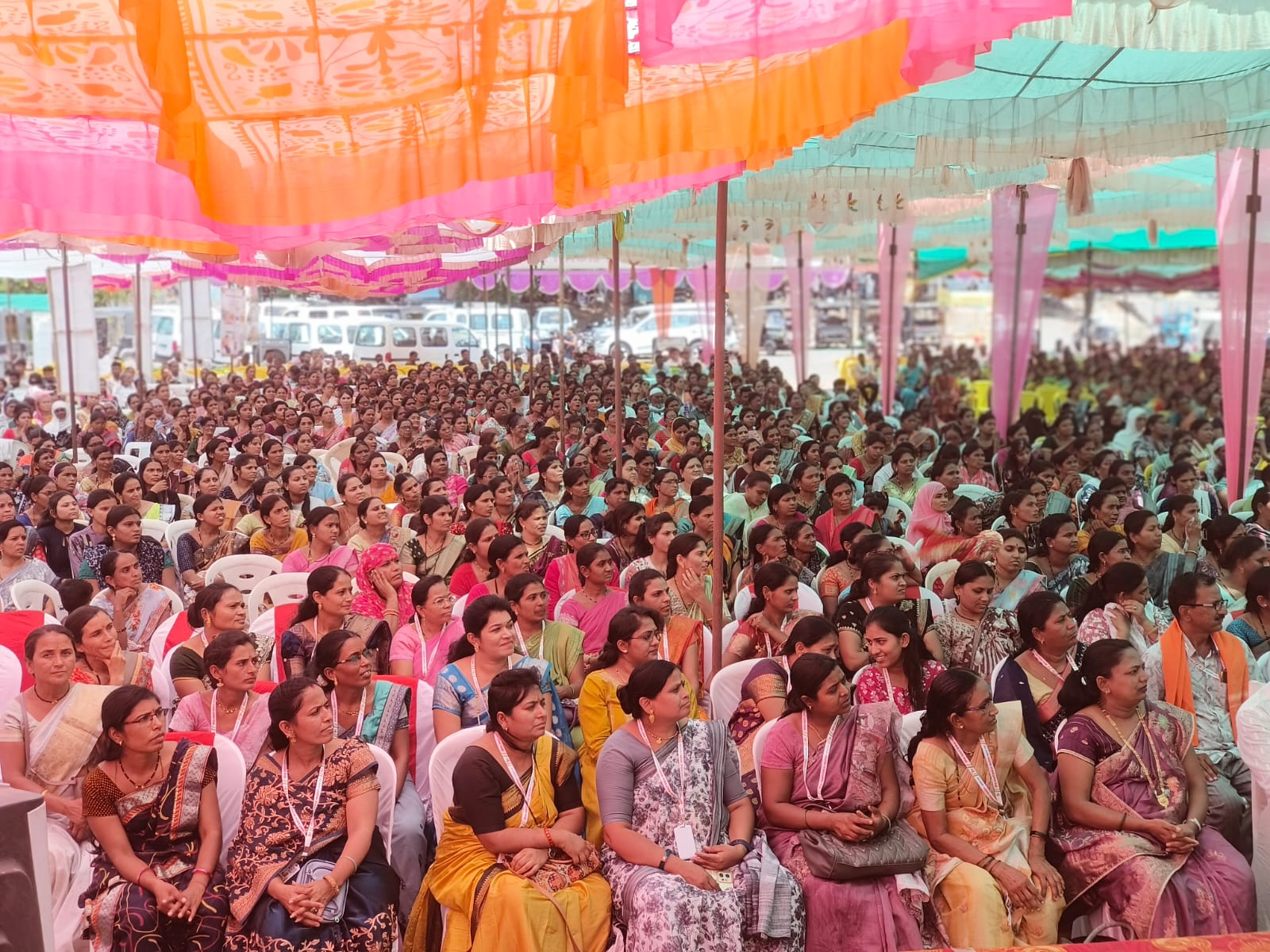
More than 1,000 people gathered. Nobody was pushed. Nobody was promised anything. They came because, for the first time, something new had finally reached them. They came out of curiosity. They came to experience a Health ATM with their own hands. And then the conversation shifted in a way we did not script. People did not stop at getting screened. They started asking what comes next:
"How do we bring this to our village?" "How do we make this accessible to our people?"
That is not adoption. That is ownership.
Why women stood at the front of the line
The most striking pattern of the day was not the footfall. It was who drove it.
Women came first. Women brought their mothers-in-law, their neighbours, their children. Women asked the sharpest operational questions: where would the machine sit, who would run it, what would it cost, how often could people use it.
This tracks with everything we have seen across 3,500+ Health ATM deployments. When a woman in a household understands a health intervention, it stops being a one-time event and becomes a habit for the whole family. Change does not stay contained. It spreads across families, across communities, across generations.
What is the real barrier to women's healthcare in rural India?
It is rarely a lack of willingness. It is a stack of small frictions that add up to "not today":
Barrier
What it looks like on the ground
Distance
The nearest diagnostic lab is 15–40 km away
Time and wage loss
A basic blood test costs a full working day
Cost
A screening panel can exceed a week's household health budget
Permission and mobility
Travelling alone to a district town is not always an option
Privacy
Discussing symptoms in a crowded OPD is a deterrent
Deprioritisation
Her check-up gets postponed until someone else's is done
The clinical cost of these frictions is significant. Anaemia remains widespread among Indian women of reproductive age. Breast cancer is the most commonly diagnosed cancer among Indian women, and a large share of cases are still detected at an advanced stage. Hypertension, thyroid disorders and diabetes frequently go undetected in women until a complication forces a hospital visit.
Almost all of these are conditions that early screening catches.
How does a Health ATM solve for women specifically?
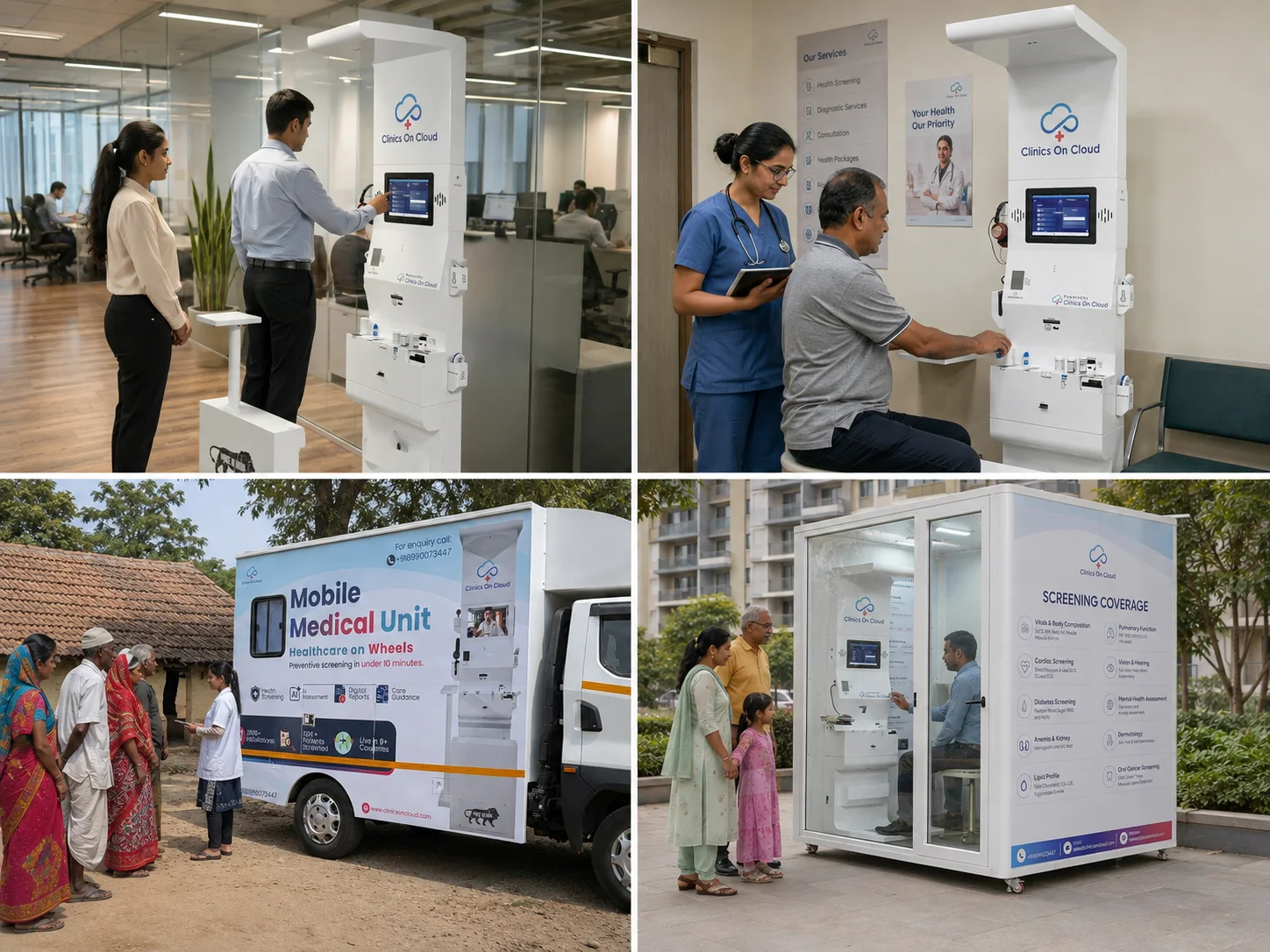
A Clinics on Cloud Health ATM is a compact, AI-powered digital health kiosk that delivers a full preventive check-up at the point where people already are — a gram panchayat office, a PHC, an anganwadi centre, a school, a market.
For a woman in a village, the practical difference is this:
65+ health parameters in under 10 minutes — including blood pressure, haemoglobin, blood sugar, BMI, SpO2, temperature, ECG and more
No travel, no wage loss— the kiosk is within walking distance, not a bus ride away
Voice-guided, multilingual interface — usable in Marathi and other regional languages, including by first-time users with low digital literacy
Private, dignified screening — a self-guided process instead of a public queue
Instant AI health report — delivered on WhatsApp and email, so it can be shown to any doctor later
Teleconsultation on the spot — a qualified doctor can see live vitals remotely and issue a digital prescription
A continuous health record — every visit builds a cloud-based history instead of a lost paper slip
Each village kiosk operates as a spoke connected to hospitals and specialists in urban hubs, so a screening does not dead-end at a number on a printout. It routes into actual care.
From access to ownership: women as health entrepreneurs
The Satara question — "how do we bring this to our village?" — points at the more durable opportunity.
A Health ATM does not only serve women. It can be run by them:
ASHA and anganwadi workers use the kiosk as a screening tool, dramatically increasing the number of households they can cover meaningfully.
Self-Help Groups (SHGs)can own and operate a kiosk as a micro-enterprise, generating income while delivering a public good.
Women operators make other women far more likely to walk in, get screened and come back.
Local panchayats and CSR partners get measurable, auditable health data for their own populations.
This is where a screening drive stops being a campaign and starts being infrastructure.
What this means if you are planning a health programme
For gram panchayats and district administrations: a hub-and-spoke Health ATM network extends primary care coverage without building new physical infrastructure or recruiting new clinical staff.
For CSR and foundation teams:women's preventive screening is one of the highest-leverage health interventions available, and a kiosk produces per-beneficiary data you can actually report against.
For hospitals and diagnostic chains: village kiosks function as a legitimate, continuous patient-discovery layer feeding verified cases into your specialists.
For NGOs and SHG federations:the operating model can be owned locally, creating livelihood alongside health outcomes.
Satara was stop one
Satara did not just host the first roadshow. It showed us what happens when access meets intent.
Over 1,000 people experienced it. Women led it. And the conversation moved from "what is this" to "how do we own this" within a single day.
This is much bigger than a campaign. This is a beginning.
Next stop: loading…
Bring a Health ATM to your community
If you represent a gram panchayat, district health office, CSR programme, hospital, NGO or SHG federation and want to set up a Health ATM in your area, talk to the Clinics on Cloud team. We will help you size the deployment, plan the screening programme and train local operators
health-atmHealth ATMDeep Dive
Join the conversation
Leave a comment.
Add your comment
Your email is never published. Comments appear after a quick review.
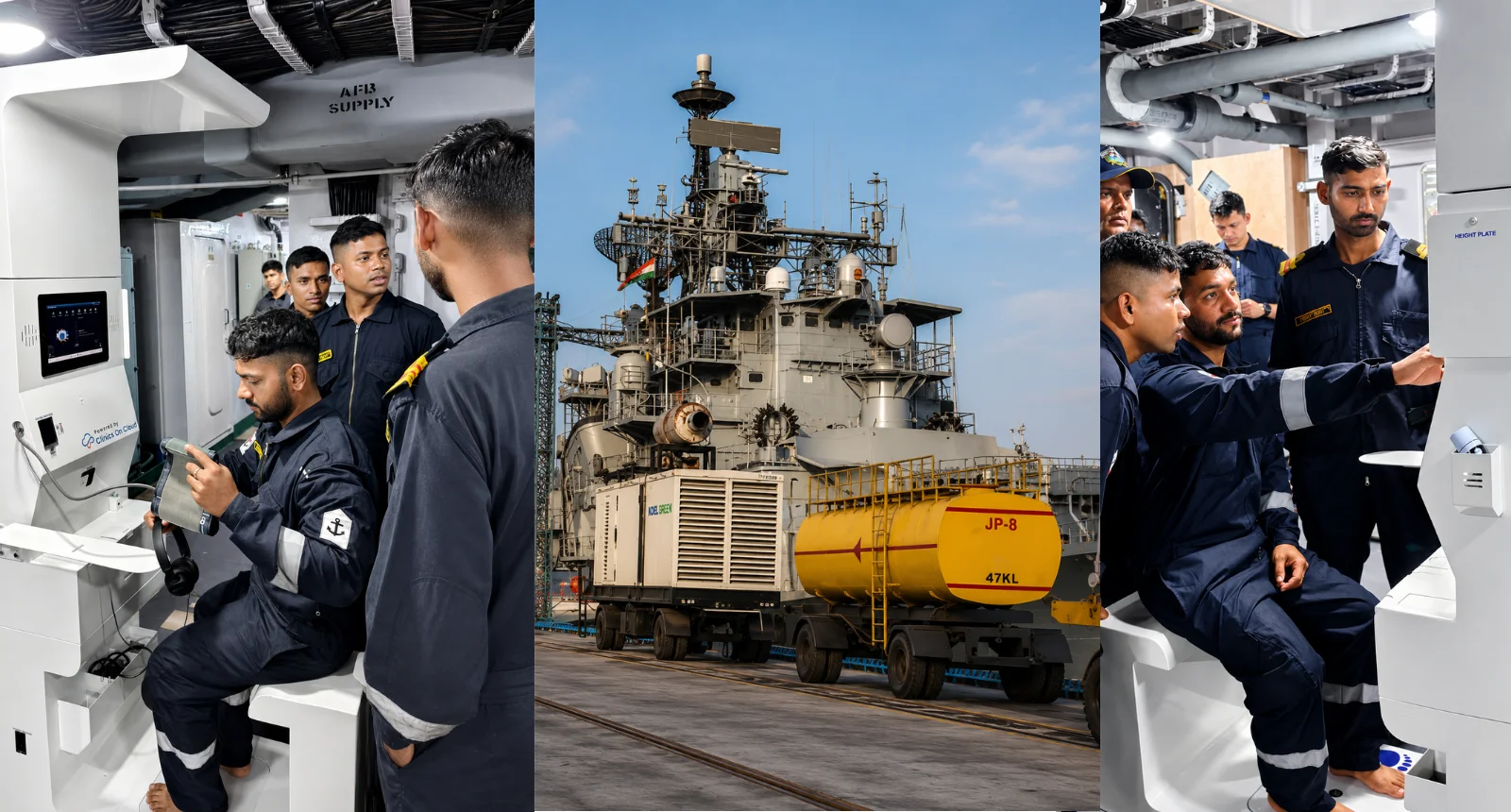
Discover how Clinics On Cloud Health Kiosks are enabling preventive screening, digital health records, telemedicine and connected healthcare for Indian Navy personnel serving at sea.
Looking for the best Health ATM in India? Discover how to choose the best Health ATM manufacturer in India and explore Health ATM, health kiosk, telemedicine and preventive healthcare solutions from Clinics On Cloud.
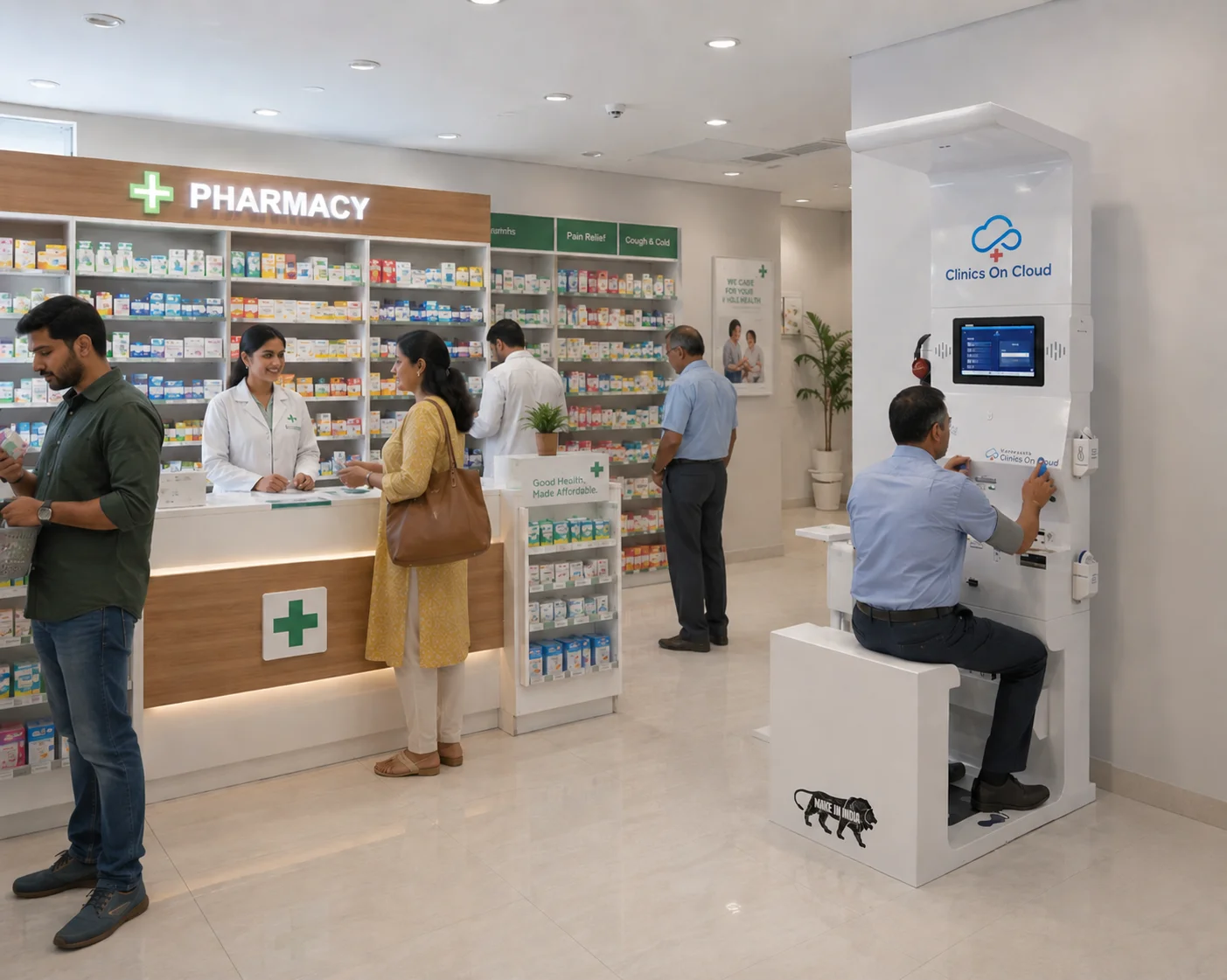
We're thrilled to announce a groundbreaking new installation at Pharmacy by PharmDrive that marks a turning point in how accessible healthcare is delivered.
By integrating Clinics on Cloud Health Kiosks into Pharmacy by PharmDrive locations, we're transforming traditional pharmacies into something far more powerful: intelligent healthcare microclinics.
This isn't just about adding a machine to a pharmacy. It's about fundamentally reimagining what a healthcare access point looks like.
We started Clinics on Cloud with a simple belief - that the quality of your healthcare should not depend on your postcode. Whether you're a government, corporate, NGO or entrepreneur - we built this for you.
Call us
+91 8999 073 447
Mon - Sat · 9 AM to 6 PM IST
Write to us
sales@clinicsoncloud.com
Partnerships · Deployments · Support
Visit us online
www.clinicsoncloud.com
Products · Case Studies · News
Find us
Nighoje, Chakan MIDC
Pune, Maharashtra - 410501, India
Built for every kind of health partner.
Government Body Corporate / HR Team NGO / CSR Partner Hospital or Clinic Defence Organisation International Partner Investor / Distributor Rural Entrepreneur
 Entry · HA-17Health ATM