 Entry · HA-95Health ATM
Health Kiosk meaning in Hindi || हेल्थ कियोस्क का मतलब
Health Kiosk का मतलब (सरल हिंदी) Health Kiosk एक डिजिटल मशीन/स्टेशन है जहाँ कुछ मिनटों में बेसिक हेल्थ चेकअप और
Read story 5 min
Ear health is a vital yet often overlooked aspect of overall wellness. Hearing impairments and ear disorders can significantly impact communication, education, and quality of life.
An audiometry test is a hearing screening in which a person signals which pure tones they can hear across a range of frequencies and volumes, producing a chart called an audiogram. Clinics On Cloud pairs audiometry with digital otoscope imaging inside a 10-minute checkup covering 65+ clinical parameters across 14 specialties.
An audiometry test is a hearing screening that presents pure tones at different pitches and volumes through headphones and records the quietest tone a person reports hearing at each pitch, ear by ear. The plotted result is called an audiogram.
The test does not treat anything and does not by itself name a cause. It describes hearing sensitivity at a moment in time, and an audiologist or ENT specialist interprets that description alongside history, examination and further testing.
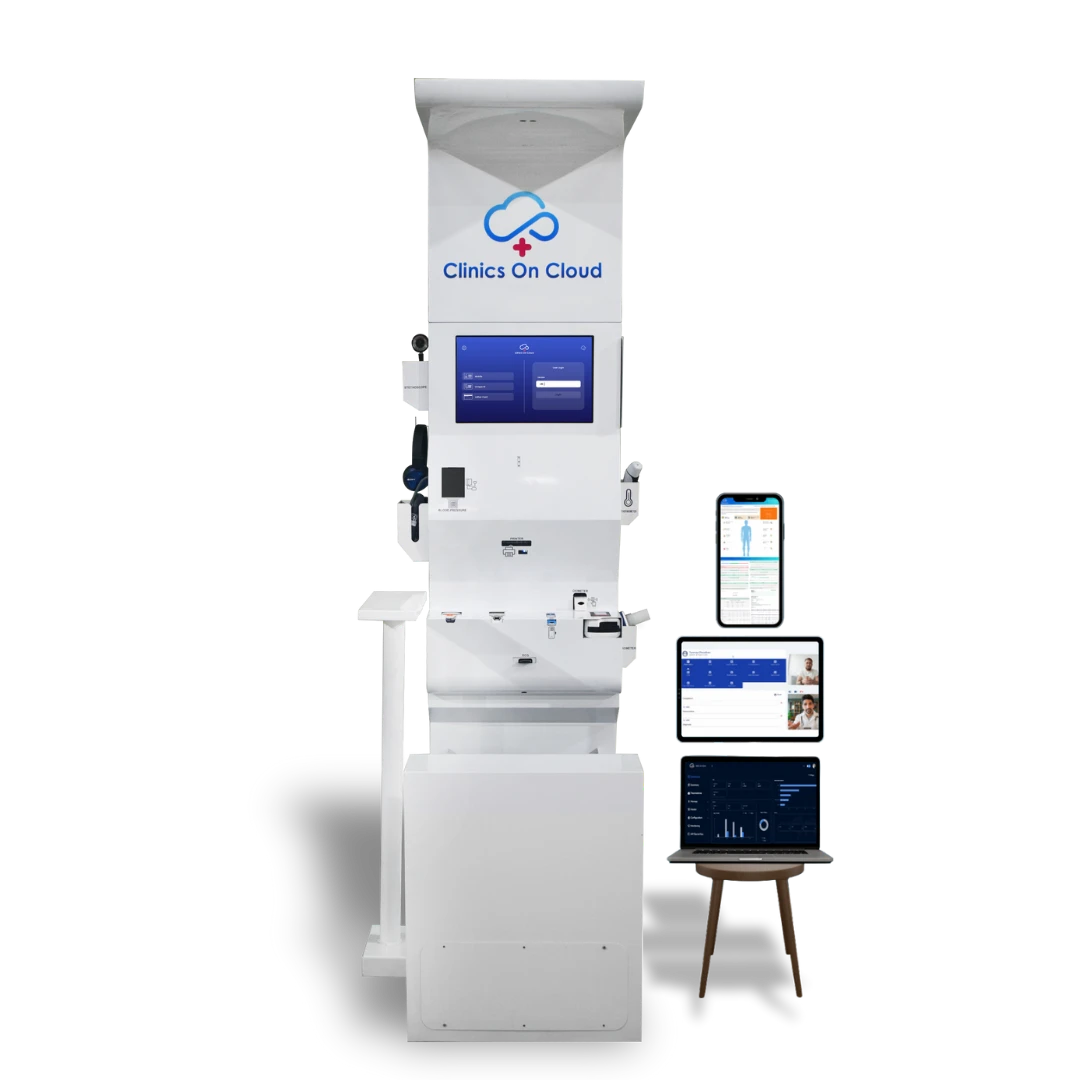
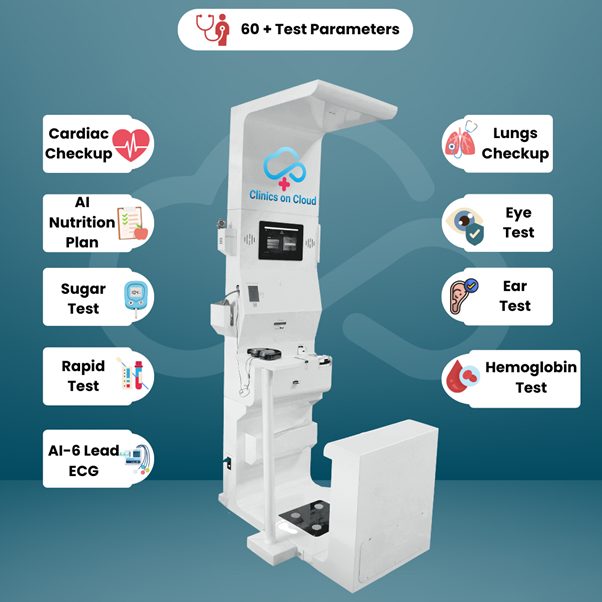
Clinics On Cloud builds two ear health parameters into its kiosks: audiometry and otoscope ear visualisation. Clinics On Cloud is India’s first CDSCO-licensed Health ATM and Health Kiosk manufacturer, based at Nighoje, Chakan MIDC, Pune, and screens hearing in the same session as vitals, vision, cardiac and point-of-care tests.
Hearing is the parameter people postpone longest. Reduced hearing arrives gradually, is easy to compensate for socially, and rarely hurts. Screening at the workplace or community camp is how that pattern gets interrupted.
| Parameter | What it captures | How it is captured | What it can indicate | What it cannot do |
|---|---|---|---|---|
| Audiometry (pure tone screening) | The quietest tone heard at each tested pitch, for each ear separately | Calibrated headphones, tones presented across a range of frequencies, user responds on the touchscreen | Reduced hearing sensitivity that warrants professional assessment | Name a cause, grade a disability, or serve as a fitness certificate |
| Otoscope ear visualisation | High-resolution digital images of the ear canal and the eardrum | Digital otoscope with a single-use speculum, images shown on screen and stored in the record | Visible findings that a clinician should review, such as obstruction or an abnormal-looking eardrum | Diagnose an infection or any ear condition on its own |
| Combined screening record | Audiogram plus paired ear images in one longitudinal record | Stored per person, comparable year on year | Change over time in a noise-exposed worker | Replace an audiologist or ENT examination |
The pairing matters. A screening audiogram alone tells you a person heard less. The paired image gives the reviewing clinician immediate context for why that might be, starting with the most ordinary explanation of all, a blocked canal.
Clinics On Cloud states device accuracy of 90 to 95 percent depending on test and device, under correct usage, calibration and patient preparation. For audiometry, correct usage is mostly environment: run the test in the quietest room available, not next to the shop floor, and repeat any test where the person was distracted. The exact frequency set the module presents is a configuration detail, so confirm it with the Clinics On Cloud team against your occupational health protocol before standardising a programme on it.
An otoscope examination is a visual inspection of the ear canal and the eardrum using a lighted instrument, performed on a Clinics On Cloud kiosk with a digital otoscope that captures high-resolution images. The images appear on screen and are saved to the person’s record.
The device captures pictures. It does not read them. What the images enable is a clinician looking at a clear view of an ear canal and tympanic membrane during a teleconsultation, without the person travelling to an ENT clinic first.
Each examination uses a single-use speculum, discarded after one person. The examination is painless and takes under a minute per ear when performed by a trained operator.
The most common practical finding is also the most mundane: an ear canal blocked with wax. That matters for the screening itself, because an obstructed canal can affect a hearing test, and it matters for the person, because the remedy is straightforward once a qualified clinician has looked. Do not attempt to clear an ear canal yourself, and do not put anything into the ear on the basis of a screening image.
A screening audiogram answers how much a person heard. An otoscope image gives the reviewing clinician the first look at why. Run separately, the two produce two appointments. Run together, they produce one usable clinical picture.
This pairing is what makes remote ear review viable. A doctor on a video call cannot look inside an ear. A doctor reviewing a stored, well-lit image of the canal and eardrum alongside an audiogram can judge far better who needs an in-person ENT appointment. The same image-plus-teleconsultation model runs through skin, hair and nail imaging for teledermatology.
A common workplace rule of thumb is that if people have to raise their voices to be understood at arm’s length, the area is worth assessing for noise. Treat that as a prompt to involve your occupational health physician, not as a measurement.
Noise-induced hearing loss is the strongest reason Indian employers buy hearing screening. It develops slowly, it is not reversible, and the worker rarely reports it early, which is precisely the combination that periodic screening exists to address.
Occupational health obligations for Indian factories sit under the Factories Act, 1948 and the applicable state factory rules, with mining workforces overseen by the Directorate General of Mines Safety. Noise exposure limits and periodic medical examination requirements vary by process and jurisdiction, so confirm your specific obligations with your factory medical officer or occupational health physician. No exposure limits or thresholds are stated on this page, because they belong in your statutory compliance document, not in a blog post.
The operational problem employers face is throughput. Sending workers off-site to an audiologist means lost shifts, low turnout and no baseline for most of the workforce. A kiosk at the plant gate reverses that: screening happens during the shift, and every worker gets a dated audiogram that can be compared next year.
Three deployment patterns work in practice:
Screen hearing alongside pulmonary function testing and what PEF, FVC and FEV1 measure and far vision, near vision and colour blindness screening, since the same worker in the same visit usually needs all three.
A screening audiogram within the expected pattern indicates that hearing sensitivity looked unremarkable under test conditions on that day. It does not rule out ear disease, and it does not mean noise protection can be relaxed.
A flagged audiogram indicates reduced sensitivity at one or more tested pitches and that an audiologist or ENT specialist should assess you. It does not tell you the cause, the type or the permanence of that change, and a screening device is not the place to learn any of those things. Formal audiometry in a sound-treated booth, with clinical examination, is the next step.
An otoscope image showing something unusual indicates that a clinician should look at it. Nothing more should be read into an image by the person screened, and no ear drops, oils, syringing or cleaning should be attempted on the basis of one.
Sudden hearing loss, ear pain, discharge, dizziness or ringing that starts abruptly needs prompt medical attention rather than a wait for the next screening round. Across the Clinics On Cloud network, 2 lakh+ abnormalities have been detected and routed for early intervention, and the referral is the part that produced the outcome.
Kiosk audiometry is a screening test performed in an ordinary room. Diagnostic audiometry is performed in a sound-treated booth by an audiologist, includes air and bone conduction testing, speech testing and tympanometry, and produces a clinical assessment. These are different things with different purposes.
Clinics On Cloud is not a diagnostic laboratory and does not replace an audiologist or an ENT department. What the kiosk offers is coverage: the whole workforce, the whole school, the whole village, screened and dated, with a referral pathway attached and a record that supports comparison over time.
For the wider parameter picture, see clinical parameters and tests offered by a health kiosk.
To plan hearing screening for a noise-exposed workforce, a school programme or a community camp, call +91 8999 073 447, Monday to Saturday, 9:00 to 18:00 IST, or email sales@clinicsoncloud.com. Bring your site list, workforce size, screening frequency and the audiologist or ENT provider you will refer flagged cases to.
Clinics On Cloud provides preventive health screening and is not a diagnostic laboratory. Screening results are indicative and are not a diagnosis. Always consult a qualified physician before acting on any health information.
Your email is never published. Comments appear after a quick review.
Entry · HA-95Health ATMHealth Kiosk का मतलब (सरल हिंदी) Health Kiosk एक डिजिटल मशीन/स्टेशन है जहाँ कुछ मिनटों में बेसिक हेल्थ चेकअप और
Clinical Parameters and Tests Offered by Health Kiosk In the era of preventive health, early detection and comprehensive screening are
 Entry · HA-11Health ATM
“Health Kiosk “General Health Tests Introduction General health tests are a cornerstone of preventive healthcare, providing baseline insights into an
An audiometry test is a hearing screening that plays pure tones at different pitches and volumes through headphones and records the quietest tone a person reports hearing in each ear. The result is plotted as an audiogram. A screening audiometry test indicates whether professional assessment is needed; it is not a diagnosis of hearing loss.
No. A Clinics On Cloud kiosk screens hearing and flags results for review. Diagnosis of hearing loss, including its type, degree and cause, is made by an audiologist or ENT specialist using diagnostic audiometry in a sound-treated booth along with clinical examination. The kiosk’s role is to identify who needs that assessment and connect them through telemedicine.
An otoscope examination is a visual inspection of the ear canal and eardrum. The Clinics On Cloud digital otoscope captures high-resolution images using a single-use speculum and stores them in the person’s record. The device captures images; a qualified clinician interprets them, usually during a teleconsultation, and decides whether an in-person ENT review is required.
It can. An ear canal obstructed by wax may affect a hearing screening result, which is one reason audiometry and otoscope imaging are performed together on the same kiosk. Never attempt to clear your own ear canal or insert anything into the ear. Have a qualified clinician review the images and advise.
Frequency should follow your statutory occupational health requirements and the advice of your factory medical officer or occupational health physician. Indian obligations sit under the Factories Act, 1948 and applicable state rules, with mining workforces overseen by the Directorate General of Mines Safety. A dated baseline audiogram for every noise-exposed worker is the practical starting point.
They serve different purposes. Kiosk screening gives you coverage across an entire workforce or community in a day, with a dated audiogram and a referral pathway. An audiologist gives diagnostic depth in a sound-treated booth with air conduction, bone conduction and speech testing. Screening finds the people who need the audiologist.
Pricing varies by configuration, since audiometry and otoscope are usually specified alongside vision, spirometry, vitals and point-of-care tests for occupational health use. Indicative Health ATM pricing starts from ₹6,00,000. Share your site count, workforce size and screening frequency with the Clinics On Cloud team for a configured quote.
Clinics On Cloud, the brand of SehatPro Technologies Pvt Ltd, manufactures screening kiosks at Nighoje, Chakan MIDC, Pune and is India’s first CDSCO-licensed Health ATM and Health Kiosk manufacturer. Its deployments span defence, government and large corporate occupational health programmes, with 3,500+ installations across 200+ cities and 8+ countries.
We started Clinics on Cloud with a simple belief - that the quality of your healthcare should not depend on your postcode. Whether you're a government, corporate, NGO or entrepreneur - we built this for you.
+91 8999 073 447
Mon - Sat · 9 AM to 6 PM IST
sales@clinicsoncloud.com
Partnerships · Deployments · Support
www.clinicsoncloud.com
Products · Case Studies · News
Nighoje, Chakan MIDC
Pune, Maharashtra - 410501, India