

Health Kiosk in Reasi — How the Vaishno Devi Shrine Board Put a Health ATM on India’s Most Walked Pilgrimage Route
Every year, close to a crore people walk to Vaishno Devi.
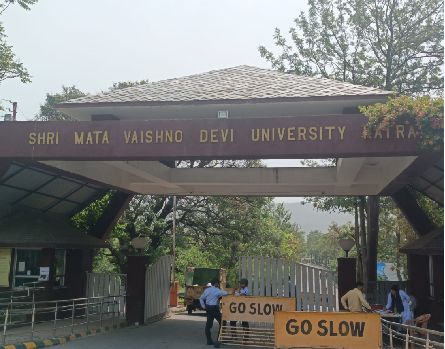
That number is not a rough estimate. In 2024, exactly 94.83 lakh pilgrims made the journey — through Katra, up the Trikuta Hills of Reasi district, across a 14-kilometre mountain track at altitudes touching 5,200 feet. On weekdays, the count reaches 40,000 pilgrims per day. On weekends and during Navratri, the numbers go higher still.
These are not tourists. They are people of all ages, many in their 60s, 70s and beyond — walking steep gradients, in summer heat or winter cold, often for the first time in years. Cardiac events, altitude-related oxygen drops, dehydration, and undetected hypertension on a mountain track far from a hospital are not hypothetical risks. They are documented, recurring medical emergencies.
The Shri Mata Vaishno Devi Shrine Board understood this. And it acted.
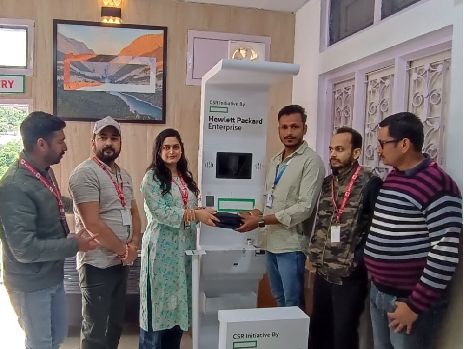
In April 2024, the Shrine Board — under the direct directions of Lieutenant Governor Manoj Sinha — signed a formal MoU for the installation of nine cloud-enabled Health ATMs along the pilgrimage track in Reasi district, plus one dedicated Telemedicine Studio at Katra, the yatra’s base camp. Business Standard covered it. The Tribune India reported it. It became the first documented instance of a major Indian pilgrimage authority deploying Health ATMs as a permanent infrastructure element of the yatra route.
This is what Clinics On Cloud’s Health Kiosk looks like when it operates at national scale — on a route walked by nearly a crore people a year, managed by one of India’s most resourced religious trusts, and backed by the J&K Lieutenant Governor’s office.
📰 THE VAISHNO DEVI HEALTH ATM STORY — As Covered by National and Regional Media
These are independently reported editorial stories — not press releases — from publications that covered the Shrine Board’s Health ATM deployment as a significant public health development.
▸ Business Standard: “Shrine Board Inks Pact to Set Up Health ATMs on Vaishno Devi Temple Track”
Published 6 April 2024 via PTI. Business Standard reported the MoU signing between SMVDSB and Hewlett Packard Enterprise — covering the specific commitment of nine Health ATMs along the yatra track plus one Telemedicine Studio at Katra. The article confirmed the initiative was undertaken ‘as per the directions of Lt Governor Manoj Sinha’ as part of HPE’s CSR programme to ‘enhance healthcare accessibility for pilgrims, stakeholders and local inhabitants on the yatra track round the clock.’
▸ The Tribune India: “Health ATMs to Be Set Up on Vaishno Devi Shrine Route”
Tribune India — one of J&K’s most trusted regional news publications — covered the same announcement, confirming the 50+ parameter capability and the 10-minute screening time. The Tribune’s readership in Jammu & Kashmir gives this coverage particular credibility with local audiences searching for health services in Reasi district.
▸ Greater Kashmir / ETV Bharat: “40,000 Pilgrims Visit Mata Vaishno Devi Daily — Shrine Board Expands Facilities”
Greater Kashmir documented the Shrine Board CEO’s statement that nearly 40,000 devotees visit daily — with numbers rising on weekends and Navratri. This context confirms the scale of the health screening need that the Health ATMs are deployed to serve.
▸ India TV News: “How Many Pilgrims Visited Vaishno Devi Shrine in 2024?”
India TV News reported 94.83 lakh pilgrims in 2024 — the second highest footfall in a decade — confirming that the Vaishno Devi yatra track is one of India’s highest-footfall public health screening environments.
Understanding Reasi District — Where Pilgrimage Meets Public Health
Reasi is a district of Jammu & Kashmir with a dual identity unlike any other in India. It is simultaneously a quiet administrative district with a predominantly rural population — and the gateway to Vaishno Devi, one of the country’s most visited pilgrimage sites. These two identities create a healthcare challenge that no standard model adequately addresses.
94.83 lakh Pilgrims visited Vaishno Devi in 2024 alone — 2nd highest in a decade (Shrine Board CEO, Anshul Garg)
40,000 per day Average daily pilgrims at the shrine — rising further on weekends and festival seasons (SMVDSB, 2025)
50,000 per day NGT-mandated daily cap on pilgrims — requiring systematic triage and health management at scale
9 cloud-enabled units Health ATMs installed along the yatra track — committed by SMVDSB MoU, April 2024
1,585 metres (~5,200 ft) Altitude of the Vaishno Devi Bhawan — creating genuine cardiac and respiratory risk for pilgrims
14 km on foot Distance from Katra base camp to the shrine — walked by every pilgrim, often in a single stretch
The healthcare challenge in Reasi is therefore not one problem — it is two overlapping problems that must be solved with the same infrastructure:
Resident population healthcare
Reasi district’s permanent residents face the same NCD burden as rural communities across J&K — hypertension, diabetes, cardiac risk among adults, anaemia among women and elderly. Limited diagnostic infrastructure means these conditions are frequently undetected until late stage.
Pilgrim healthcare along the yatra track
Up to 50,000 people per day — of all ages, many with undiagnosed chronic conditions — walk a 14-km mountain route at 1,585 metres altitude. The physical exertion combined with altitude, temperature variation, dehydration, and pre-existing conditions creates a predictable pattern of cardiac events, oxygen desaturation, blood pressure spikes, and heat-related emergencies.
Why hypertension is the silent emergency on the yatra route: I Feel Fine — So Why Did My Doctor Say My Blood Pressure Is High? — The medical reality of undetected hypertension in physically demanding conditions.
Why ECG screening matters on a mountain track: Why Is My Heart Racing for No Reason? What Your ECG Can Tell You — How ECG readings identify cardiac risk before it becomes an emergency.
The Shrine Board’s Health ATM Deployment — A Formal Government Commitment
The Vaishno Devi Health ATM deployment is not an informal wellness initiative. It is a formal institutional commitment — an MoU signed at the highest level of the Shrine Board’s administration, with clear operational parameters documented in national media.
| Deployment Detail | Information |
| Institution | Shri Mata Vaishno Devi Shrine Board (SMVDSB) |
| Directed by | Lt Governor Manoj Sinha (Chairman, SMVDSB) |
| Implementation partner | Hewlett Packard Enterprise (HPE) — under CSR mandate |
| MoU signed | April 2024 |
| Health ATMs deployed | 9 cloud-enabled units along the Reasi yatra track |
| Telemedicine infrastructure | 1 Telemedicine Studio at Katra (the base camp) |
| Parameters screened | 50+ per patient — including BP, blood glucose, temperature, SpO2, BMI, body fat, dehydration, pulse rate |
| Screening speed | Complete assessment in under 10 minutes |
| Operational hours | Round the clock (24/7) — covering night yatra and early morning pilgrim traffic |
| Population served | Pilgrims, local Reasi residents, yatra track workers and stakeholders |
| Connectivity | Cloud-enabled — reports accessible remotely through telemedicine platform |
| Media coverage | Business Standard (PTI), The Tribune India, Greater Kashmir |
The decision to make these Health ATMs operational round the clock is significant. The Vaishno Devi yatra runs 24 hours — pilgrims arrive and depart at all hours, and medical emergencies follow no schedule. The 24/7 Health ATM infrastructure matches the operational reality of the route.
Primary source: Business Standard — Shrine Board Inks Pact to Set Up Health ATMs on Vaishno Devi Temple Track (April 6, 2024) — PTI-reported MoU details, parameters, and LG Manoj Sinha’s directive.
Regional coverage: The Tribune India — Health ATMs to Be Set Up on Vaishno Devi Shrine Route — J&K’s most trusted regional newspaper confirming the deployment.
What a Clinics On Cloud Health ATM Does — and Why Every Parameter Matters on This Route
Each of the 50+ parameters measured by the Health ATM along the Vaishno Devi route has a specific clinical reason for being there. This is not a generic screening list — it is a set of measurements chosen for a population under physical stress, at altitude, with a high prevalence of undetected chronic conditions.
Blood Pressure
The #1 screening priority on the yatra track. Physical exertion combined with altitude and cold temperature causes BP to rise — often dramatically in patients with pre-existing but undiagnosed hypertension. A 70-year-old pilgrim with a BP of 165/100 halfway up Trikuta Hill is a medical emergency waiting to happen. The Health ATM catches this before it does.
SpO2 (Oxygen Saturation)
At 1,585 metres, oxygen saturation drops — particularly in older pilgrims, those with respiratory conditions, and those not acclimatised to altitude. SpO2 below 94% at altitude is a clinical warning requiring rest or evacuation. The Health ATM identifies this before the pilgrim continues the ascent.
Blood Glucose
Diabetic pilgrims — and there are many, given India’s diabetes prevalence — are at risk of hypoglycaemia during strenuous walking and hyperglycaemia from dietary disruption during travel. Both are emergencies on a mountain track. Instant blood glucose monitoring at Katra and along the route enables early identification.
12-Lead ECG
Cardiac events are the most common medical emergencies on the Vaishno Devi route. The 14-km walk at altitude places sustained demand on the cardiovascular system. A 12-lead ECG identifies arrhythmias, ST changes, and other cardiac risk markers before the pilgrim begins or continues the ascent. Combined with telemedicine, an abnormal ECG result at Katra triggers an immediate cardiologist review.
Body Temperature
Temperature on the Trikuta Hills varies sharply — summer days are warm, nights are cold, and the cave shrine is consistently cold. Hypothermia risk among elderly pilgrims and heat exhaustion among those walking in summer are both real. Temperature monitoring at the base identifies pilgrims who should not proceed.
Dehydration Indicators
Dehydration is the most common condition among yatris — caused by inadequate fluid intake during the climb and exacerbated by heat or cold. The Health ATM’s dehydration parameter flags high-risk pilgrims for hydration intervention before they develop more serious symptoms.
BMI & Body Composition
For the Shrine Board’s welfare screening programmes — particularly for elderly, divyang (differently-abled), and first-time pilgrim populations — baseline BMI and body composition data helps identify individuals who may require additional support during the yatra.
Pulse Rate & Heart Rhythm
Resting pulse rate and rhythm abnormalities are rapid indicators of cardiac stress. Elevated resting pulse before beginning a 14-km mountain walk is a clinical warning sign. The Health ATM captures this in seconds.
Full product specifications: COC Health Kiosk — Technical Details & Deployment Models — Complete parameter list, device specifications, and connectivity options.
Portable deployment for the track: COC Box Clinic — A fully equipped portable clinic suitable for deployment at intermediate yatra points — Banganga, Ardhkuwari, and Bhairon Temple — without permanent infrastructure.
The Pilgrim’s Journey — What Happens at a Health ATM on the Yatra Route
The Health ATM is designed for pilgrims who may never have used a digital health device before — elderly, rural, multilingual, and often anxious about the technology. The experience is built around simplicity:
1. Pilgrim approaches the kiosk at Katra or along the route — No registration, no appointment, no paperwork. The touchscreen guides through a brief language selection — Hindi, Urdu, or English — and a few basic questions.
2. BP cuff and sensor measurements begin — The oscillometric BP device, fingertip SpO2 sensor, and pulse reader capture readings simultaneously. The pilgrim sits still for 60 seconds.
3. ECG in 30 seconds — Electrode contact at the armrests completes the 12-lead ECG. The AI engine analyses the rhythm trace in real time.
4. Blood glucose via fingertip prick — Optional but strongly recommended for older pilgrims and those with known diabetes. Result in under 60 seconds.
5. Temperature and body composition — Infrared temperature reading. BMI and body composition from the platform sensor.
6. Digital health report generated — The complete report appears on-screen. It is simultaneously sent to the Telemedicine Studio at Katra — where a doctor is available to review flagged reports in real time.
7. Automatic triage and advice — Normal results: the pilgrim receives a summary and is cleared to continue the yatra. Flagged results — high BP, low SpO2, abnormal ECG, or low blood glucose — trigger an immediate consultation with the Katra Telemedicine Studio. The doctor advises rest, intervention, or referral before the pilgrim proceeds up the mountain.
The telemedicine layer: Clinics On Cloud Telemedicine Platform — How the Katra Telemedicine Studio connects to specialist doctors and how flagged pilgrims receive remote clinical consultation.
The AI risk engine: AI-Powered Health ATM — India’s Smartest Preventive Healthcare Machine in 2026 — How the AI engine combines multiple readings to identify risk patterns that individual measurements miss.
Where the Nine Health ATMs Are Deployed — And Why These Locations
Nine cloud-enabled Health ATMs distributed across a 14-km mountain pilgrimage route is not a random placement decision. Each location is chosen based on pilgrim density, medical risk concentration, and existing infrastructure. The deployment logic follows the yatra’s documented emergency pattern:
🏘️ Katra (Base Camp)
The highest priority location — and the site of the dedicated Telemedicine Studio. All pilgrims pass through Katra before beginning the ascent. Pre-screening at Katra is the most effective intervention point: identifying high-risk pilgrims before they begin the physically demanding 14-km climb. The Shrine Board’s registration system processes thousands of Yatra Parchis (registration slips) daily at Katra — the Health ATM integrates naturally into this existing triage workflow.
🏔️ Banganga (First Rest Point)
The first significant rest point after leaving Katra. Pilgrims who have been walking for 1–2 hours often experience the first signs of cardiac or respiratory stress here. A Health ATM at Banganga allows screening of pilgrims mid-route — before they commit to the more demanding sections higher up the trail.
⛰️ Ardhkuwari (Mid-Route Resting Complex)
The most important intermediate halt — approximately halfway to the Bhawan, at a significantly higher altitude. The Shrine Board’s all-weather rest complex at Ardhkuwari can accommodate 1,500 pilgrims simultaneously. A Health ATM here provides altitude-point screening for oxygen saturation and cardiac indicators — the two parameters most affected by the elevation gain.
🕍 Bhawan (The Shrine Complex)
The goal of every pilgrim — but also the point of maximum physical exhaustion. A Health ATM at the Bhawan provides post-exertion screening for pilgrims who have just completed the ascent before they begin the return journey. Post-exercise cardiac events are most common in the 30–60 minutes after physical exertion — this is when ECG and BP monitoring is most clinically valuable.
🛤️ Bhairon Temple Track
The secondary route completing the standard yatra circuit. Bhairon Temple is the traditional last stop after Vaishno Devi darshan — adding another 2.5 km of walking. Health ATM coverage here ensures the entire circuit is screened.
🏕️ Worker and Stakeholder Facilities
The yatra track supports thousands of porters, horse handlers, dhaba operators, Shrine Board staff, and CRPF personnel. These workers — many spending weeks or months on the mountain — have their own occupational health needs: chronic exposure to altitude, physical labour, and limited access to diagnostic services. The ’round the clock’ mandate of the MoU ensures Health ATM access for this population as well.
What Changes When Health ATMs Are on the Yatra Route
| Scenario | Without Health ATM | With Health ATM |
| Pilgrim with undetected hypertension begins ascent | BP unchecked — risk of hypertensive crisis at altitude discovered only at emergency | Flagged at Katra pre-screening — advised to rest, medicated, or referred before ascending |
| Elderly pilgrim with SpO2 drop at Ardhkuwari | No baseline — condition undetected until collapse or severe symptoms | SpO2 flagged at altitude point — rest protocol initiated, telemedicine advice given |
| Diabetic pilgrim mid-route hypoglycaemia | No blood glucose data — risk of loss of consciousness on the trail | Blood glucose flagged at Banganga — glucose administered before continuing |
| Cardiac arrhythmia in a 65-year-old pilgrim | ECG not available on route — discovered only at hospital after cardiac event | 12-lead ECG at Katra Telemedicine Studio — cardiologist review before ascent |
| Rural Reasi resident with undetected anaemia | No haemoglobin testing available locally | On-site Hb check at community health centre Health ATM — early anaemia treatment |
| Yatra track worker with chronic hypertension | No routine monitoring — condition worsens untreated for months | Monthly screening at Health ATM — treated and monitored without leaving the route |
| District hospital emergency load | High — many emergencies preventable with prior screening | Reduced — pre-screening catches high-risk cases before they become emergencies |
Beyond the Yatra — Health ATMs for Reasi’s Permanent Residents
The Shrine Board’s MoU explicitly includes ‘local inhabitants’ among the populations the Health ATMs are designed to serve — not just pilgrims. This is an important distinction.
Reasi district’s permanent population faces the same chronic disease burden as rural communities across Jammu & Kashmir — without the urban hospital infrastructure that J&K’s larger cities offer. The terrain of Reasi makes even routine clinic visits a significant undertaking for villages in the district’s more remote areas.
| Health Condition | Population Most Affected | Gap Before Health ATMs |
| Hypertension | Adults 45+; agricultural and labour workforce | BP monitoring only at district hospital — distant for most villages |
| Type 2 Diabetes | Rising across all age groups | Blood glucose test required lab visit in Reasi town |
| Cardiac Risk | Men 40–65 in physically demanding occupations | ECG not available at PHC level in most of Reasi district |
| Anaemia | Women and elderly populations | Haemoglobin testing required lab referral |
| Altitude-related conditions | Workers and residents in higher-elevation areas | No on-site respiratory or oxygen monitoring |
The Health ATMs along the yatra track serve a dual purpose: they are deployed to protect pilgrims during the yatra season, but they are available 24/7 — meaning Reasi’s permanent residents gain access to diagnostic screening that was previously unavailable in their district. A local teacher, a CRPF jawan’s family, a Katra shopkeeper — all now have access to 50+ parameter health screening without travelling to Jammu city.
Related reading: Why Annual Health Checkups Are Not Enough Anymore — Why rural populations need continuous community-level screening, not episodic hospital visits.
Reasi as a National Template — High-Footfall Sacred Sites and Health Infrastructure
The Vaishno Devi Health ATM deployment is significant beyond Reasi district. It establishes a template for how India’s major pilgrimage sites — which collectively draw hundreds of millions of visitors annually — can integrate preventive health screening into their infrastructure.
The numbers make the case for this template:
94.83 lakh in 2024 Annual pilgrims at Vaishno Devi alone — one of India’s most visited sites
50,000 per day (NGT cap) Daily pilgrims at peak periods — each requiring potential health triage
100+ sites nationally Major pilgrimage sites across India with comparable footfall and health risk profiles
India’s pilgrimage economy is one of the country’s largest and least-addressed public health challenges. Millions of people — disproportionately elderly, rural, and medically underserved — undertake physically demanding journeys to sites that have historically lacked diagnostic infrastructure. The Vaishno Devi deployment changes this expectation.
▸ Karnataka Government — Kalaburagi — First state government to launch Health ATMs at PHCs during Kalyana Karnataka Utsav — proving the government deployment model. [Clinics On Cloud Blog]
▸ PCMC, Maharashtra — Municipal corporation adoption of Health ATMs — the urban government precedent. [Hindustan Times]
▸ Mizoram — Rural health expansion across a state — the cross-geography validation. [Times of India]
▸ Vadodara, Gujarat — PHC and CHC deployment across a district — the government health facility model. [Clinics On Cloud Blog]
▸ Singapore — International smart city deployment — proving the model works across regulatory environments. [Clinics On Cloud Blog]
▸ UAE — Corporate, government, and public deployment across the Gulf’s most advanced healthcare market. [Clinics On Cloud Blog]
See all deployments: Our Presence — Where Clinics On Cloud Health ATMs Operate — 3,500+ locations across 7+ countries and growing.
Alignment With National and J&K Health Priorities
The Reasi Health ATM deployment aligns with five active government health priorities — making it structurally embedded in India’s healthcare agenda:
▸ Ayushman Bharat — Health & Wellness Centres: NHM’s mandate for PHCs to deliver comprehensive preventive screening is directly served by Health ATMs — particularly in Reasi, where PHC diagnostic infrastructure has historically been limited.
▸ NCD Screening Programme (30+ Population): J&K’s NCD mission targets BP and blood glucose screening for all adults over 30. Health ATMs at Katra and along the yatra route serve thousands of adults over 30 every day — generating the digital data trail required for NCD programme monitoring.
▸ National Anaemia Mukt Bharat: Built-in haemoglobin screening directly supports the government’s anaemia programme for women and adolescents — a population health priority in rural J&K.
▸ PM-JAY / Pradhan Mantri Jan Arogya Yojana: High-risk patients identified through Health ATM screening can be prioritised for PM-JAY-funded secondary care — making Reasi residents’ screening clinically and financially consequential.
▸ J&K Pilgrim Health Infrastructure: LG Manoj Sinha’s direction to deploy Health ATMs as part of the Shrine Board’s infrastructure commitment reflects J&K administration’s recognition that pilgrim welfare is a government responsibility — not just a charitable one.
Frequently Asked Questions — Health Kiosk in Reasi / Vaishno Devi Yatra Route
Q: How many Health ATMs are deployed on the Vaishno Devi yatra route?
A: The Shri Mata Vaishno Devi Shrine Board signed an MoU in April 2024 for the installation of nine cloud-enabled Health ATMs along the pilgrimage track in Reasi district, plus one Telemedicine Studio at Katra — the yatra’s base camp.
Source: Business Standard — Shrine Board Inks Pact for Health ATMs on Vaishno Devi Track
Q: What health tests does the Health ATM perform for pilgrims?
A: The Health ATM measures 50+ parameters — blood pressure, blood glucose, SpO2 (oxygen saturation), ECG, body temperature, BMI, body fat index, dehydration indicators, and pulse rate — in under 10 minutes. No appointment or lab visit required.
Product details: COC Health Kiosk — Full Specifications
Q: Are the Health ATMs available at night on the yatra route?
A: Yes. The MoU specifically mandates round-the-clock (24/7) operation — matching the Vaishno Devi yatra, which runs day and night with pilgrims arriving and departing at all hours.
Q: Can a Reasi resident (not a pilgrim) use the Health ATM?
A: Yes. The Shrine Board’s MoU explicitly includes ‘local inhabitants’ alongside pilgrims and yatra track stakeholders as intended beneficiaries. Health ATMs deployed at and near Katra are accessible to Reasi’s permanent population as well.
Q: What happens if the Health ATM flags a serious result for a pilgrim?
A: Flagged results are immediately reviewed at the Telemedicine Studio in Katra, where a doctor provides remote consultation. Depending on the result, the pilgrim may be advised to rest, receive on-site treatment, or be referred to a hospital before continuing the yatra. The integration of Health ATM and telemedicine is specifically designed to prevent serious emergencies from developing on the mountain track.
Telemedicine details: Clinics On Cloud Telemedicine Platform
Q: Why does the Vaishno Devi route need ECG screening specifically?
A: The 14-km walk to Vaishno Devi Bhawan at 1,585 metres altitude creates sustained cardiovascular demand — particularly for older pilgrims and those with undetected cardiac conditions. Cardiac events are among the most common medical emergencies on the yatra route. A 12-lead ECG at Katra identifies arrhythmias and cardiac risk markers before the pilgrim begins the ascent.
Read more: Why Is My Heart Racing? What Your ECG Can Tell You
Q: Who directed the Health ATM installation at Vaishno Devi?
A: The initiative was undertaken ‘as per the directions of Lt Governor Manoj Sinha, who is also the Chairman of the Shrine Board’ — as confirmed by both Business Standard and The Tribune India. HPE (Hewlett Packard Enterprise) provided the Health ATMs under its CSR mandate.
Q: Can other pilgrimage sites or religious trusts deploy Health ATMs?
A: Yes. The Vaishno Devi deployment model is directly replicable for other major pilgrimage sites — Tirupati, Shirdi, Char Dham, Amarnath, Kedarnath, and others — where high pilgrim footfall creates comparable health screening needs. Contact Clinics On Cloud to discuss deployment for your site.
Enquire: Contact Clinics On Cloud
Jai Mata Di — and a Health Check Before You Begin
Every year, nearly a crore people make the same journey. They climb 1,585 metres with faith, devotion, and no knowledge of what their blood pressure, oxygen level, or heart rhythm is doing under the exertion.
For most of them, the journey is safe. For some — statistically certain, given the numbers — it will not be, unless someone checks.
The Shri Mata Vaishno Devi Shrine Board checked. Nine Health ATMs on the route. A Telemedicine Studio at Katra. Round-the-clock screening for pilgrims, locals, and yatra workers alike. Directed by the Lt Governor. Documented by Business Standard and The Tribune India.
This is what preventive healthcare looks like when it is taken seriously — not as a wellness programme or a marketing exercise, but as infrastructure. The same kind of infrastructure that the Shrine Board builds rest stops, queue complexes, and helipads with.
Health ATMs on the Vaishno Devi route are not an amenity. They are a safety system.
📞 Contact Clinics On Cloud to deploy Health ATMs at pilgrimage sites, government facilities, or community centres → clinicsoncloud.com/contact-us/
📧 helpdesk@clinicsoncloud.com | 📞 +91 89990 73447