HomeBlogRevolutionizing Employee Health: The Power of HealthATMs
Article15 May 20233 minUpdated
Revolutionizing Employee Health: The Power of HealthATMs
Revolutionizing Employee Health: The Power of HealthATMs.elementor-widget-container p a:link,.elementor-widget-container p a:visited{color:#0066cc} h3{font-size: 20px; font-weight: bold;}.elementor-widget-container ul{ margin-left:20px;}.elementor-widget-container ul li{ margin-bottom:20px;}
CCClinics On Cloud TeamPublished from Pune, India
Telemedicine
“
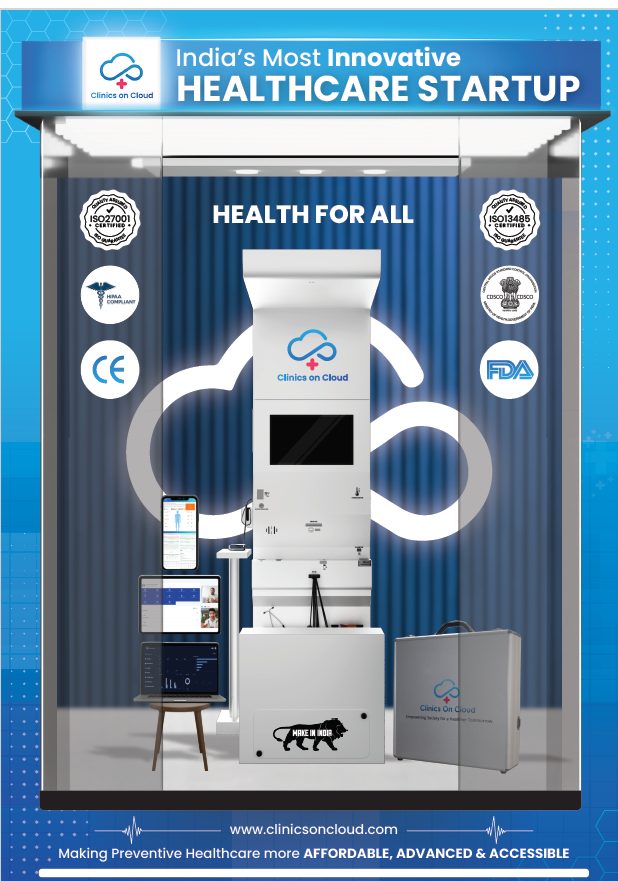
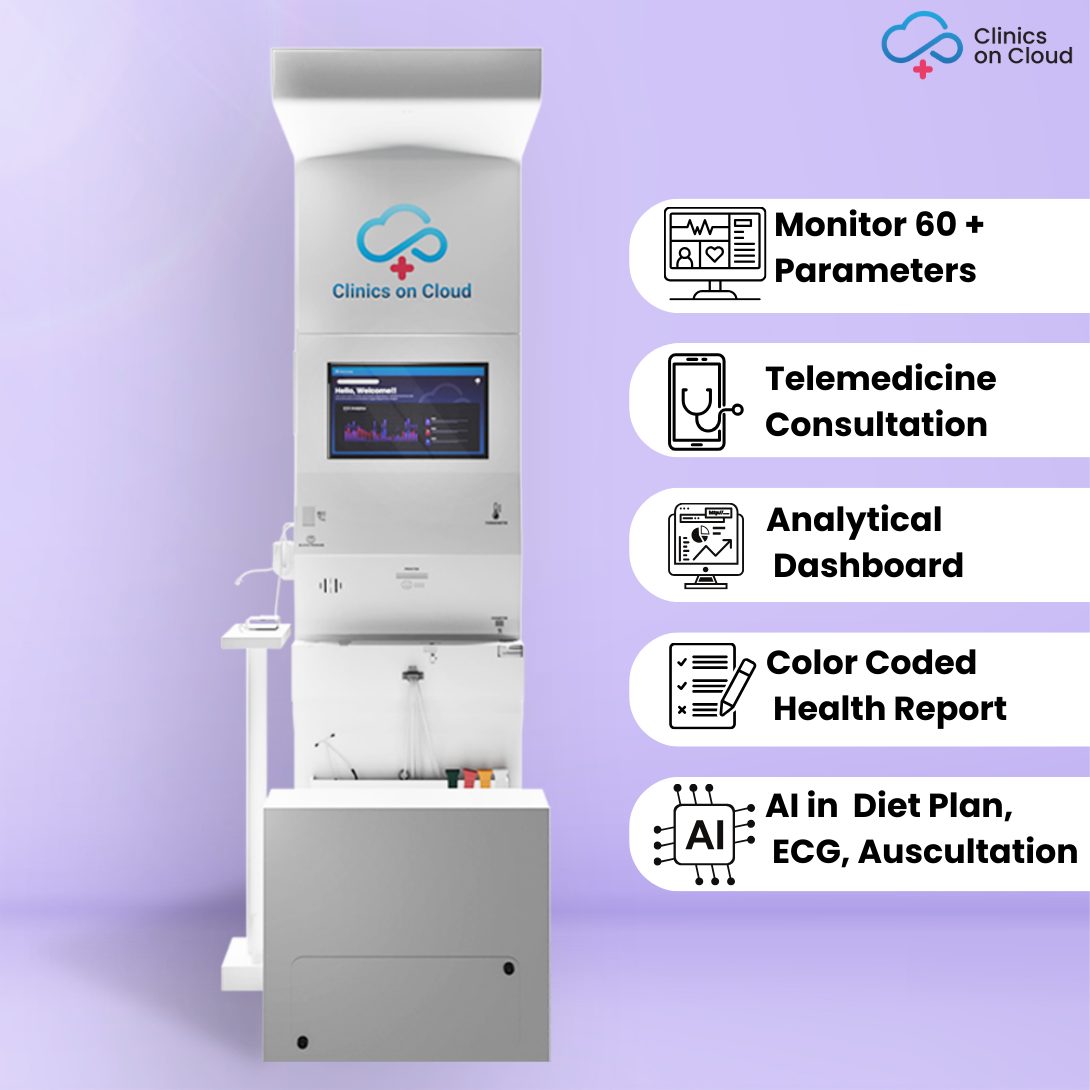
Employee health screening is the periodic measurement of a workforce’s clinical indicators to identify people who need medical follow-up. An on-site Clinics On Cloud Health ATM performs 65+ clinical parameters across 14 specialties in 10 minutes at the workplace, removing the travel and appointment friction that suppresses participation in off-site corporate health checkups.
Why employers screen at all
Employers screen for four distinct reasons, and confusing them produces a wellness programme that satisfies nobody.
Statutory and occupational. Some sectors require periodic medical examination of workers exposed to specific hazards. This is a compliance obligation with a defined scope, and it belongs to occupational health, not to a wellness budget.
Risk identification in a workforce that will not otherwise present. Most working-age adults with early hypertension, raised blood sugar or an abnormal lipid profile have no symptoms and no reason to visit a doctor. The World Health Organization and ICMR both treat these conditions as a priority because they progress silently. An employed population is one of the few places where a large group can be measured systematically.
Benefit and retention. Screening is a visible benefit that employees value, particularly where it extends to dependants.
Programme design. Without aggregate measurement, wellness spending is guesswork.
These four purposes need different designs. Statutory screening is prescribed. Risk identification wants breadth and repetition. A benefit wants convenience and dignity. Programme design wants aggregate data. An on-site kiosk serves the last three well and supplements, but does not replace, the first.
What an on-site kiosk changes about participation
Participation decides whether a screening programme means anything, and it is governed by friction rather than by employee attitude.
The traditional model asks an employee to book a slot at a diagnostic centre, fast beforehand, travel there, wait, and return. Every step sheds participants, and those most likely to drop out have long commutes, shift patterns, caring responsibilities or hourly-paid roles. They are frequently the people the programme most needs to reach.
An on-site Health ATM removes almost all of that friction: 10 minutes, in the building the employee is already in, no appointment, no skilled operator. Self-service also removes the queue in front of a nurse, which matters more than employers expect.
Three design choices raise participation further.
Placement. A unit in a lobby, cafeteria or shop-floor rest area is used. A unit in a locked medical room is not.
Privacy. A screened enclosure or a branded Health Lounge suite makes screening ordinary rather than conspicuous.
Repetition. A permanent unit generates repeat sessions, and a second reading is what turns a number into a trend.
Clinics On Cloud corporate deployments include Reliance, with a Health Kiosk and Health Lounge at its corporate headquarters as of July 2026, along with Tata Power, Godrej, Bajaj Allianz, Hewlett Packard, Konica Minolta and IDBI. The Government of West Bengal uses Clinics On Cloud for employee screening.
What HR can and cannot see
State this firmly, because it is the single objection that stops corporate screening programmes.
HR receives aggregate, de-identified reporting only. HR does not receive individual employee results.
An individual’s screening report belongs to the individual. It is delivered by print, SMS, email or WhatsApp, and can be linked to their own ABHA record under the Ayushman Bharat Digital Mission with their consent. It does not route to their manager, their HR business partner or their personnel file.
What the employer receives through the centralised multi-location analytics dashboard is population-level and de-identified: distribution of flagged readings across a site, participation rates by location, and whether follow-up is occurring. That is all that programme design requires.
Data type
Employee sees
Employer / HR sees
Clinician sees
Individual screening report
Yes, in full, directly
No
Yes, on consultation or with employee consent
Individual flagged abnormality
Yes
No
Yes, where the employee proceeds to consultation
Mental health questionnaire result
Yes
No, not even in aggregate at small site sizes
Yes, on consultation
Site-level participation rate
Not applicable
Yes, aggregate
Not applicable
Site-level distribution of flagged readings
Not applicable
Yes, de-identified aggregate
Not applicable
Individual identity tied to any clinical value
Yes, their own
No
Only with consent
Two operational rules protect this in practice. Suppress aggregate reporting below a minimum cohort size, because a “site” with six employees is not de-identified in any meaningful sense. And never let a wellness dataset feed a performance, promotion or underwriting decision about an identified individual. An employer that breaks either rule will lose participation permanently, and will deserve to. Clinics On Cloud is ISO 27001 certified for information security, HIPAA compliant, GDPR compliant and VAPT tested.
Consent obligations to employees
Consent in a workplace is not the same as consent in a clinic, because the employment relationship carries an implicit power imbalance. A programme that ignores this produces consent that is technically recorded and practically coerced. Six obligations are worth writing into the programme document before the first unit is installed.
Participation must be genuinely voluntary, and declining must carry no consequence, stated explicitly and in writing.
Explain what is measured before the session, in the employee’s language.
Explain who sees what, in the terms of the table above, at each screening rather than once at launch.
Separate statutory occupational examinations from voluntary wellness screening. Merging them lets an employee assume the whole thing is mandatory and reportable.
Handle mental health screening with additional care. PHQ-9 and GAD-7, covered in mental health screening using PHQ-9 and GAD-7, screen and flag; they do not diagnose or treat. Results here should never be reported to an employer at any site small enough for inference.
Make record linkage opt-in. ABHA linkage is the employee’s choice, not the employer’s.
None of this is legal advice; an employer should have its own counsel confirm obligations under applicable Indian data protection and labour law. The design principle stands regardless: the employee owns their result.
Where a kiosk fits alongside the annual health checkup
An on-site kiosk does not replace the annual health checkup package. It changes what that package is for.
Dimension
Annual off-site health checkup
On-site Health ATM screening
Frequency
Once a year, if attended
Continuous availability, repeat sessions monthly or quarterly
Scope
Broad panel including assays a kiosk does not perform
The relationship is complementary. Kiosk screening widens the funnel and catches change between annual cycles; the laboratory panel confirms and covers the tests no kiosk performs, including every vitamin assay, culture and imaging. Clinics On Cloud is not a diagnostic laboratory. For the full measurement list see clinical parameters and tests offered by a health kiosk, and for the cardiometabolic group that dominates corporate screening see cardiac tests explained.
Insurance, TPAs and the claims question
Employers frequently ask whether an on-site screening programme reduces group health insurance premiums. The honest answer is that this is a negotiation with the insurer and its third-party administrator, and it depends on the insurer’s underwriting model, the size of the group and the evidence the employer can present.
Clinics On Cloud makes no premium reduction claim and no claims-cost claim. What the platform provides is the evidence base for that conversation: participation rates, de-identified distribution of flagged readings, and whether flagged employees actually reached a clinician. Medi Assist is among the healthcare and insurance organisations Clinics On Cloud works with.
One caution. Screening data must not be used to price, exclude or disadvantage an identified individual employee. Aggregate programme evidence for group negotiation is legitimate. Individual data flowing to an underwriter is not, and it will end employee trust immediately.
Deployment models for offices, factories and distributed sites
Workplace type
Recommended configuration
Placement
Notes
Corporate head office
Health Kiosk, optionally within a Health Lounge suite
Lobby, cafeteria or dedicated wellness room
Branded suite raises perceived value and protects privacy
Manufacturing plant
Health Kiosk with rugged enclosure
Near shift change point or canteen
Shift patterns matter more than headcount; site it where all shifts pass
IT campus, multi-building
One unit per building rather than one per campus
Building lobby
Walking distance between buildings suppresses use
Distributed branch network
Rotational Mobile Medical Unit or scheduled camps
Branch premises
Fixed units rarely justify themselves below a threshold headcount
Remote or project site
Portable Box Clinic
Site office
Designed for locations with no infrastructure
Battery backup of 3 to 4 days and offline capability matter most at project sites and warehouses where power is unreliable.
How to measure a screening programme honestly
Most corporate wellness reporting measures activity rather than effect. Four metrics tell you whether the programme works.
Participation rate, by site and cohort. The gateway metric: a programme reaching 15% of a workforce cannot claim a workforce-level effect.
Flag rate, the proportion of sessions producing a reading warranting follow-up. A low flag rate is not automatically good news; it can mean the people at risk are the ones not attending.
Follow-up completion, the proportion of flagged employees who reached a clinician. This separates a screening programme from a data collection exercise, and most employers do not track it.
Repeat rate and trend, the proportion of employees with two or more sessions and the direction of aggregate readings over time.
An illustrative calculation, not a result. Suppose a site has 1,000 employees, an off-site annual checkup historically achieved 30% attendance, and an on-site kiosk achieves 70%. That is 400 additional employees measured; at a 12% flag rate, roughly 48 additional employees are identified for follow-up who would previously have been missed. These figures are illustrative assumptions used to show the method, not observed results from any Clinics On Cloud deployment. Replace every number with your own data before presenting anything to a board, and use your own quoted package price and wage costs for any cost comparison. Clinics On Cloud publishes no productivity, absenteeism or ROI figure.
Next steps
To scope an employee health screening programme across one site or many, call Clinics On Cloud on +91 8999 073 447, Monday to Saturday, 9:00 to 18:00 IST, or email sales@clinicsoncloud.com. See the Clinics On Cloud Health Kiosk and the Health Lounge, and for vendor comparison read best Health ATM manufacturer in India.
“
Clinics On Cloud provides preventive health screening and is not a diagnostic laboratory. Screening results are indicative and are not a diagnosis. Always consult a qualified physician before acting on any health information.
Revolutionizing Healthcare with Trusted Telehealth Services Clinics on Cloud – Your Partner in Accessible, Affordable & Advanced Telemedicine In today’s
Transforming Healthcare with AI-Powered POD Clinics and Doctor Offices The healthcare industry is undergoing a significant transformation with the advent
Category Synonyms/LSI/NLP Terms What is Telemedicine? Remote healthcare, Virtual healthcare, Digital health, Online medical consultations, E-healthcare, Remote medical services, Telehealth
Employee health screening is the periodic measurement of a workforce’s clinical indicators to identify individuals who need medical follow-up. It covers statutory occupational examinations, voluntary wellness screening, and programme-level measurement for designing health interventions. Screening identifies risk; it does not diagnose, treat or prevent disease, and every flagged result should reach a qualified physician.
Can HR see individual employee health results?
No. With a Clinics On Cloud programme, individual results go to the employee. HR and the employer receive aggregate, de-identified reporting only: participation rates, distribution of flagged readings and follow-up completion at site or cohort level, suppressed below a minimum cohort size. Mental health questionnaire results should not be reported to an employer in any form. Clinics On Cloud is ISO 27001 certified, HIPAA compliant, GDPR compliant and VAPT tested.
Is employee consent required for workplace health screening?
Voluntary wellness screening requires informed, genuinely voluntary consent, and declining must carry no consequence. Employees should be told what is measured, who sees what, and that ABHA record linkage is opt-in. Statutory occupational examinations follow their own legal basis and should be kept separate from wellness screening. Confirm your obligations with your own legal counsel.
What does a corporate wellness kiosk cost in India?
Indicative Health ATM pricing starts from ₹6,00,000 and varies with configuration, parameter set, enclosure, connectivity and service terms. Multi-site programmes, Health Lounge suites and rental or AMC structures are quoted separately. Contact the Clinics On Cloud team on +91 8999 073 447 or sales@clinicsoncloud.com for a configuration-specific quotation.
Does workplace screening reduce group health insurance premiums?
That depends entirely on your insurer and third-party administrator, your group size and the evidence you can present. Clinics On Cloud makes no premium reduction claim. The platform supplies the aggregate, de-identified evidence base for that negotiation. Individual employee screening data must never be shared with an underwriter or used to disadvantage an identified employee.
Can a health kiosk replace an occupational health doctor or a diagnostic laboratory?
No, on both counts. A Health ATM screens and flags. It does not perform statutory occupational assessments requiring clinical examination, and it does not perform confirmatory laboratory testing, cultures, imaging or vitamin assays. Clinics On Cloud is not a diagnostic laboratory. The kiosk is the detection layer in front of both.
How accurate are workplace kiosk screening results?
Clinics On Cloud states device accuracy of 90-95%, depending on the specific test and device, under correct usage, calibration and patient preparation. Those conditions matter as much as the number, so a corporate programme should include a calibration schedule and consumable management from the outset. Results are indicative and are not a diagnosis.
Get In Touch
Healthcare is a right. Not a privilege.
We started Clinics on Cloud with a simple belief - that the quality of your healthcare should not depend on your postcode. Whether you're a government, corporate, NGO or entrepreneur - we built this for you.
Call us
+91 8999 073 447
Mon - Sat · 9 AM to 6 PM IST
Write to us
sales@clinicsoncloud.com
Partnerships · Deployments · Support
Visit us online
www.clinicsoncloud.com
Products · Case Studies · News
Find us
Nighoje, Chakan MIDC
Pune, Maharashtra - 410501, India
Built for every kind of health partner.
Government Body Corporate / HR Team NGO / CSR Partner Hospital or Clinic Defence Organisation International Partner Investor / Distributor Rural Entrepreneur

 Entry · T-07Telemedicine