 Entry · HA-84Health ATM
Health Kiosk in Karnataka
Health ATM in Karnataka Karnataka is one of India’s fastest-growing digital and healthcare ecosystems. With a population of 7 crore+,
Read story 4 min
Telangana is one of India’s fastest-growing states with strong urban development in Hyderabad, Warangal, Karimnagar, Khammam, Nizamabad. However, despite advanced super-speciality hospitals in Hyderabad, large rural and tribal belts still lack regular screening, diagnostics, and preventive healthcare access.
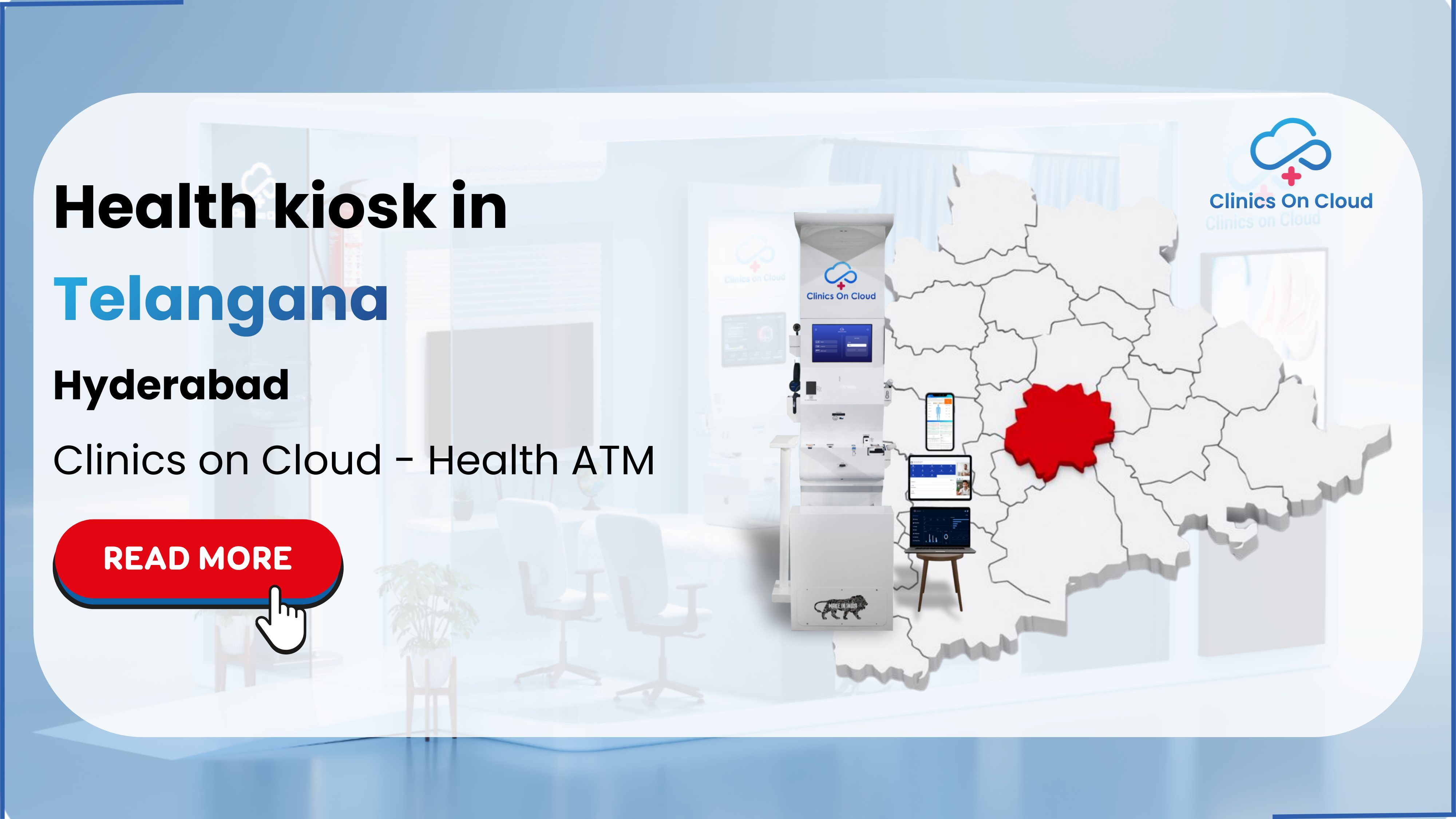
A health kiosk rollout in Telangana is a seven-step programme, not a hardware purchase: define the screening population, choose sites, configure the parameter set, settle language and staffing, plan for offline operation, build the follow-up pathway, then measure. Clinics On Cloud kiosks capture 65+ clinical parameters across 14 specialties in a 10-minute checkup.
Most failed screening programmes fail here. “Employee wellness” is not a population. “All 1,400 shop-floor staff at the Patancheru unit, twice a year” is.
Telangana rollouts usually fall into one of four populations. Bulk drug and formulation plant workers around Patancheru, Jeedimetla, Bollaram and the Pharma City corridor. Desk-based staff at HITEC City, Gachibowli and the Financial District. Agricultural and small-town populations across the Godavari and Krishna belt districts. And dispersed communities in the agency areas of Adilabad, Komaram Bheem Asifabad, Bhadradri Kothagudem and Mulugu.
Write down the headcount, the screening frequency and the acceptable travel distance for a user. Those three numbers determine how many kiosks you need and where they go.
Telangana is a dry Deccan plateau state with one very large metropolitan concentration and a long tail of small towns and forested northern districts. Site selection has to reflect that split rather than treating every district the same.
| Site type | Telangana locations | Why it works |
|---|---|---|
| Pharma and bulk drug plants | Patancheru, Jeedimetla, Bollaram, Mucherla corridor | Shift-based workforce already inside a gated premises |
| Technology campuses | HITEC City, Gachibowli, Financial District, Madhapur | High headcount per building, employer-funded wellness |
| Life sciences and research parks | Genome Valley, Shamirpet | Occupational health programmes already exist to plug into |
| Textile clusters | Warangal textile park, Sircilla powerloom belt | Concentrated workforce with limited clinic access |
| Coal, granite and quarrying belt | Ramagundam, Kothagudem, Karimnagar granite belt | Dust and heat exposure, contractor turnover |
| Agricultural market yards | Nizamabad, Nalgonda, Khammam, Jagtial | Fixed market days assemble a rural population reliably |
| District and area hospitals | District headquarters across the state | Outpatient triage before a doctor consultation |
| Agency and tribal blocks | Adilabad, Asifabad, Eturnagaram, Bhadrachalam | Screening must travel; use Box Clinic or a Mobile Medical Unit |
| Pilgrimage sites | Yadadri, Basara, Vemulawada, Bhadrachalam, Medaram | Time-bound crowds, many elderly visitors |
Fixed kiosks belong where people already gather. Where they do not, screening moves, which is what the Mobile Medical Unit and the portable Box Clinic handle.
Do not buy every sensor for every site. The Clinics On Cloud kiosk covers 65+ parameters across 14 specialties, and a Telangana programme normally weights them differently by site type.
A pharma or granite-belt unit prioritises pulmonary function, cardiac and general health parameters. A technology campus prioritises body composition, lipid profile, blood pressure, diabetes screening and the mental health instruments. A district hospital or market-yard unit prioritises anaemia, diabetes, blood pressure, vision and urine analysis, because those are the screenings that most often route someone into care they were not otherwise going to seek.
Fix the configuration per site type before you order, because retrofitting sensors after deployment costs more than specifying them correctly.
Telugu is the base language for a Telangana rollout, and Urdu is not optional in Hyderabad, where a large share of the population in the older city areas speaks it at home. The northern and forested districts add Lambadi and Gondi speakers, the Adilabad border belt adds Marathi, and industrial sites across the state employ Hindi-speaking migrant workers.
The Clinics On Cloud kiosk uses a multilingual touchscreen with audio-visual guidance, so the same unit serves all of these. Voice guidance is the part that matters, because it removes literacy as a barrier.
Staffing is lighter than buyers expect. The kiosk requires no skilled operator. Most programmes assign one existing person per site, typically a security supervisor, an HR executive or an ANM, to encourage footfall and keep consumables stocked. Budget for that role explicitly. Sites with nobody nudging users towards the kiosk consistently under-screen.
Hyderabad sites rarely have an infrastructure problem. Agency-area and remote plant sites do. Plan for both.
The kiosk carries 3 to 4 days of battery backup and operates offline, storing screenings locally and syncing when a connection returns. For camps in Eturnagaram, Bhadrachalam or the Asifabad blocks, that capability is the difference between a working programme and an idle machine. Confirm during the site survey where power comes from, whether the location is enclosed, and how data will eventually reach the dashboard.
Screening without a next step is data collection, not healthcare. Decide before launch what happens when a result is flagged.
The kiosk generates a colour-coded report delivered by print, SMS, email or WhatsApp, and connects the user to a live doctor consultation on video when a result falls outside expected ranges. Records can be linked to an ABHA number under the Ayushman Bharat Digital Mission, and public health programmes can route teleconsultations through eSanjeevani. For a corporate programme, define who receives the escalation and within what window. For a CSR or public health programme, define which facility the person is referred to.
Agree the reporting metrics before the first unit is commissioned. Four hold up:
A centralised multi-location dashboard aggregates these across every Telangana site, which is what a CSR review committee or a corporate board actually asks to see.
Indicative Health ATM pricing starts from ₹6,00,000, with the final quotation set by configuration, volume and consumable mix. Annual maintenance covers calibration, preventive visits and spares. A prepared single site is commissioned in days; a multi-district Telangana rollout is sequenced cluster by cluster so the first sites generate data before the rest ship.
For how other states approach the same decision, see the sector-by-sector health kiosk guide for Karnataka and health kiosk deployment across Maharashtra. Readers new to the format should start with what a Health ATM is and how it works, and buyers comparing suppliers with the guide to the best Health ATM in India.
Clinics On Cloud provides preventive health screening and is not a diagnostic laboratory. Screening results are indicative and are not a diagnosis. Always consult a qualified physician before acting on any health information.
Your email is never published. Comments appear after a quick review.
Entry · HA-84Health ATMHealth ATM in Karnataka Karnataka is one of India’s fastest-growing digital and healthcare ecosystems. With a population of 7 crore+,
 Entry · HA-84Health ATM
How Health ATMs and Smart Health Kiosks Are Transforming Preventive Healthcare in Maharashtra Maharashtra is one of India’s most dynamic
 Entry · HA-77Health ATM
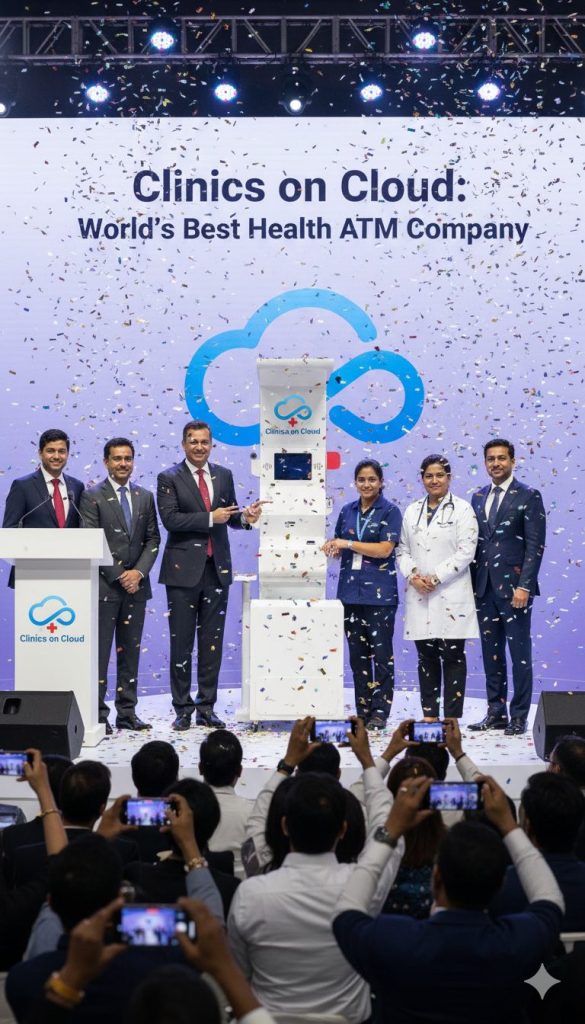
In the rapidly evolving landscape of digital health, a true leader is defined not just by innovation, but by trust,
Typical Telangana sites are pharma and bulk drug plants around Patancheru and Jeedimetla, technology campuses in HITEC City and Gachibowli, textile units at Warangal and Sircilla, district hospitals, agricultural market yards, college campuses and pilgrimage centres. Remote agency blocks are better served by a portable Box Clinic or a Mobile Medical Unit.
Yes. Clinics On Cloud supplies, installs and services Health ATMs across Telangana. The units are manufactured at Nighoje, Chakan MIDC, Pune, and Telangana buyers are covered for commissioning, calibration, consumables and spares under an annual maintenance contract.
A prepared Hyderabad site is normally surveyed, delivered, commissioned and handed over within days. Sites in the northern districts or inside plant premises take longer only where power, enclosure or access approvals are the bottleneck. Orientation for site staff takes under a day.
Yes. The annual maintenance contract covers scheduled preventive visits, calibration, sensor checks, consumable supply and spares across the state, including sites outside Hyderabad. Settle the response window in writing, since that figure determines real-world uptime more than any specification does.
Indicative pricing starts from ₹6,00,000. The final number depends on the configuration you select from the 14 specialties, expected monthly screening volume and consumables. A plant unit with pulmonary testing and a campus unit are priced differently. Share your site list for a configured quotation.
Start with two sites, an agreed monthly screening target and a 90-day review date. Clinics On Cloud runs the site survey, proposes the configuration and AMC, and provides dashboard access. Review throughput, flag rate and teleconsultation completion at 90 days, then scale.
No skilled operator is required. The screening is voice-guided and self-service. In practice, most programmes nominate one existing staff member per site to promote usage and keep consumables stocked, which materially improves screening volumes.
Clinics On Cloud operates to ISO 27001 information security certification and is HIPAA and GDPR compliant, with VAPT testing applied to the platform. Records can be linked to an ABHA number under the Ayushman Bharat Digital Mission. Agree data ownership and retention terms in the contract before launch.
We started Clinics on Cloud with a simple belief - that the quality of your healthcare should not depend on your postcode. Whether you're a government, corporate, NGO or entrepreneur - we built this for you.
+91 8999 073 447
Mon - Sat · 9 AM to 6 PM IST
sales@clinicsoncloud.com
Partnerships · Deployments · Support
www.clinicsoncloud.com
Products · Case Studies · News
Nighoje, Chakan MIDC
Pune, Maharashtra - 410501, India