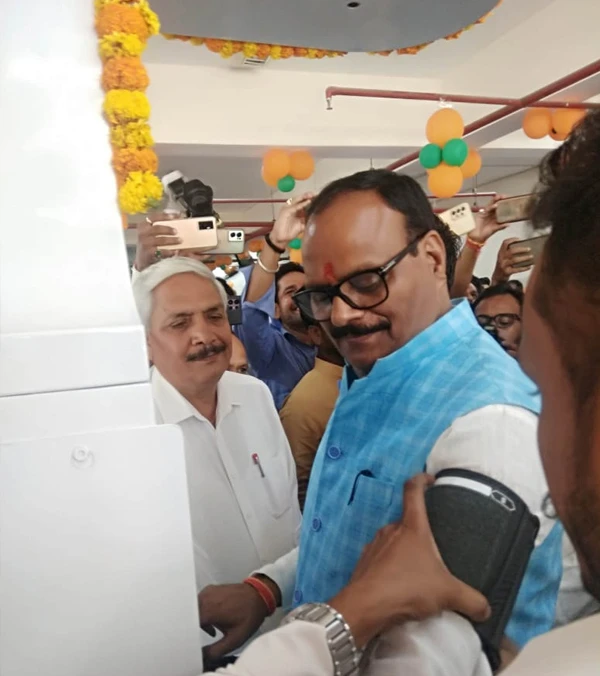
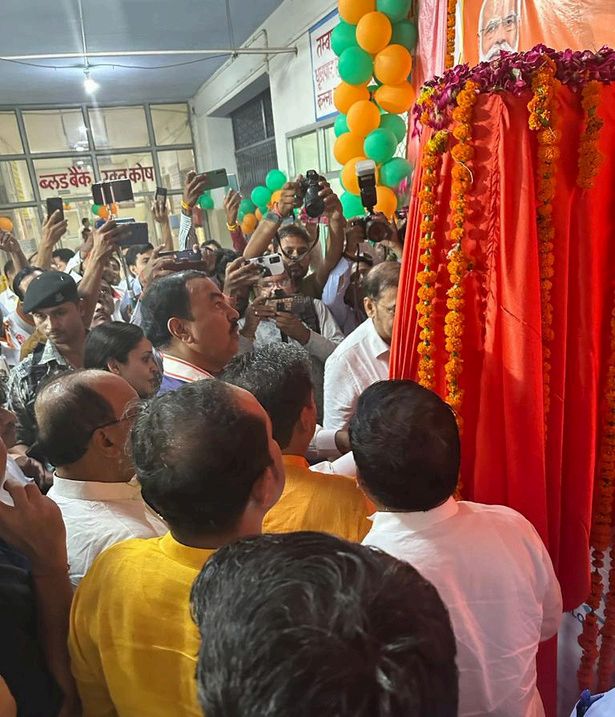
HomeBlogDeputy CM Brijesh Pathak inaugurated the Health ATM machine at Khushi Nagar. Free Medical Checkups are made available for the citizens including children.
Article15 February 20232 minUpdated
Deputy CM Brijesh Pathak inaugurated the Health ATM machine at Khushi Nagar. Free Medical Checkups are made available for the citizens including children.
Deputy CM Brijesh Pathak inaugurated the Health ATM machine at Khushi Nagar. Free Medical Checkups are made available for the citizens including children.
CCClinics On Cloud TeamPublished from Pune, India
Preventive Care
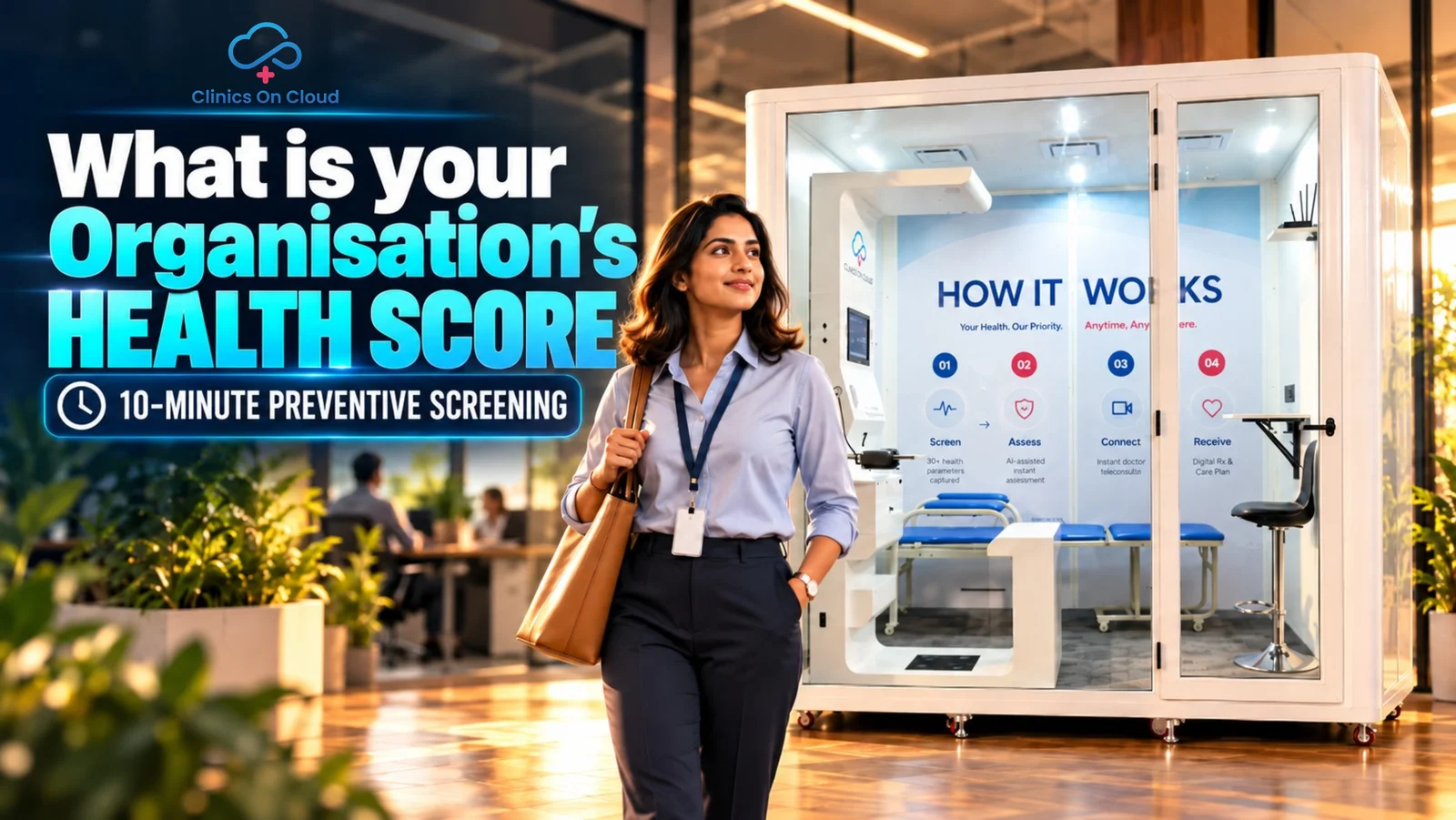
A Health ATM at a public health facility is a self-service station that measures 65+ clinical parameters across 14 specialties and prints a report on the spot. Clinics On Cloud supplies these units to government programmes in Uttar Pradesh, including NHM Uttar Pradesh’s 200 Health ATM deployment. Whether screening is free is set by the deploying health authority.
In this article
What a public Health ATM is for
Kushinagar and the eastern UP district context
What gets measured at a public screening point
Who actually operates the unit
Screening children and families
What happens after an abnormal reading
How a district or block requests a unit
Frequently asked questions
What a public Health ATM is for
A district hospital OPD queue is the wrong place to discover that you have high blood pressure. By the time most people in a public facility get measured, they are there for something else.
A Health ATM inverts that. It puts measurement at the front door, before the consultation, and it does not need a clinician to take the reading. That is the entire public-health argument for it: screening capacity that does not consume scarce clinician time.
For a state health department, three things follow. Volume goes up because screening no longer competes with consultation hours. Coverage widens because a unit can sit at a community health centre or a block office rather than only at a district hospital. And the department gets de-identified aggregate data on what it is finding, which it did not previously have at that granularity.
None of that replaces a laboratory or a doctor. It changes who gets measured at all.
Kushinagar and the eastern UP district context
Kushinagar sits in eastern Uttar Pradesh, near the Bihar border, with a largely rural population, an agricultural economy and a significant Buddhist pilgrimage circuit that brings domestic and international visitors through the district.
Three things about that profile matter for screening design:
Distance is the binding constraint, not willingness. In a district where most people live outside the district headquarters, a preventive checkup that requires a trip to the town is a checkup that does not happen. A screening point at a block-level facility removes a travel decision from the equation.
The working day is the real cost. For an agricultural or daily-wage household, the cost of a checkup is rarely the test fee. It is the day of income lost travelling and waiting. A 10-minute screening at a nearby facility is a fundamentally different proposition from a half-day trip.
Language and literacy shape usage. A screening station in eastern UP has to work for someone who reads slowly or not at all. Clinics On Cloud units use a multilingual touchscreen with voice guidance, so the sequence is spoken as well as displayed.
The same logic applies across eastern UP districts with comparable geography — which is why the state-level programme model matters more than any single installation. Our Health Kiosks in Uttar Pradesh page covers the buyer view across the state, and Health Kiosk in Lucknow covers the state-capital installations.
What gets measured at a public screening point
A Clinics On Cloud unit covers 65+ clinical parameters across 14 specialties. A public deployment is usually configured to a subset — the department chooses what the programme needs and what its consumables budget supports.
Specialty group
Typical public-programme relevance
General health (19 parameters)
Vitals, height, weight, BMI, body composition — the baseline every programme runs
Cardiac (9)
Blood pressure and ECG; the highest-yield NCD screening at population scale
Diabetes (2)
Random blood sugar and HbA1c; core to any NCD programme
Vision (3)
Far vision, near vision, colour vision — high yield in school and camp settings
Hearing and ENT (2)
Audiometry and otoscope imaging
Pulmonary (4)
PEF, FVC, FEV, FEV1/FVC
Urine analysis (10)
Broad, low-cost screening panel
Rapid infectious disease (10)
Screening only; every reactive result needs laboratory confirmation
Anaemia and kidney (2)
Particularly relevant in maternal and adolescent programmes
Mental health (2)
Depression and anxiety screening instruments
Maternal health (1)
Fetal monitoring
Dermatology (3), dental and oral (4), Ayurvedic assessment (7)
Two corrections worth stating plainly, because older material on this site got them wrong. The unit screens across 65+ parameters — it does not diagnose 50-plus conditions. And a rapid infectious-disease result is a screening result that requires confirmatory laboratory testing before it means anything clinically.
Who actually operates the unit
This is the question public-sector buyers ask that vendors tend to answer vaguely, so here is the honest version.
The unit is designed to be used without a clinician. The screen guides the user through each step in their own language, and the readings are taken by the instruments rather than by a person. That is what makes it deployable at a sub-district facility.
In practice, most public deployments still station someone at the unit — usually existing facility staff or a trained operator — because throughput, queue management and helping first-time users are human jobs. Whether that person is present, and who employs them, is decided by the deploying health authority. Clinics On Cloud supplies the hardware, the software, the training and the service contract; it does not staff the site.
Public installations see whole families, not just adults, and that changes the configuration.
Vision and hearing screening are the highest-value paediatric modules by a wide margin, because uncorrected vision and undetected hearing loss affect schooling directly and are cheap to catch. Height, weight and BMI support growth monitoring. Anaemia screening matters in adolescent programmes.
Three constraints apply. Children should be screened with a parent or guardian present and consenting. Not every parameter is appropriate at every age, and the configuration should be set with the facility’s medical officer. And a paediatric screening result belongs with a paediatrician, not with a chart on a wall.
What happens after an abnormal reading
A screening programme that flags a problem and does nothing about it is worse than no programme, because it teaches people that getting checked is pointless.
The unit prints a colour-coded report immediately and can send it by SMS, email or WhatsApp. Where the deployment includes teleconsultation, a flagged result can open a video consultation with a registered medical practitioner from the same session. Where the facility has its own clinicians, the flag routes into the existing OPD.
Records can be linked to the citizen’s ABHA number under the Ayushman Bharat Digital Mission, so a reading taken at a block facility is retrievable at a district hospital later. That continuity is the part that turns a screening event into a screening programme.
The referral pathway has to be agreed before the first unit goes live. Deciding it afterwards is the most common way these programmes fail.
How a district or block requests a unit
Public procurement runs through the health department rather than through individual facilities, so the route is usually one of these:
Under an existing state programme. If the state already has a Health ATM programme, a district requests inclusion through the CMO’s office and the state NHM unit.
District-level procurement. Where a district has its own budget line, it procures directly, typically through GeM or a state tender.
CSR or trust funding. A company or foundation funds units placed at public facilities, with the department agreeing to host and run them.
MP or MLA local area development funds, where the facility and the department agree to operate the unit.
Clinics On Cloud is CDSCO licensed and holds ISO 13485, ISO 27001, CE and US FDA certifications, and manufactures in Chakan MIDC, Pune. Procurement teams evaluating suppliers will find the criteria worth testing in how to choose a Health ATM manufacturer, and the rural deployment models in how a Health ATM benefits rural India.
To discuss a district or block deployment: +91 8999 073 447 or sales@clinicsoncloud.com.
Clinics On Cloud provides preventive health screening and is not a diagnostic laboratory. Screening results are indicative and are not a diagnosis. Always consult a qualified physician before acting on any health information.
Pulmonary health is critical for overall well-being, especially in populations exposed to environmental pollutants, allergens, and respiratory infections. Chronic pulmonary
Public Health ATM locations are set by the district health administration, and units are added or relocated as programmes expand. For current locations in Kushinagar, contact the Chief Medical Officer’s office for the district. Clinics On Cloud can confirm whether a supplied unit is operational at a given facility on request.
Is the checkup at a government Health ATM free?
That depends on the deploying authority. Where a state or district health programme funds the unit and its consumables, screening is generally offered free to citizens. Where a unit is placed under a different model, a nominal charge may apply. Clinics On Cloud supplies the equipment; it does not set citizen pricing at public facilities.
What tests does a public Health ATM do?
The platform covers 65+ clinical parameters across 14 specialties, including blood pressure, ECG, blood sugar, HbA1c, lipid profile, SpO2, BMI and body composition, vision, hearing, lung function, urine analysis and rapid infectious disease screening. Each deployment is configured to the programme’s chosen subset.
How long does a checkup take?
About 10 minutes for a full session, with a printed report available immediately afterwards.
Do children get screened at a Health ATM?
Yes, with a parent or guardian present and consenting. Vision, hearing, height, weight and BMI are the most commonly used paediatric modules. The appropriate parameter set for children should be agreed with the facility’s medical officer.
Does a Health ATM diagnose disease?
No. It screens and flags readings that fall outside expected ranges so that a qualified clinician can review them. It is not a diagnostic laboratory, and rapid test results require confirmatory laboratory testing.
Can a village panchayat or block office get a unit?
Yes. Units operate offline with 3–4 days of battery backup, which makes sub-district siting practical. Procurement still runs through the district or state health department, or through a CSR partner working with them.
What does a Health ATM cost for a government programme?
Indicative pricing starts from ₹6,00,000 per unit, varying with configuration, the parameter set selected, consumables, connectivity, training and the service contract. Multi-unit programme pricing is quoted against the tender or programme scope.
Get In Touch
Healthcare is a right. Not a privilege.
We started Clinics on Cloud with a simple belief - that the quality of your healthcare should not depend on your postcode. Whether you're a government, corporate, NGO or entrepreneur - we built this for you.
Call us
+91 8999 073 447
Mon - Sat · 9 AM to 6 PM IST
Write to us
sales@clinicsoncloud.com
Partnerships · Deployments · Support
Visit us online
www.clinicsoncloud.com
Products · Case Studies · News
Find us
Nighoje, Chakan MIDC
Pune, Maharashtra - 410501, India
Built for every kind of health partner.
Government Body Corporate / HR Team NGO / CSR Partner Hospital or Clinic Defence Organisation International Partner Investor / Distributor Rural Entrepreneur
 Entry · PC-24Preventive Care