HomeBlogDPDP Act Milestone on 13 November 2026: What Clinics and Health Screening Programmes Must Do
Deep Dive21 October 20265 min read
DPDP Act Milestone on 13 November 2026: What Clinics and Health Screening Programmes Must Do
November is not the final deadline for most providers. It is the point where preparation time starts running out.
CCClinics On Cloud TeamPublished from Pune, India
Health ATM
“
Quick answer: India's Digital Personal Data Protection (DPDP) Rules, notified on 13 November 2025, roll out in phases. The consent-manager provisions start on 13 November 2026, and full compliance is due by May 2027. Every clinic, lab and health screening programme that collects digital patient data counts as a “data fiduciary” and must get clear consent, protect the data and honour patient rights.
What is changing on 13 November 2026?
MeitY notified the DPDP Rules on 13 November 2025 and built in a phased rollout. Rule 4, which governs consent managers, comes into force one year later on 13 November 2026 (Mondaq, Aug 2026). The core obligations on security, breach notice within 72 hours, retention and patient rights apply from May 2027 (DPDPA timeline).
November is not the final deadline for most providers. It is the point where preparation time starts running out.
Does the DPDP Act apply to small clinics?
Yes. Independent doctors, dental clinics, Ayurveda and homeopathy centres and standalone labs all fall under DPDP if they collect or process digital patient information (Kratikal). Size does not create an exemption.
The same applies to health screening programmes run by employers, CSR teams, housing societies and governments. A health kiosk that records blood pressure, sugar and ECG is processing personal data.
What must healthcare providers do under DPDP?
Get specific, informed consent. Blanket or implied consent is no longer valid for patient data (KPMG, Dec 2025).
Use data only for the stated purpose. Screening data collected for a health report should not be reused for unrelated marketing.
Secure it. Encryption, access controls, logging and backups.
Report breaches within 72 hours.
Honour patient rights. Access, correction, erasure, grievance redressal and nomination (Acuity Law, Oct 2026).
Delete data you no longer need under a defined retention policy.
DPDP also gives clinical establishments and healthcare professionals a limited exemption from parental consent for children's data, but only when the processing is confined to health services that protect the child's health.
What does this mean for health kiosks and screening camps?
Preventive screening only works if people trust where their numbers go. If a factory worker or a villager fears their results will be shared without permission, they will not step up to the machine.
That is why data protection has to be designed into the screening workflow, not added afterwards. Ask any screening partner five questions:
How is consent captured before the first test?
Where is the data hosted, and who can access it?
What security certifications does the platform hold?
Can patients get their report, correct it, or ask for deletion?
Can the data sit on our own servers if we need it to?
How Clinics On Cloud protects screening data
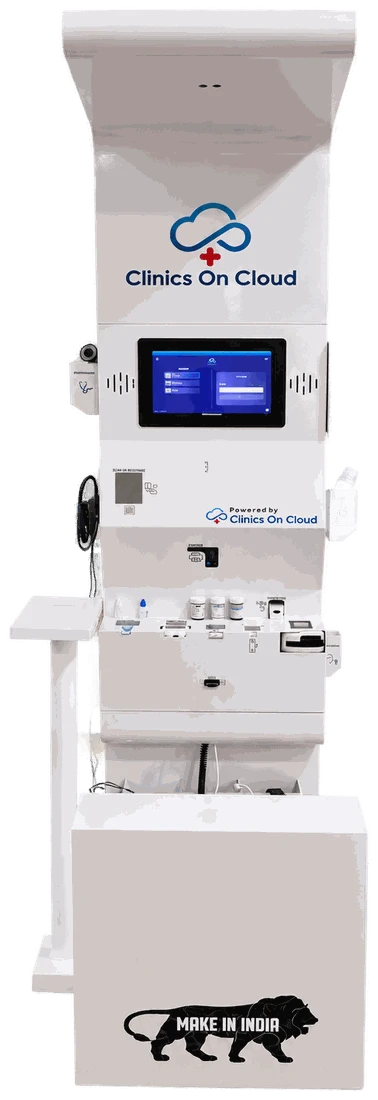
The Clinics On Cloud Health ATM platform is built with ISO 27001 information security, IEC 62304 software processes, and regular VAPT and WASA security testing. Data is hosted on AWS cloud infrastructure with primary, secondary and long-term backups. Where an organisation needs it, the application and data can run on client-controlled servers (platform FAQ).
Reports go straight to the person screened through WhatsApp or email. Integrations with HMIS, EMR and government systems run through approved APIs (Data and Analytics). Read our privacy policy for details.
Your next step
Use the months before May 2027 to map what patient data you collect, where it goes and who sees it. If you run or plan a screening programme for employees, students or communities, talk to our team about a setup that fits your DPDP plan.
India's hospital chains are adding 34,000+ beds. See why preventive health checkups and Health ATMs cut costs earlier, and how to bring one to your community.
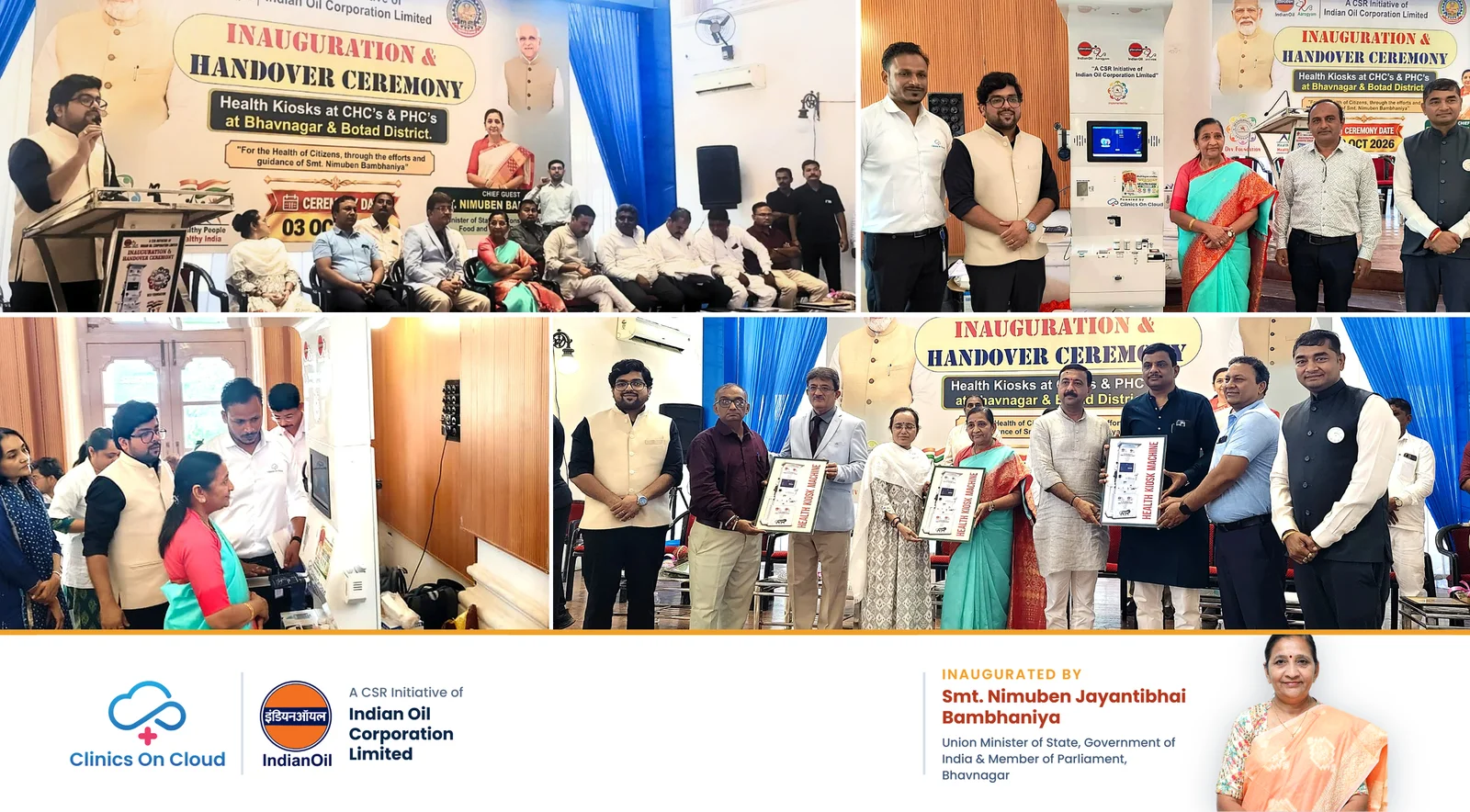
21 Primary Health Centres. 21 Clinics On Cloud Health Kiosks. One stronger connected public-health network - through an IndianOil CSR initiative in the Bhavnagar Lok Sabha constituency.
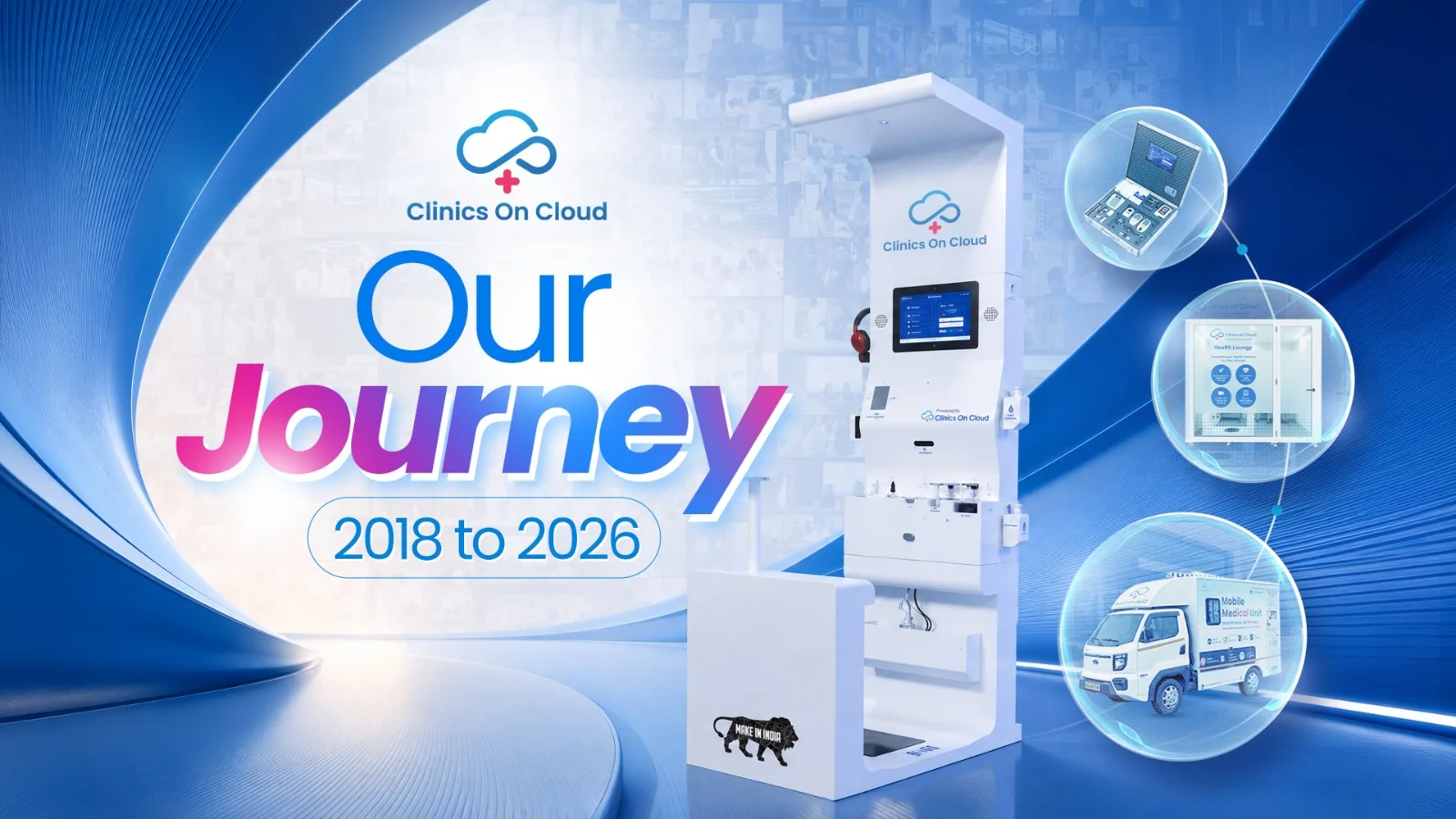
If ATMs could revolutionise banking by bringing financial services closer to people, why could healthcare not become just as accessible? Eight years on, that question is still the company.
When do the DPDP Rules come into force for healthcare?
The rules were notified on 13 November 2025. Consent-manager provisions start on 13 November 2026, and most substantive obligations apply from May 2027.
Is a small clinic a data fiduciary under DPDP?
Yes. Any clinic, lab or doctor that collects or processes digital patient data is a data fiduciary.
Is implied consent enough for patient data?
No. Consent must be specific, informed and given for a stated purpose.
Is health data from a health kiosk covered by DPDP?
Yes. Readings such as blood pressure, blood sugar and ECG linked to a person are personal data and must be protected.
Get In Touch
Healthcare is a right. Not a privilege.
We started Clinics on Cloud with a simple belief - that the quality of your healthcare should not depend on your postcode. Whether you're a government, corporate, NGO or entrepreneur - we built this for you.
Call us
+91 8999 073 447
Mon - Sat · 9 AM to 6 PM IST
Write to us
sales@clinicsoncloud.com
Partnerships · Deployments · Support
Visit us online
www.clinicsoncloud.com
Products · Case Studies · News
Find us
Nighoje, Chakan MIDC
Pune, Maharashtra - 410501, India
Built for every kind of health partner.
Government Body Corporate / HR Team NGO / CSR Partner Hospital or Clinic Defence Organisation International Partner Investor / Distributor Rural Entrepreneur
 Entry · HA-70Health ATM