HomeBlogThe Future of Healthcare: How HealthATMs Are Changing the Game
Article29 April 20233 minUpdated
The Future of Healthcare: How HealthATMs Are Changing the Game
The Future of Healthcare: How HealthATMs Are Changing the Game.elementor-widget-container p a:link,.elementor-widget-container p a:visited{color:#0066cc} h3{font-size: 20px; font-weight: bold;}.elementor-widget-container ul{ margin-left:20px;}.elementor-widget-container ul li{ margin-bottom:20px;}
CCClinics On Cloud TeamPublished from Pune, India
Preventive Care
“
Health ATMs change healthcare access by changing what a screening costs in time, not only in fees. A Clinics On Cloud Health ATM delivers 65+ clinical parameters across 14 specialties at the point of need, removing the travel, wage loss and waiting that decide who gets screened.
The argument in one paragraph
The question “is a Health ATM cheaper than a clinic visit?” is the wrong question, because a fee comparison ignores most of what a screening costs the person paying it. The right question is what the total cost of obtaining a screening is, including travel, lost earnings and waiting time, and how that total varies across a population. Once you account for the full cost, the interesting property of a distributed screening station is not that each test is cheaper. It is that the cost falls furthest for exactly the people who are currently screened least.
That is an equity argument, and it is a stronger claim than a price claim. This article makes it without inventing a single cost figure.
What a screening actually costs the person being screened
A preventive health screening has at least five cost components, and only one of them appears on an invoice.
Cost component
Who bears it
How it varies
The fee for the test or package
The individual, an employer, an insurer or a government programme
Set by the provider; the only component usually quoted
Travel cost
Almost always the individual
Rises sharply with distance from a facility, and with the absence of public transport
Lost earnings for time away
The individual, and disproportionately if paid hourly or daily
A daily-wage worker loses a full day’s income; a salaried employee often loses only convenience
Waiting and queueing time
The individual
Independent of the fee, and frequently the largest single time block
Accompanying person’s cost
A family member
Doubles travel and wage loss where an elderly or unwell person cannot travel alone
Two of these components are invisible in every price comparison that health providers publish, and they are the two that dominate for low-income and rural populations.
A person earning a daily wage who travels 30 kilometres to a district facility, waits half a day and returns has spent a day’s income plus fares on a test for a condition they have no symptoms of. Declining that is not health illiteracy. It is arithmetic.
The World Health Organization frames financial hardship from health spending as a core dimension of access, and the National Health Mission’s non-communicable disease work exists because asymptomatic conditions are otherwise identified late. Clinics On Cloud attributes no specific statistic to either body in this article.
Why the fee is the smallest part of the bill
For a salaried urban professional the fee genuinely is the main cost, which is why healthcare pricing discussions are written from that perspective. For most of the Indian population it is not.
An urban salaried employee. The fee dominates. Travel is short and the time cost is convenience rather than income.
A shift worker in a manufacturing plant. Time cost dominates. Attending during working hours is often impossible, and attending outside them consumes rest.
A daily-wage agricultural worker 40 kilometres from a facility. Travel and lost earnings dominate so completely that the fee is close to irrelevant to the decision.
A provider who lowers the fee changes behaviour in the first group and barely touches the third. A provider who removes the journey changes behaviour in all three, and most in the third.
This is why the significant property of a Health ATM is location rather than price. Moving the measurement to where the person already is collapses travel cost to zero and time cost to ten minutes, without changing the fee at all.
The economics of distribution: fixed cost, near-zero marginal cost
A screening station has a cost structure that is unusual in healthcare delivery and that explains why distribution works.
The capital cost is fixed and known: indicative Health ATM pricing starts from ₹6,00,000, varying by configuration, with ongoing installation, connectivity, calibration, consumable and service costs. Once the unit is installed, the marginal cost of the next session is small and requires no additional clinician-hour, because the unit is self-service and needs no skilled operator.
Contrast a staffed screening camp, whose cost scales roughly with the number of people screened and which has to be re-created each time it runs. A permanent unit’s cost is dominated by the fixed component, so cost per screening falls as utilisation rises.
Three consequences follow.
Utilisation is the whole game. A unit performing a handful of sessions a week is expensive per screening regardless of its purchase price. Siting and promotion matter more than specification.
Repetition becomes affordable. Where each additional session is cheap, screening someone quarterly is a logistics decision rather than a budget decision, and that is what makes trend detection possible.
Reach extends without proportionate staffing. A district can add sites without adding clinicians at each one, because clinical capacity is pooled through telemedicine and eSanjeevani access.
Where density is too low for a fixed unit, the same logic applies to a route: a Mobile Medical Unit or a portable Box Clinic amortises across a set of habitations. Clinics On Cloud has screened 12M+ patients and flagged 2 lakh+ abnormalities for early intervention as of 2026.
An illustrative comparison, with its assumptions stated
The following is a worked method, not a result. Every term below is a placeholder chosen to demonstrate the calculation. None of it is observed data from a Clinics On Cloud deployment, and none of it should be quoted as an outcome.
Assumptions, all illustrative: a fixed unit costs C rupees, has a useful life of L years, incurs annual operating cost O covering consumables, connectivity, calibration and service, and performs N sessions per year.
Cost per screening = (C ÷ L + O) ÷ N.
The instructive part is the sensitivity. Because C ÷ L + O is largely fixed, cost per screening is governed by N. Doubling utilisation nearly halves cost per screening; halving it nearly doubles the cost. No change in purchase price has an effect anywhere near as large.
For the individual, the comparison is not cost per screening at all:
Total cost to the individual = fee + fare + (hours away × hourly earnings) + accompanying person’s cost.
For an on-site or in-village unit, the last three terms fall close to zero. That is the mechanism. Fill both formulas with your own procurement quotation, utilisation forecast and population wage profile before presenting any figure to a board, a district authority or a funder. Clinics On Cloud publishes no cost-per-screening, savings or return-on-investment figure, because any such number is a function of a specific deployment’s utilisation.
Why distributed screening changes who gets screened at all
This is the claim that matters, and it is a claim about composition rather than volume.
If the barrier were purely price, lowering the price would screen more of the same kind of person. Because the barrier is largely distance and time, removing distance and time screens a different kind of person: the ones whose constraint was never the fee. Four groups illustrate the shift.
Daily-wage and informal workers, for whom a clinic visit costs a day’s income. A ten-minute session at a village or workplace site does not.
Women with caring responsibilities, for whom a half-day absence requires arranging childcare or elder care that a ten-minute walk does not.
Older adults with limited mobility, for whom the journey itself is the obstacle and for whom an accompanying family member’s time is a second cost.
Asymptomatic adults of any income, who will not organise a trip for a condition they cannot feel, but will use a machine they walk past.
That last group is the core of preventive screening. Hypertension and type 2 diabetes are identified late because nothing prompts the person to seek care, and proximity substitutes for a prompt.
The composition effect is why participation matters more than any other metric. A programme that screens more of the same people has improved throughput; a programme that screens people who have never been screened has improved access. These should not be reported as the same achievement. The workplace version of the argument is in employee health screening with an on-site Health ATM, and the rural version in how a Health ATM benefits rural India.
The equity argument, made carefully
The equity argument for distributed screening is straightforward and does not require exaggeration.
Preventive care is consumed most by people who need it least. The people with the time, money, transport and information to attend a checkup are, on average, in better health than the people without those things. Any delivery model that requires travel and time therefore distributes preventive care regressively, no matter how it is priced.
Distributed screening does not solve inequality in health outcomes. What it does is remove a specific regressive filter from one specific stage of the pathway: the detection stage. That is a narrow claim and a defensible one.
It matters because detection is the stage where the pathway most often never starts. A person who is never screened cannot be referred, cannot be treated and does not appear in any programme’s data. Moving detection to where people are converts an invisible population into a visible one, which is the precondition for everything downstream.
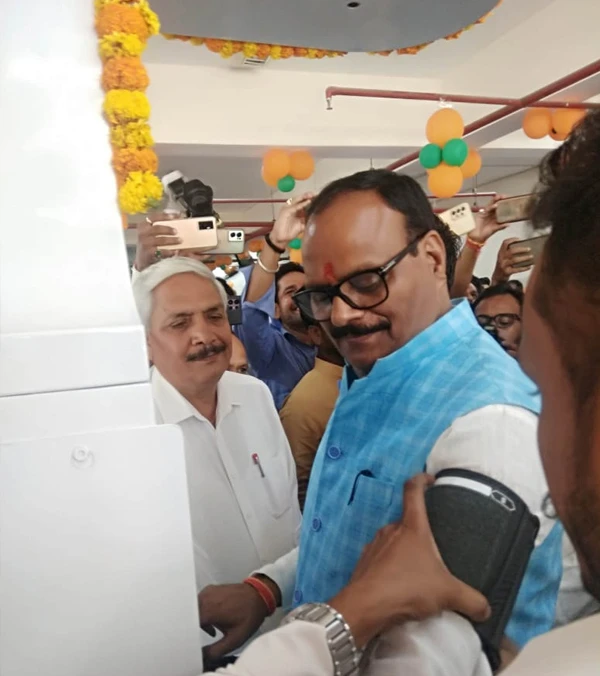
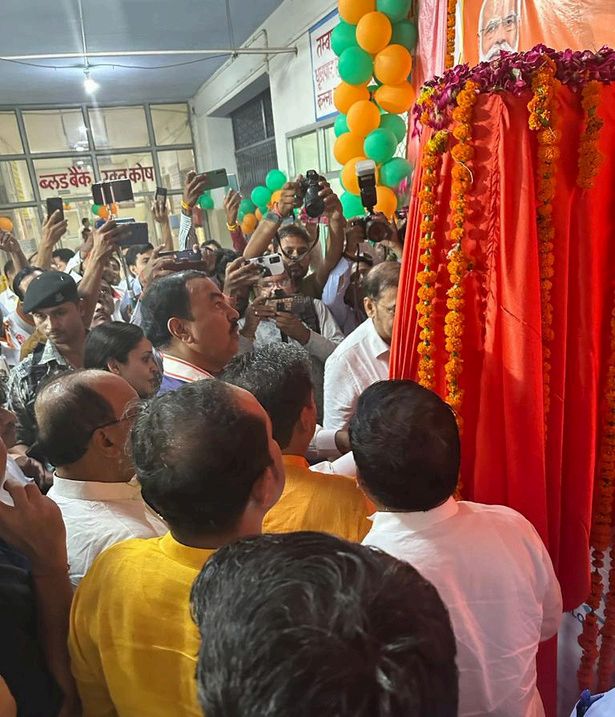
Clinics On Cloud states this as its category position: it builds the infrastructure layer for the microclinic economy, deployed across 200+ cities including last-mile locations and 8+ countries, with public deployments including NHM Uttar Pradesh’s 200 Health ATMs and defence deployments with the Indian Army.
What access economics does not fix
An honest access argument has to name what it leaves untouched, and there are four things.
Detection is not treatment. Removing the barrier to screening does not remove the barrier to care. A person flagged for raised blood sugar in their village still faces distance, cost and time to reach a clinician and a reliable medicine supply. Screening moves the bottleneck downstream; it does not remove it.
Clinical capacity is the binding constraint. Screening capacity is now cheap to add. Physician time is not. A programme that expands detection without planning for the referral load produces flagged people with nowhere to go, which is worse than not screening them.
Screening is not diagnosis. A Health ATM screens and flags. It does not diagnose, treat, cure or prevent any condition, and Clinics On Cloud is not a diagnostic laboratory. Confirmatory testing, imaging and specialist assays remain laboratory and hospital work.
Utilisation can collapse quietly. The economics above depend entirely on N. A unit that is installed, photographed and then unused has a cost per screening that approaches infinity, and this is the most common failure mode in distributed health programmes. Ownership, promotion and recall are not optional extras.
To model access economics for a district programme, a CSR budget or a corporate site, call Clinics On Cloud on +91 8999 073 447, Monday to Saturday, 9:00 to 18:00 IST, or email sales@clinicsoncloud.com. See the Clinics On Cloud Health Kiosk and, for configuration and vendor comparison, best Health ATM manufacturer in India.
“
Clinics On Cloud provides preventive health screening and is not a diagnostic laboratory. Screening results are indicative and are not a diagnosis. Always consult a qualified physician before acting on any health information.
Health ATMs improve access by removing the travel, lost earnings and waiting time that make up most of the real cost of a screening. A Clinics On Cloud unit performs 65+ clinical parameters across 14 specialties in 10 minutes at the point of need, works offline with 3 to 4 days of battery backup and needs no skilled operator, so screening happens where people already are.
Is a Health ATM cheaper than a clinic visit?
The fee comparison is the wrong comparison. For most of the Indian population the dominant costs of a screening are travel, lost earnings and waiting, not the fee. A Health ATM reduces those to near zero by moving the measurement to the person. Clinics On Cloud publishes no cost-per-screening figure, because the number depends entirely on a specific site’s utilisation.
What does a Health ATM cost?
Indicative Health ATM pricing starts from ₹6,00,000 and varies with configuration, parameter set, enclosure, connectivity and service terms. Because most of the cost is fixed rather than per-session, the cost per screening is governed by how heavily the unit is used. Contact Clinics On Cloud on +91 8999 073 447 or sales@clinicsoncloud.com for a configuration-specific quotation.
Why do people skip preventive health checkups?
Usually because the total cost of attending exceeds the perceived value of a test for a condition they have no symptoms of. That total includes fares, a day’s lost income for hourly and daily-wage workers, waiting time and often a family member’s time as well. Removing the journey changes the calculation more than lowering the fee does.
How does distributed screening change who gets screened?
It changes the composition, not just the volume. Because the barrier is largely distance and time rather than price, removing distance and time reaches people whose constraint was never the fee: daily-wage workers, women with caring responsibilities, older adults with limited mobility, and asymptomatic adults of any income who would never organise a trip.
Can a Health ATM reach people that clinics never see?
That is the central access claim, and it is about detection specifically. Distributed screening converts a population that never presents into a population that is measured and visible, which is the precondition for referral and treatment. It does not by itself deliver treatment, and a programme without a referral pathway will not produce a health outcome.
What are the limits of Health ATMs for healthcare access?
Four limits. Detection is not treatment. Physician capacity, not screening capacity, is the binding constraint in most programmes. Screening is not diagnosis, and Clinics On Cloud is not a diagnostic laboratory. And the economics depend entirely on utilisation, so an installed but unused unit delivers no access benefit at any price.
Get In Touch
Healthcare is a right. Not a privilege.
We started Clinics on Cloud with a simple belief - that the quality of your healthcare should not depend on your postcode. Whether you're a government, corporate, NGO or entrepreneur - we built this for you.
Call us
+91 8999 073 447
Mon - Sat · 9 AM to 6 PM IST
Write to us
sales@clinicsoncloud.com
Partnerships · Deployments · Support
Visit us online
www.clinicsoncloud.com
Products · Case Studies · News
Find us
Nighoje, Chakan MIDC
Pune, Maharashtra - 410501, India
Built for every kind of health partner.
Government Body Corporate / HR Team NGO / CSR Partner Hospital or Clinic Defence Organisation International Partner Investor / Distributor Rural Entrepreneur
 Entry · PC-43Preventive Care