AI Doctor Clinic or AI Medical Clinic
World’s First AI Doctor Clinic: How AI Medical Clinics and Health Kiosks Are Shaping the Future of Healthcare Artificial Intelligence
Read story 8 min
.elementor-widget-container p a:link,.elementor-widget-container p a:visited{color:#0066cc} h3{font-size: 20px; font-weight: bold;}.elementor-widget-container ul{ margin-left:20px;}.elementor-widget-container ul li{ margin-bottom:20px;} Bridging Health Gaps: Clinics On Cloud's Revolutionary Path in African Healthcare
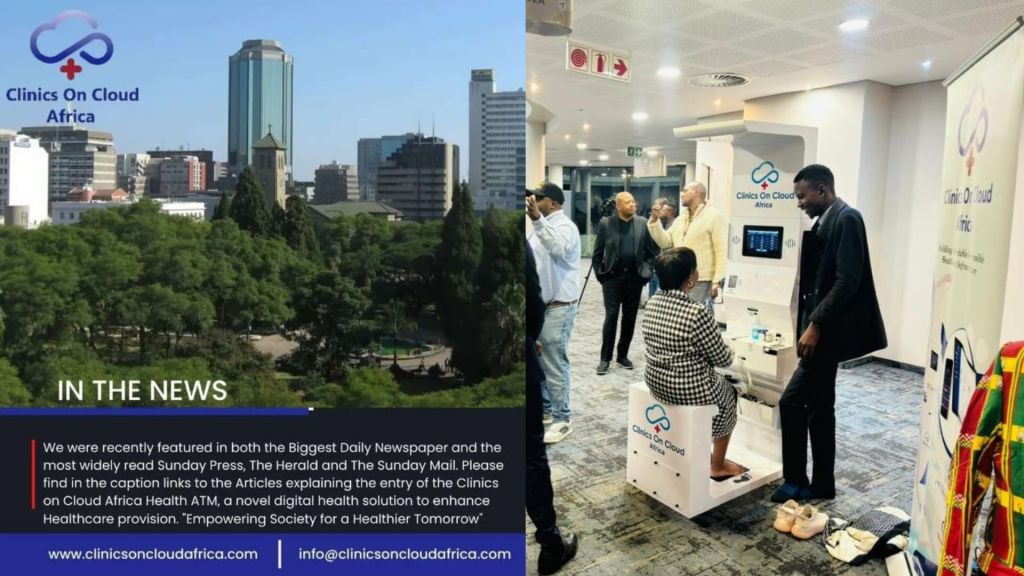
The healthcare gap a screening kiosk closes is the gap between the day a condition becomes detectable and the day a person finally sees a clinician. Clinics On Cloud Health ATMs capture 65+ clinical parameters across 14 specialties, work offline, and escalate only abnormal results to a doctor, so one clinician covers a much larger population across Africa.
Note: This is a short overview. The complete supplier, regulatory and procurement guidance is in the region-by-region guide to health kiosks in Africa.
“Healthcare gap” is used loosely enough to mean nothing. It is worth separating the four gaps, because a kiosk closes one of them well, one partially, and two not at all.
The detection gap is the interval between a condition becoming measurable and someone measuring it. This is the gap a screening kiosk closes directly.
The triage gap is knowing which of a thousand people needs a clinician this week. A kiosk closes this partially, by flagging abnormal results and routing them.
The treatment gap is the availability of drugs, procedures, beds and clinicians once a person is identified. A kiosk does not close this. It can make it more visible, which is uncomfortable but useful.
The financing gap is who pays. A kiosk does not close this either. It changes the unit economics of screening, which is a different thing.
Being honest about that division is the whole point. A screening device oversold as a health system produces disappointed funders and abandoned equipment. A screening device sold as a detection and triage layer, feeding a referral pathway that someone else owns, is a durable piece of infrastructure.
Where clinicians are scarce and distances are long, most first contacts with the health system happen late, when a person already feels unwell. The consequence is that the health system sees the advanced version of conditions it could have seen early.
A screening station changes this because it does not spend clinician time to produce a measurement. It spends clinician time only on the results that need it. Clinics On Cloud has screened 12M+ patients across its network on exactly that pattern, and 2 lakh+ (200,000+) abnormalities have been detected and routed for early intervention.
The kiosk itself needs no skilled operator. Sessions are driven by a multilingual touchscreen with voice guidance, which matters where reading levels vary and where the beneficiary population does not speak the official language of the country.
Most kiosk projects fail on infrastructure, not on clinical capability. Four properties decide whether a unit is still working in year three:
Where there is no building, the Box Clinic is the appropriate product rather than a fixed kiosk. Where a population is spread across a district, a Mobile Medical Unit running a circuit covers more people per unit.
Clinics On Cloud holds CDSCO licensing in India, ISO 13485 for medical-device quality management, US FDA and CE, plus ISO 27001, HIPAA compliance, GDPR compliance and VAPT testing.
Those are manufacturer credentials. They are not national approvals. Most African jurisdictions require separate medical-device registration filed by a locally licensed importer, plus import permits, and increasingly a data-protection and telemedicine review where identifiable records are stored. Clinics On Cloud does not claim regulatory approval in any specific African country and supports partners with the technical file rather than with a promise about a national register.
Four buyer types dominate African deployments: ministries and public health departments through tender, NGOs and implementing partners through grant funding, development agencies and donors with heavy reporting obligations, and private employers in mining, agriculture, ports, manufacturing and retail pharmacy.
The private buyer usually moves fastest and sustains the programme longest, because that buyer funds the maintenance directly. The grant-funded buyer reaches more beneficiaries per rupee but must answer a question at design stage that is often deferred: who owns and funds this asset after the programme period ends.
The full treatment of procurement routes, regional buyer types, power planning and import pathways is in the region-by-region guide to health kiosks in Africa. For the parallel export picture in Asian markets, see health kiosks across Asia, and for manufacturer credentials see Clinics On Cloud as a Health ATM manufacturer.
To discuss a territory or a programme design, write to sales@clinicsoncloud.com or call +91 8999 073 447 (Mon–Sat, 9:00–18:00 IST). Specifications are on the Health Kiosk page.
Clinics On Cloud provides preventive health screening and is not a diagnostic laboratory. Screening results are indicative and are not a diagnosis. Always consult a qualified physician before acting on any health information.
Your email is never published. Comments appear after a quick review.
World’s First AI Doctor Clinic: How AI Medical Clinics and Health Kiosks Are Shaping the Future of Healthcare Artificial Intelligence
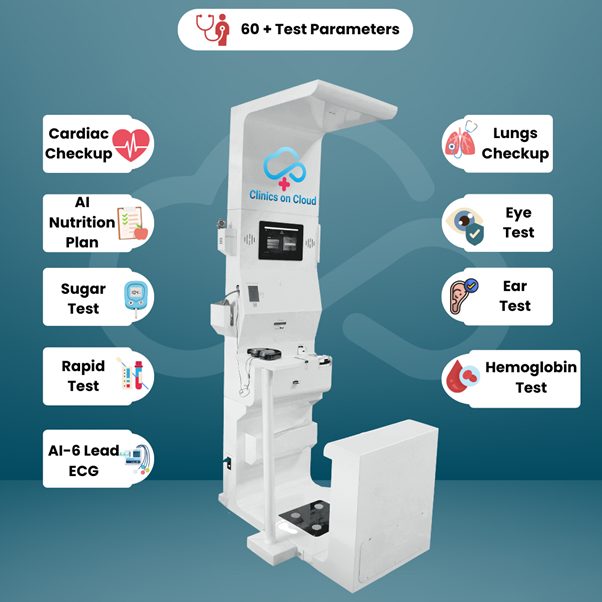 Entry · G-67Global
Uganda Health Kiosk Uganda is currently facing a critical public health emergency due to an outbreak of Sudan ebolavirus (SUDV).
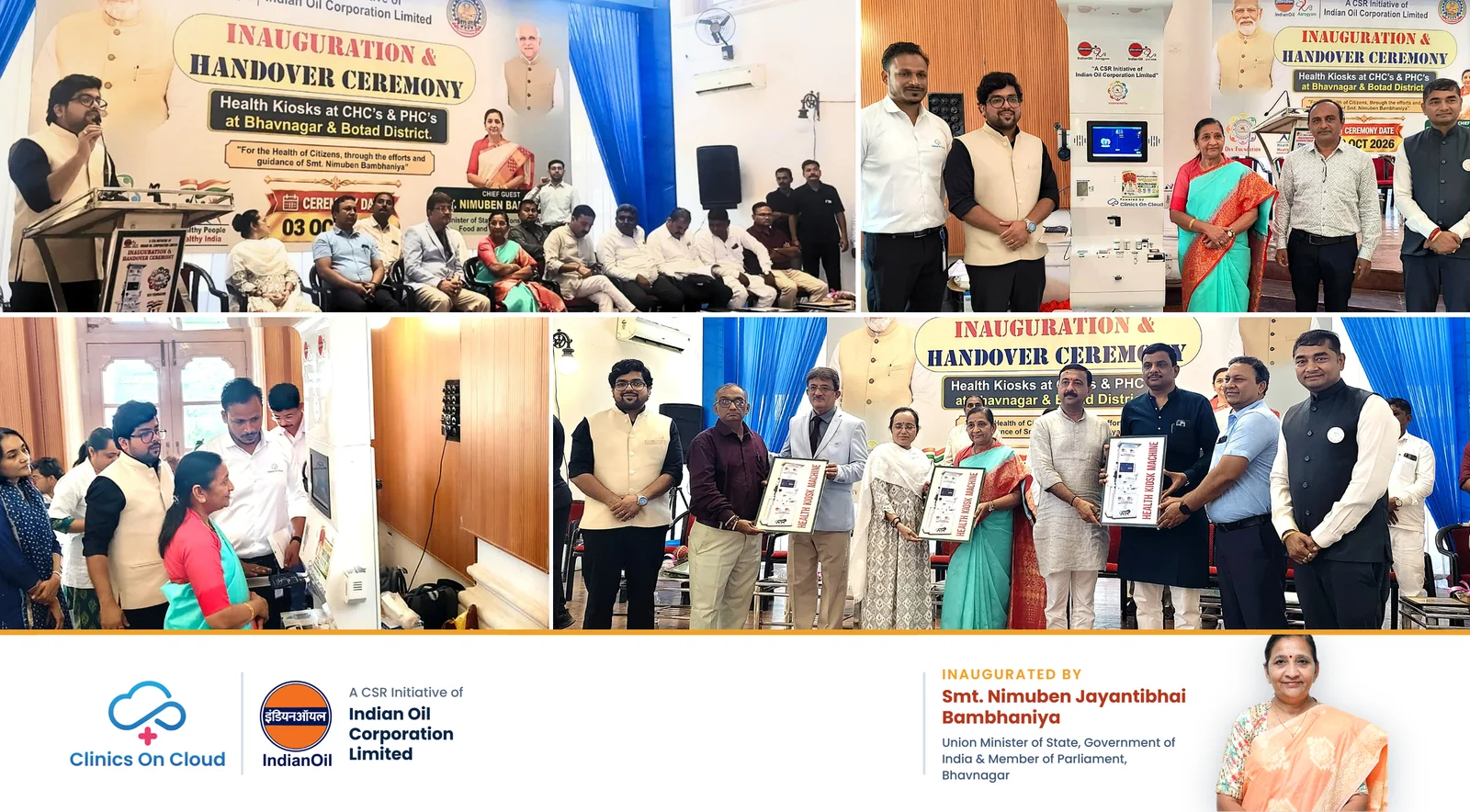 Entry · HA-81Health ATM
21 Primary Health Centres. 21 Clinics On Cloud Health Kiosks. One stronger connected public-health network - through an IndianOil CSR initiative in the Bhavnagar Lok Sabha constituency.
A health kiosk closes the detection gap and part of the triage gap. It measures people who would otherwise not be measured, and it identifies which of them needs a clinician now. It does not close the treatment gap or the financing gap, and it should never be procured as though it does.
Yes, because screening does not consume clinician time to produce a measurement. A Clinics On Cloud Health ATM runs a 10-minute session with no skilled operator and escalates only abnormal results to a doctor by video. One clinician reviewing flagged results covers far more people than the same clinician seeing everyone in sequence.
Yes. The kiosk completes the screening, prints a colour-coded report and stores the record locally with no internet connection, then synchronises when the network returns. Live doctor teleconsultation is the only function that requires an active connection, so intermittent-data sites still screen continuously.
No. Clinics On Cloud is not a diagnostic laboratory and a kiosk does not diagnose, treat or dispense. It produces indicative screening results and a structured record, and it prompts appropriate medical follow-up. It is a triage layer in front of a clinic, not a substitute for one.
Ministries through public tender, NGOs and implementing partners through grant funding, development agencies through donor programmes, and private employers in mining, agriculture, ports and manufacturing. Employer-funded programmes tend to last longest because the buyer also funds the maintenance.
Pricing varies by configuration, language sets, power setup, freight and duty, so Clinics On Cloud quotes against a defined scope. Write to sales@clinicsoncloud.com or call +91 8999 073 447 with your country, buyer type and expected first-year volume, and ask for the export technical file and distributor terms.
We started Clinics on Cloud with a simple belief - that the quality of your healthcare should not depend on your postcode. Whether you're a government, corporate, NGO or entrepreneur - we built this for you.
+91 8999 073 447
Mon - Sat · 9 AM to 6 PM IST
sales@clinicsoncloud.com
Partnerships · Deployments · Support
www.clinicsoncloud.com
Products · Case Studies · News
Nighoje, Chakan MIDC
Pune, Maharashtra - 410501, India