 Entry · PC-91Preventive Care
World Diabetes Day 2026: Why “Early Action on Diabetes” Depends on Screening Infrastructure
World Diabetes Day 2026’s theme is early action. With 43% of Indian adults with diabetes undiagnosed, here’s what screening infrastructure must change.
Quick answer: World Diabetes Day 2026 falls on Saturday, 14 November 2026. The International Diabetes Federation’s theme for 2026–27 is “Early action on diabetes”, with a focus on early diagnosis and risk reduction (IDF). For India, early action is mainly a screening-access problem. The IDF estimates that 43% of Indian adults with diabetes, about 38.6 million people, do not know they have it (IDF Diabetes Atlas 2025, India). Closing that gap needs screening points close to where people live and work, connected to records and follow-up, not just awareness campaigns.
Key takeaways
- Theme: “Early action on diabetes” (IDF, 2026–27). WHO says the theme highlights earlier diagnosis, access to comprehensive care and reducing stigma.
- Scale: India had an estimated 89.8 million adults (20–79) with diabetes in 2024, projected to reach 156.7 million by 2050 (IDF Diabetes Atlas).
- The hidden pool: The ICMR-INDIAB national study found 11.4% diabetes prevalence (≈101 million people) and 15.3% prediabetes (≈136 million) (Lancet Diabetes & Endocrinology, 2023).
- Public screening is scaling: Ayushman Arogya Mandirs have completed more than 420 million screenings for hypertension and diabetes (Union Health Minister, Sept 2026).
- The next gap is continuity: Screening only helps if it leads to confirmation, a digital record and follow-up. That is an infrastructure question.
What is World Diabetes Day?
World Diabetes Day is the world’s largest diabetes awareness campaign. It was established in 1991 by the International Diabetes Federation (IDF) and the World Health Organization (WHO) and is observed every year on 14 November. Each year or multi-year cycle has a theme. For 2026–27 the theme is “Early action on diabetes”, and the campaign for 14 November focuses on early diagnosis and risk reduction (worlddiabetesday.org).
Why “early action” matters more in India than almost anywhere else
1. India has one of the world’s largest undiagnosed populations
According to the IDF Diabetes Atlas 2025, India has the second-highest number of adults with diabetes in the world. An estimated 43% of them are undiagnosed. Undiagnosed diabetes is not harmless. It quietly damages the heart, kidneys, eyes and nerves for years before symptoms show up.
2. Prediabetes is a large, reversible window
The ICMR-INDIAB study surveyed more than 1.1 lakh adults across every state. It estimated 136 million Indians with prediabetes, more than the number with diabetes. The study’s authors describe this pool as a “golden window” for prevention (National Medical Journal of India, 2023). Prediabetes can often be reversed with lifestyle change, but only if it is found first.
3. Detection without control is half a job
The same research group reported that fewer than 7% of people with self-reported diabetes achieved combined control of blood sugar, blood pressure and cholesterol (the “ABC” targets) (NMJI). Early action therefore has to cover diagnosis and what happens after it.
Note on the numbers: IDF and ICMR-INDIAB estimates differ because they use different age bands, methods and reference years. Both point the same way: a very large share of India’s diabetes and prediabetes burden is still undetected.
What India is already doing
India runs one of the largest NCD screening efforts in the world:
- Population-based screening at about 1.86 lakh Ayushman Arogya Mandirs for everyone aged 30+, covering hypertension, diabetes and three common cancers. That has meant 420 million+ hypertension and diabetes screenings so far (Daily Excelsior / MoHFW, Sept 2026).
- Intensified NCD screening drives under the National Programme for Prevention and Control of NCDs (NP-NCD), with data uploaded to the NP-NCD portal (MoHFW).
- A digital backbone: 95.99 crore ABHA IDs had been created by 31 July 2026 (Lok Sabha reply via Kashmir Life), and more than 100 crore health records have been linked under the Ayushman Bharat Digital Mission.
The foundations exist. The harder part is making screening continuous, convenient and connected, especially for working-age adults who rarely visit a primary health centre.
Where screening breaks down — and what fixes it
| Gap in the diabetes pathway | What usually goes wrong | What screening infrastructure can do |
|---|---|---|
| Access | Working adults skip check-ups that need a lab visit and time off | Put screening points where people already are: workplaces, pharmacies, transit hubs, villages |
| Frequency | One-off camps catch people once, then lose them | Permanent kiosks or scheduled mobile visits allow repeat testing over time |
| Records | Paper results get lost, so risk trends are never seen | ABHA-linked digital records build a longitudinal history |
| Confirmation and referral | A high reading isn’t followed by a confirmatory test | Built-in teleconsultation and referral prompts at the point of screening |
| Follow-up | No reminders and no tracking of whether care was taken up | Dashboards that flag people overdue for re-screening or review |
What a modern screening point looks like
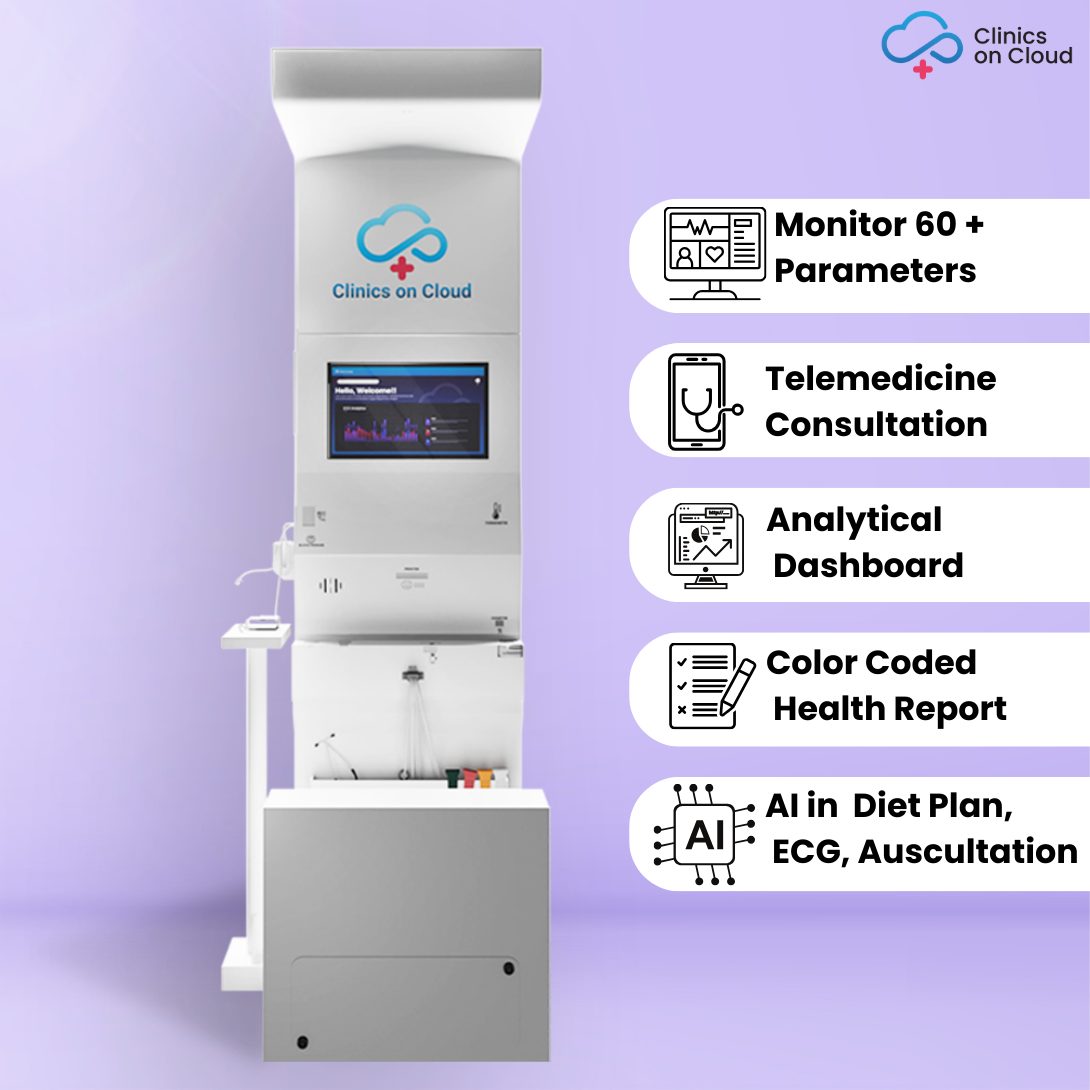
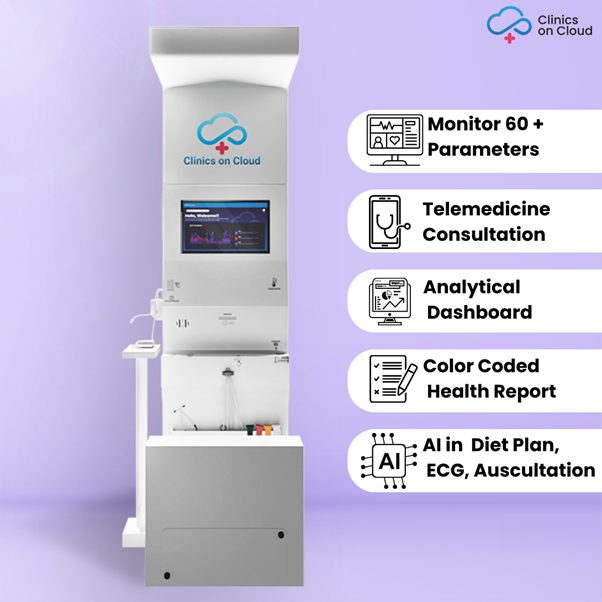
A health ATM or smart health kiosk is a self-service or assisted unit that measures vitals and point-of-care markers (such as blood glucose, blood pressure and BMI) in minutes. It produces a digital report and can connect the person to a doctor by teleconsultation. Related formats extend the same model:
- Health lounges and health pods for corporate campuses, hospitals and public buildings.
- Mobile Medical Units (MMUs) that bring screening and primary care to villages, construction sites and industrial clusters on a schedule.
- Box clinics and connected microclinics for low-resource settings where a full clinic isn’t viable.
These formats don’t replace Ayushman Arogya Mandirs or doctors. They add more points of entry and capture the data that makes follow-up possible.
How different organisations can act this World Diabetes Day
- Workplaces: Run an on-site screening drive this week, then make it routine. India’s labour codes are already pushing employers towards annual health check-ups for employees over 40. A screening point at work turns that into ongoing early detection.
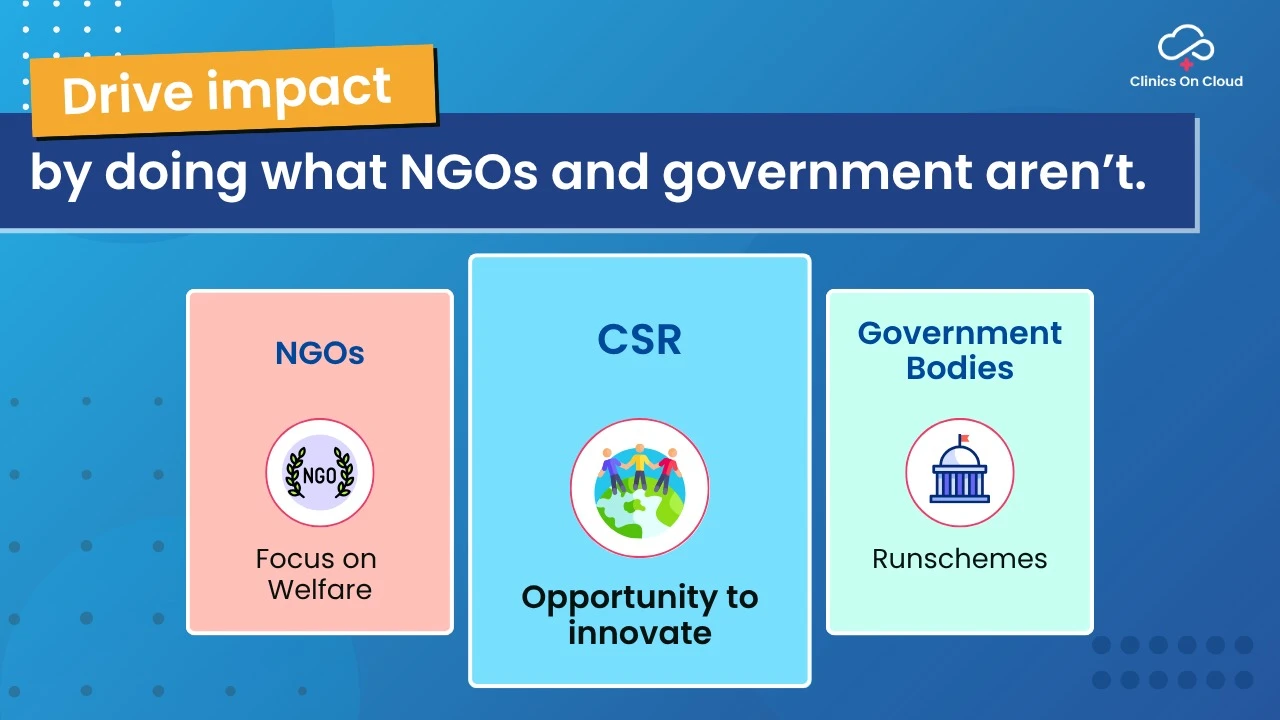
- CSR teams: Fund screening that produces measurable outcomes, such as people screened, people flagged and referrals completed, rather than one-day camps. Healthcare received ₹8,531 crore, 21% of all CSR spend, in FY2024-25 (India CSR). The question is how much of it buys continuity.
- State health departments: Add digital screening points to Ayushman Arogya Mandirs and outreach programmes so that results flow straight into ABHA records and NP-NCD reporting.
- Hospitals: Place kiosks in OPD waiting areas and pharmacies to screen family members and visitors, who are often the people least likely to come in otherwise.
How Clinics On Cloud supports early action
Clinics On Cloud builds preventive healthcare infrastructure: Health ATMs, AI-enabled Health Lounges, Health Pods, Box Clinics and Mobile Medical Units. Our deployments span India and international markets, with thousands of installations and millions of screenings to date. They bring point-of-care screening, teleconsultation and digital health records to workplaces, communities and public health programmes.
Planning a World Diabetes Day screening drive, or a programme that runs all year? Talk to our team about deploying screening where your people are.
Sources
- International Diabetes Federation — World Diabetes Day 2026: Early action on diabetes
- WHO — World Diabetes Day 2026
- IDF Diabetes Atlas 2025 — India country report
- Anjana RM et al. Metabolic NCD health report of India (ICMR-INDIAB-17). Lancet Diabetes Endocrinol, 2023
- Mohan V, Anjana RM, Tandon N. Lessons learnt from the ICMR–INDIAB study. NMJI, 2023
- Daily Excelsior — 420 million screened for hypertension, diabetes under central scheme (30 Sept 2026)
- MoHFW — Intensified Special NCD Screening Drive
- PIB — Ayushman Bharat Digital Mission: India’s Digital Health Backbone (6 Jul 2026)
- India CSR — CSR spending hits ₹40,794 crore in FY2024-25