 Entry · PC-53Preventive Care
Plugging Preventive Screening Into ABDM: What 96 Crore ABHA IDs Mean for Hospitals, Clinics and Health Kiosks
ABDM now has 95.99 crore ABHA IDs and 100 crore+ linked records. Here’s how screening points and health kiosks plug into India’s digital health stack.
Quick answer: The Ayushman Bharat Digital Mission (ABDM), launched in September 2021, is India’s national digital health infrastructure. By 31 July 2026, 95.99 crore ABHA (Ayushman Bharat Health Account) IDs had been created (Lok Sabha reply), and over 104 crore health records had been linked (PIB, July 2026). For providers, the focus has moved from creating IDs to generating useful records. Preventive screening points such as health kiosks, mobile units and corporate screening programmes are among the highest-volume sources of those records.
Key takeaways
- ABHA is a 14-digit digital health ID that allows consent-based linking of health records across providers.
- ABHA growth: from 21.09 crore in 2021-22 to 95.99 crore by 31 July 2026.
- Records milestone: 100 crore+ ABHA-linked records were crossed in May 2026, with 450+ public and private health tech solutions integrated (Indian Pharma Post).
- Aarogya Setu 2.0, launched on 29 June 2026, is now ABDM’s citizen-facing Personal Health Record (PHR) gateway.
- The Digital Health Incentive Scheme (DHIS) has paid out Rs 107+ crore to hospitals, Rs 2.95 crore to diagnostics, labs and pharmacies, and Rs 26+ crore to digital solution companies (as of 18 June 2026).
ABDM in one minute: the building blocks
| Component | What it is | Why it matters for screening |
|---|---|---|
| ABHA | A 14-digit unique health ID for each citizen | Ties each screening result to the right person |
| HPR (Healthcare Professionals Registry) | A verified registry of doctors and health workers | Shows who reviewed or signed a result |
| HFR (Health Facility Registry) | A registry of facilities | Identifies where the screening happened |
| PHR app (for example Aarogya Setu 2.0) | The citizen’s personal health record | Lets people see and share their own results |
| UHI (Unified Health Interface) | An open network for health services | Enables discovery and booking of follow-up services |
| NHCX (National Health Claims Exchange) | A claims exchange | Links care episodes to insurance |
Why screening data is so valuable in ABDM
Most hospital records are created when someone is already sick. Screening records are created before illness: blood pressure, glucose, BMI and haemoglobin, measured over time. Linked to ABHA, they give doctors a longitudinal baseline. That is exactly what NCD prevention and early detection need.
The record journey: from kiosk to ABHA to doctor
- Identify: the user creates or verifies their ABHA at the kiosk, or scans an ABHA QR code.
- Screen: vitals and point-of-care tests are measured and stored digitally.
- Consult: a teleconsultation doctor (HPR-verified) reviews any abnormal results.
- Link: the screening report is linked to the user’s ABHA as a health record, with consent.
- Access: the user sees the report in their PHR app. Future providers can request it with the user’s consent.
- Follow up: repeat screenings add to the same history, so trends become visible.
What integration delivers for each stakeholder
- Hospitals: faster OPD registration. ABDM’s Scan and Share service had issued 23.21 crore ABHA-linked tokens by June 2026, and an IIHMR study found OPD waiting times fell from about an hour to 2–5 minutes (Anantam IAS summary of PIB data).
- State programmes: screening at AAMs, MMUs and kiosks flows into a single citizen history instead of separate portals.
- Employers and CSR funders: verifiable, consent-based screening records support compliance and impact reporting.
- Citizens: one place to see every check-up, wherever it happened.
Questions to ask a screening technology vendor about ABDM
- Is your software integrated with ABDM to create or verify ABHA, link records and share them? Which integration milestones are complete?
- How is consent captured and logged?
- Are your facilities registered on HFR, and doctors on HPR?
- Can records be shared to the PHR app in standard formats?
- Are you eligible for, or already claiming, DHIS incentives?
How Clinics On Cloud fits
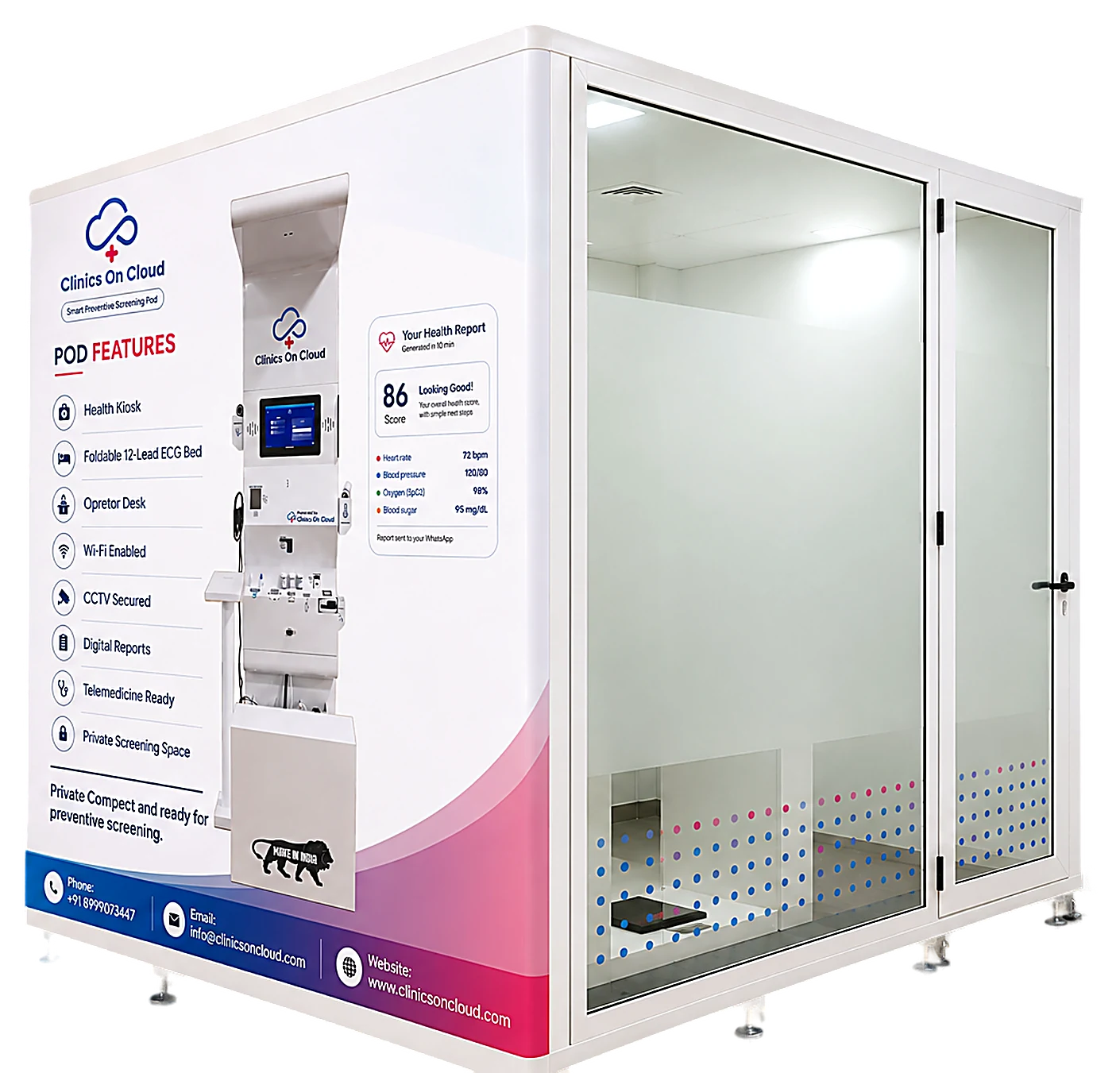
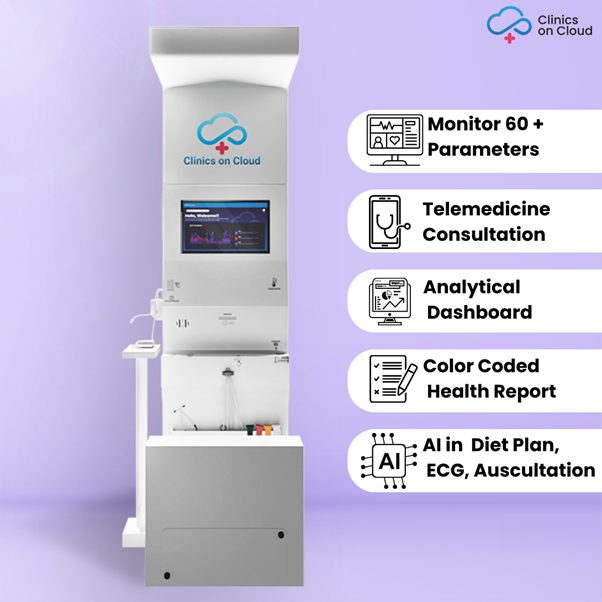
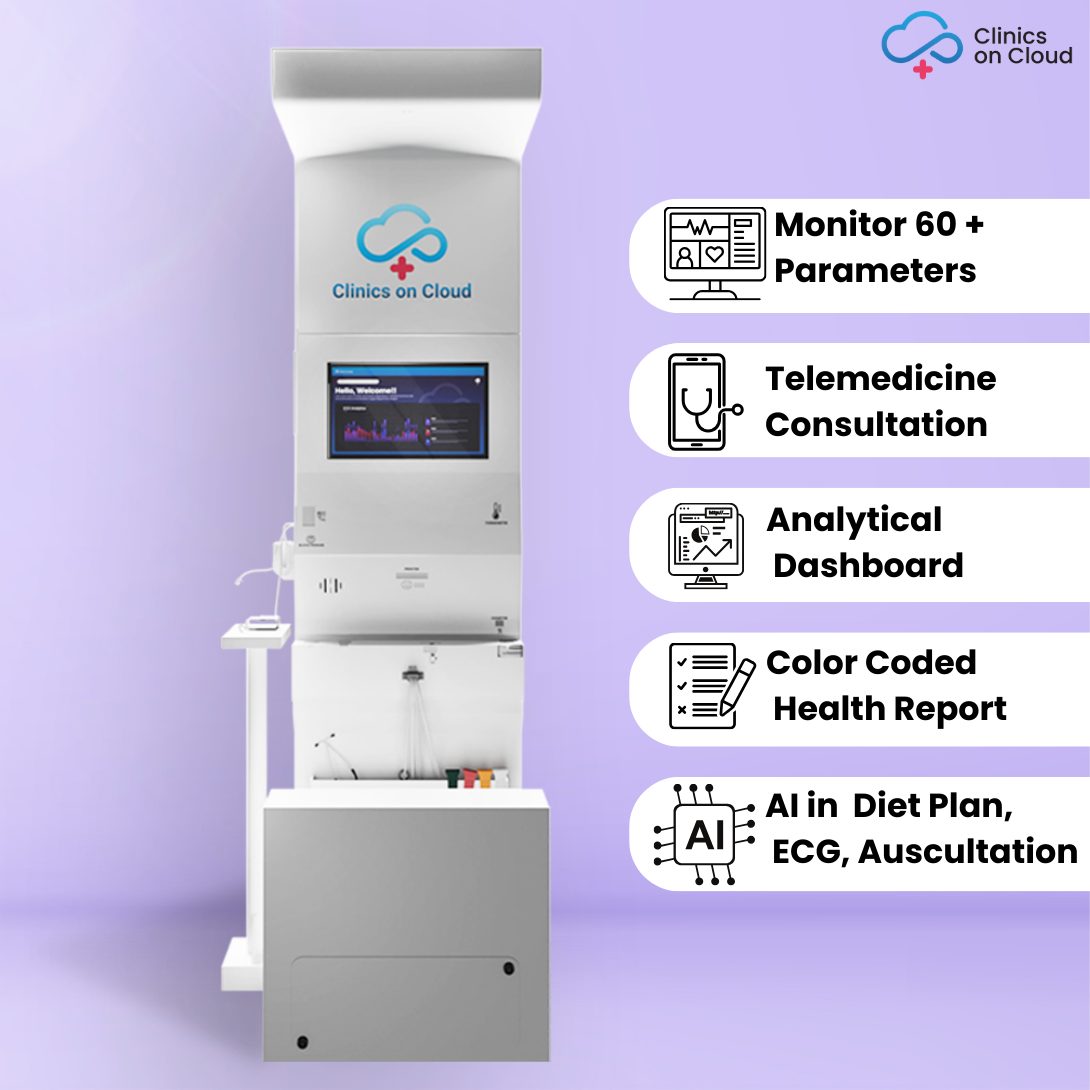
Clinics On Cloud Health ATMs, Health Lounges and Mobile Medical Units capture screening data digitally at the point of care. They are designed to plug into national digital health systems, turning every check-up into part of a longitudinal record. Talk to us about ABDM-ready screening.
Sources
- PIB — Ayushman Bharat Digital Mission: India’s Digital Health Backbone (6 Jul 2026)
- Kashmir Life — Lok Sabha reply: 95.99 crore ABHA IDs as of 31 Jul 2026
- Indian Pharma Post — ABDM crosses 100 crore ABHA-linked records (May 2026)
- NewsOnAir — ABDM crosses 90 crore ABHAs (May 2026)
- Anantam IAS — ABDM: 93 crore ABHA accounts (summary of PIB data)