AI Doctor Clinic or AI Medical Clinic
World’s First AI Doctor Clinic: How AI Medical Clinics and Health Kiosks Are Shaping the Future of Healthcare Artificial Intelligence
Read story 8 min
Healthcare spent a century getting bigger. The interesting movement now is in the other direction.
 Global
For most of the last century, healthcare got bigger. The hospital grew into a campus, the campus into a chain, and the money followed the buildings. It worked for the people who could reach them. Everybody else waited, travelled, or went without.
Something quieter has been happening alongside it. Care has started to arrive in small units - a screening booth in a factory corridor, a cabin clinic on a campus, a clinic built into a van that parks in a village square for a morning. Individually they look modest. Counted together, across countries, they are beginning to behave like an economy of their own.
A micro-clinic is the smallest unit of care that can still do something useful on its own. It does not admit anybody. It does not operate. What it does is close the first gap - the one between a person feeling that something might be wrong and anybody measuring it.
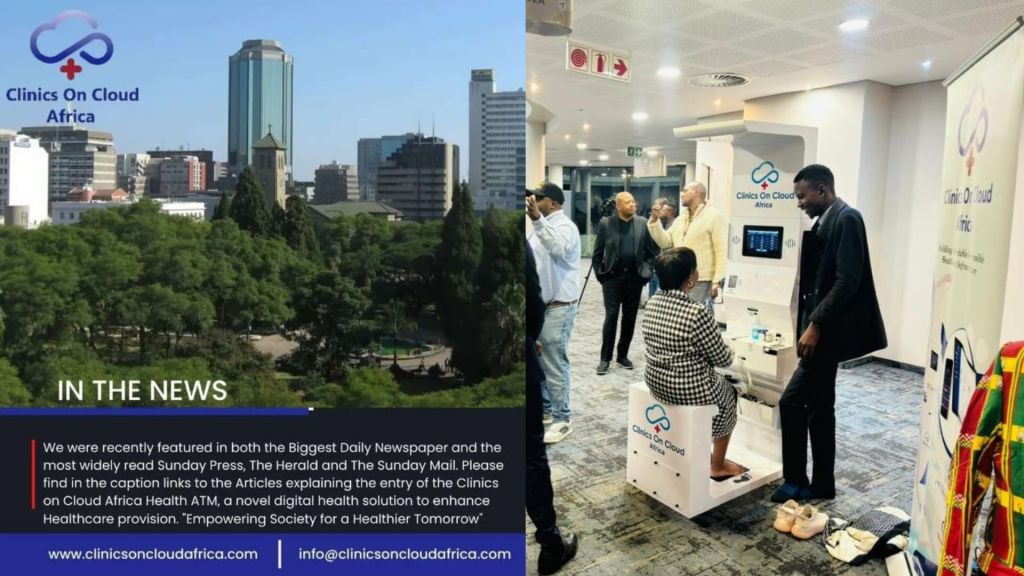
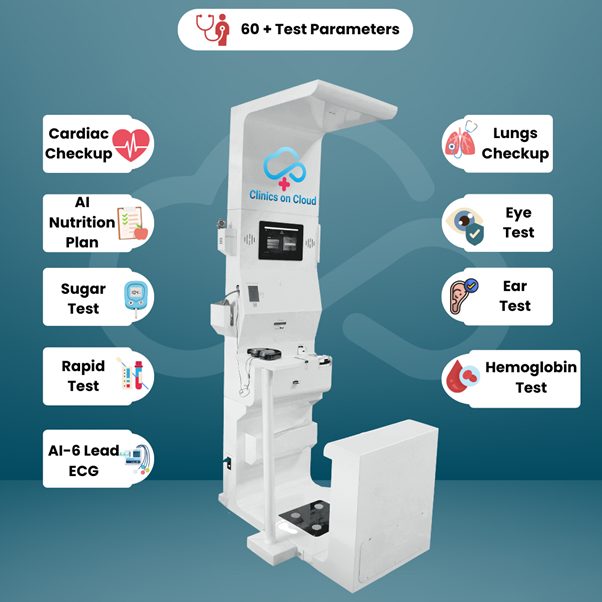
In practice that means a walk-up station that reads the body’s basic signals in a few minutes, prints or sends the result, and puts a doctor on a screen when the numbers warrant one. A Clinics On Cloud kiosk covers 65+ parameters in a single session. The point is not the count. It is that the reading happens where the person already is.
What makes this an economy rather than a product category is that the same unit answers different questions in different countries. In India it mostly answers distance and volume - screening at a scale that clinical staffing alone will not reach. In parts of Africa it answers the absence of a facility altogether. In the Gulf and in Europe it tends to answer occupational health: the employer who has to know, on paper, that its workforce is fit.
Clinics On Cloud units now run in 150+ cities across 7 countries, and the pattern holds. The hardware barely changes. What changes is who pays for it and what they are trying to find out.
Preventive care has always had a funding problem: the person who benefits is not usually the person holding the budget. Micro-clinics have quietly found the parties for whom the arithmetic already works - the employer who loses a shift to an undiagnosed condition, the CSR programme that has to show a number at the end of the year, the district that would rather find hypertension early than treat a stroke late.
None of those buyers is a hospital. That is what makes this a separate economy rather than an extension of the old one.
A micro-clinic is not a hospital in a box, and the honest version of this argument has to say so. It does not replace a physician, a laboratory or a ward. Somebody whose reading comes back wrong still has to be sent somewhere, and a screening network that has nowhere to send people is a network that has produced a number and no treatment.
The value is in the referral, not the reading. A micro-clinic economy works when it is attached to a health system that can take the people it finds.
The direction of travel is not that small clinics replace large ones. It is that the first step of care stops being a journey. Once measurement is cheap enough to sit in a corridor, screening stops being an annual event somebody organises and becomes something that happens continuously, in the background, wherever people already spend their day.
That is the shift worth watching. Not the machine, and not any single deployment - but the fact that the smallest useful unit of healthcare has become small enough, and cheap enough, to put almost anywhere.
Your email is never published. Comments appear after a quick review.
World’s First AI Doctor Clinic: How AI Medical Clinics and Health Kiosks Are Shaping the Future of Healthcare Artificial Intelligence
 Entry · G-67Global
Uganda Health Kiosk Uganda is currently facing a critical public health emergency due to an outbreak of Sudan ebolavirus (SUDV).
 Entry · G-21Global
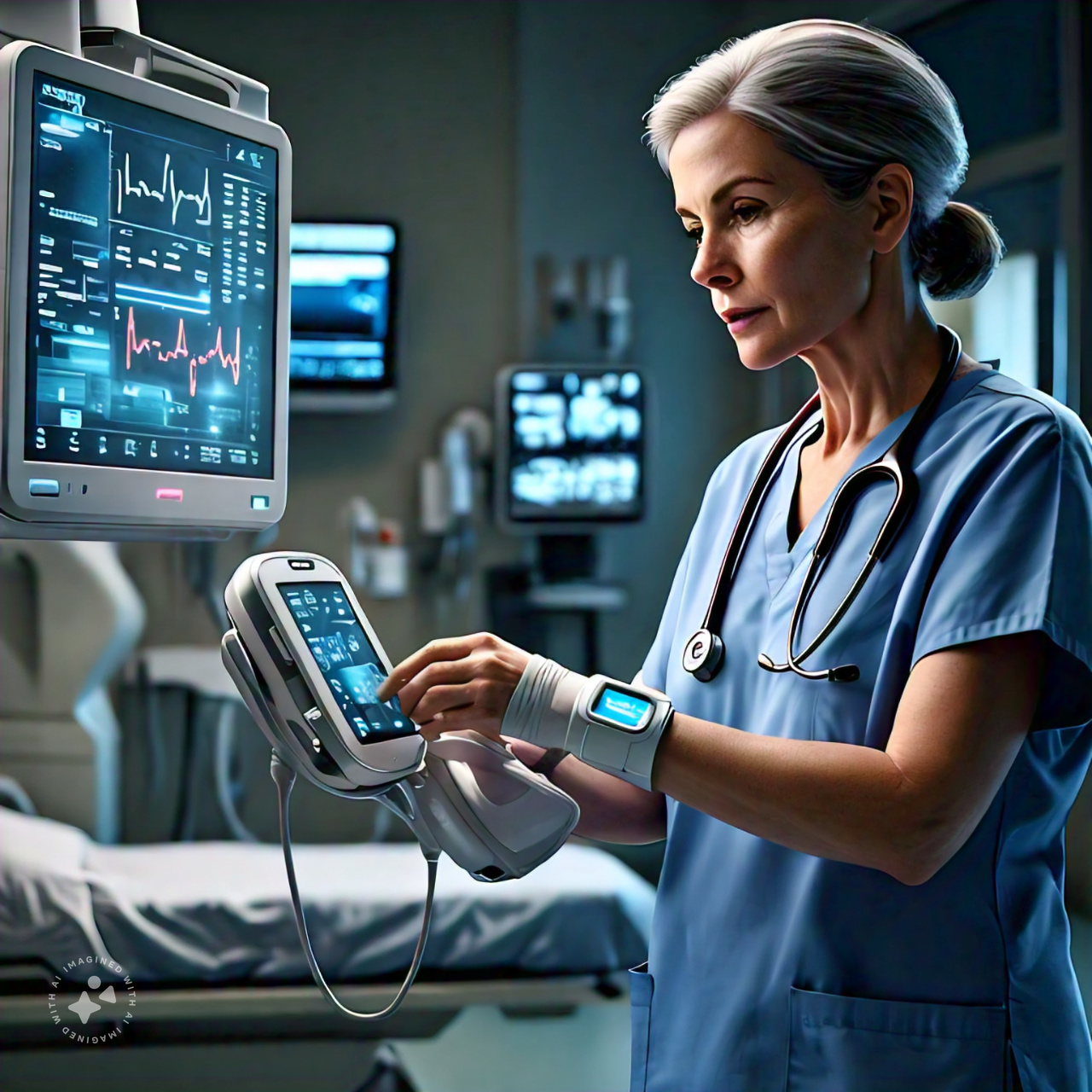
Wearable technology in healthcare is expanding rapidly, incorporating diverse applications that are enhancing the patient experience, improving outcomes, and making
The smallest unit of care that is still useful on its own - a walk-up station, cabin clinic or vehicle that measures a person’s basic health parameters where they already are, and connects them to a doctor on screen when the readings call for it. It does not admit or operate.
Telemedicine carries the conversation. A micro-clinic carries the measurement as well - blood pressure, pulse, oxygen saturation, blood sugar, BMI and more - so the doctor on the other end of the call is looking at readings rather than asking somebody to describe how they feel.
Mostly not hospitals. Employers with a workforce to keep fit, CSR programmes that have to show what their spending reached, and district and state health administrations screening populations they cannot staff a clinic for.
No, and it is not meant to. It finds the people who need a hospital sooner than they would otherwise have been found. A screening network is only worth having when there is somewhere to refer people to.
We started Clinics on Cloud with a simple belief - that the quality of your healthcare should not depend on your postcode. Whether you're a government, corporate, NGO or entrepreneur - we built this for you.
+91 8999 073 447
Mon - Sat · 9 AM to 6 PM IST
sales@clinicsoncloud.com
Partnerships · Deployments · Support
www.clinicsoncloud.com
Products · Case Studies · News
Nighoje, Chakan MIDC
Pune, Maharashtra - 410501, India