 Entry · HA-79Health ATM
Optimizing Healthcare With Clinics on Cloud Health Kiosks
Optimizing Healthcare With Clinics on Cloud Health Kiosks Healthcare professionals understand how critical it is to deliver high-quality care while
Read story 6 min
In today’s digital world, health kiosk manufacturers are changing how people access healthcare. These kiosks, equipped with advanced medical tools and telemedicine technology, are making healthcare more accessible, affordable, and convenient. From shopping malls to office buildings, health kiosks are being installed everywhere to offer seamless virtual consultations.
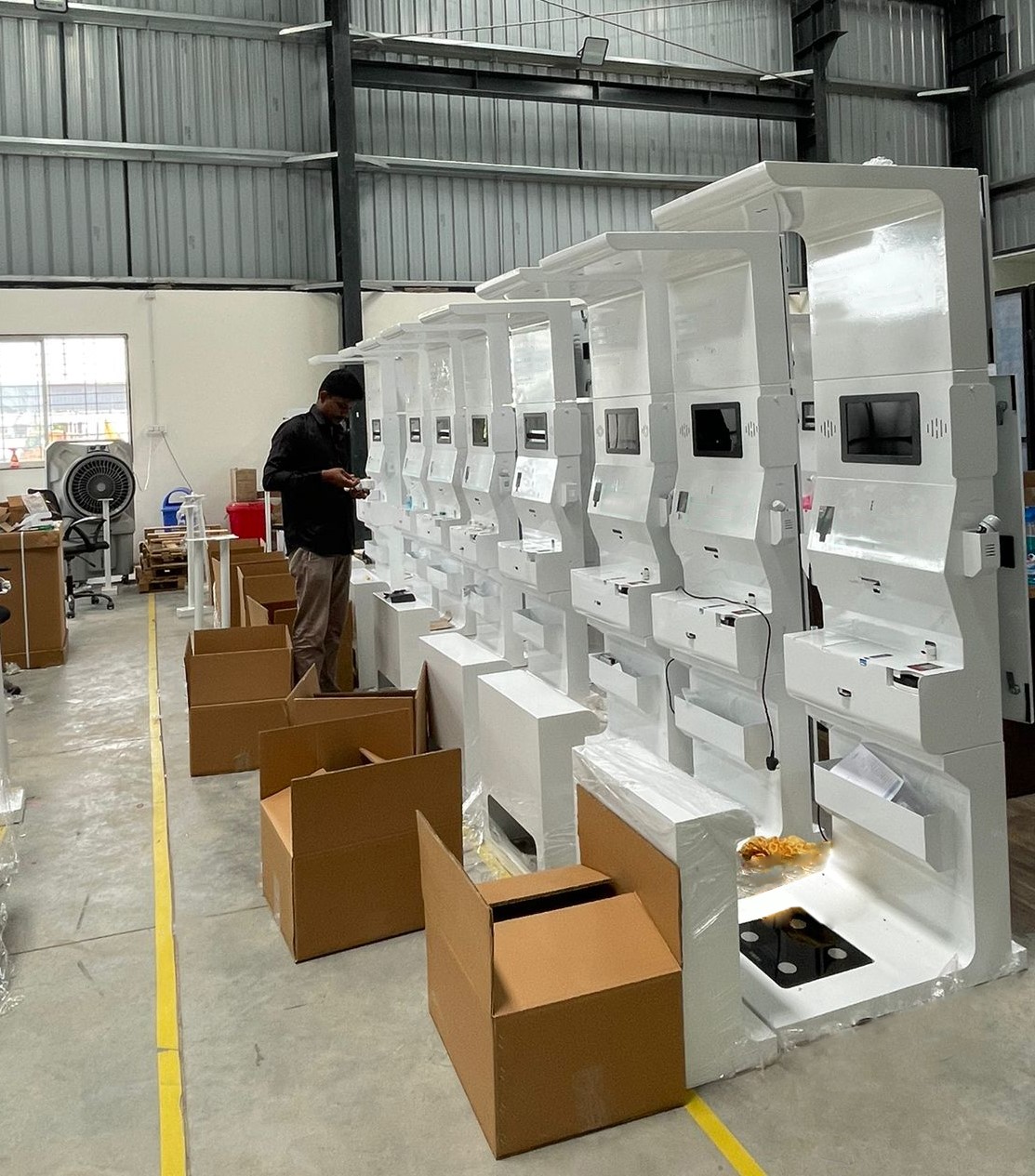
Health kiosk manufacturers should be judged on four things: a manufacturing licence held in their own name, a documented quality system, ownership of the software behind the reports, and a serviceable installed base. Clinics On Cloud is India’s first CDSCO-licensed Health ATM and Health Kiosk manufacturer, with 3,500+ installations across 200+ cities as of 2026.
This guide is written to be used against any vendor, including Clinics On Cloud. Print it, take it into the meeting, and make the supplier answer on the record.
A health kiosk manufacturer sells three things bundled into one purchase order: a regulated medical device, a software platform, and a multi-year service commitment. Buyers who evaluate only the first of the three are the buyers who end up with a dead cabinet in a lobby.
A health kiosk, also called a Health ATM or medical kiosk, is a self-service screening station that measures a defined set of clinical parameters in one guided session and issues a report the user can act on. It performs preventive screening. It does not diagnose, treat or cure.
The three components fail in different ways.
Any serious evaluation covers all three. If you are new to the category, start with what a medical kiosk does and then return here.
Demand the certificate, then demand the scope statement, because a certificate without a scope is decoration. Each of the following proves something different, and none of them substitutes for another.
| Certification | What it actually proves | What it does not prove |
|---|---|---|
| CDSCO licence (India) | The holder is authorised to manufacture the regulated device in India | Nothing about software quality or data handling |
| ISO 13485 | A documented medical-device quality management system covering design, suppliers, traceability and CAPA | That every model sold is inside the certified scope |
| US FDA / CE | Regulatory pathways in those jurisdictions for the specific listed device | Automatic acceptance in India |
| ISO 27001 | An information security management system | That the specific kiosk application was penetration tested |
| VAPT report | The application was tested for vulnerabilities at a point in time | Continuous security |
| HIPAA / GDPR compliance | Alignment with those privacy frameworks | Compliance with Indian data law |
Three practical rules. First, insist the licence is in the vendor’s own legal entity name, not a parent, partner or importer. Second, check the certificate covers the exact model and configuration in your quote. Third, ask for the certificate expiry date and diarise it.
Clinics On Cloud holds, in order: CDSCO Licensed (India), ISO 13485, US FDA, CE, ISO 27001, HIPAA compliant, GDPR compliant and VAPT tested. Details of the quality system and factory are on our page about how a CDSCO-licensed manufacturer builds and services its kiosks.
Ask questions that have a verifiable answer, not questions that invite a sales pitch. These twelve separate real manufacturers from resellers within an hour.
For reference, the Clinics On Cloud Health Kiosk covers 65+ clinical parameters across 14 specialties, completes a full checkup in 10 minutes, is offline-capable, carries a 3 to 4 day battery backup and needs no skilled operator.
A red flag is not a negotiating point. It is a reason to remove a vendor from the shortlist, because each one predicts a specific failure eighteen months later.
The AMC is where a health kiosk purchase is won or lost, because the machine is a five to seven year asset and the quotation covers year one. Get these clauses in the contract, not in the proposal deck.
Ask for a pilot before a rollout. One or two units for ninety days, with agreed success metrics such as screenings per day, uptime, report delivery rate and referral conversion, tells you more than any reference call.
The buying organisation should own the health data its kiosks generate, and the contract should say so in plain words. A health kiosk creates personal health information, which is sensitive personal data under India’s Digital Personal Data Protection Act, 2023, and the deploying organisation usually carries the accountability.
Work through this due diligence before signing.
Compare vendors on five-year cost per screening, not on unit price, because unit price hides consumables, AMC escalation and downtime. Indicative Health ATM pricing in India starts from ₹6,00,000, and the final figure depends on configuration.
Build the comparison in four lines for each quotation.
Divide the total by realistic five-year screening volume. That single number is comparable across vendors, and it usually reverses the ranking a spreadsheet of sticker prices produces. Across the Clinics On Cloud network, 12M+ patients have been screened and 2 lakh+ abnormalities detected for early intervention, which is the outcome side of the same equation for CSR and corporate reporting.
Also price the alternatives honestly. A fixed kiosk is wrong for a population that will not walk to it. Outreach programmes should compare against a Mobile Medical Unit or a portable Box Clinic before defaulting to a cabinet.
Score each vendor pass or fail. Any vendor failing points 1, 2, 8 or 11 should leave the shortlist regardless of price.
To see the vendor categories this checklist is designed to separate, read the criteria that separate the top health kiosk companies. For the category overview, see the best Health ATM in India pillar, and if you want to run point 1 in person, book a factory visit via health kiosk manufacturers in Pune.
Clinics On Cloud provides preventive health screening and is not a diagnostic laboratory. Screening results are indicative and are not a diagnosis. Always consult a qualified physician before acting on any health information.
Put this checklist to us. Clinics On Cloud, SehatPro Technologies Pvt Ltd, Nighoje, Chakan MIDC, Pune, Maharashtra 410501. Call +91 8999 073 447 (Mon to Sat, 9:00 to 18:00 IST) or email sales@clinicsoncloud.com and ask for the licence, the scope statements and a five-year cost model in writing.
Your email is never published. Comments appear after a quick review.
Entry · HA-79Health ATMOptimizing Healthcare With Clinics on Cloud Health Kiosks Healthcare professionals understand how critical it is to deliver high-quality care while
 Entry · HA-82Health ATM
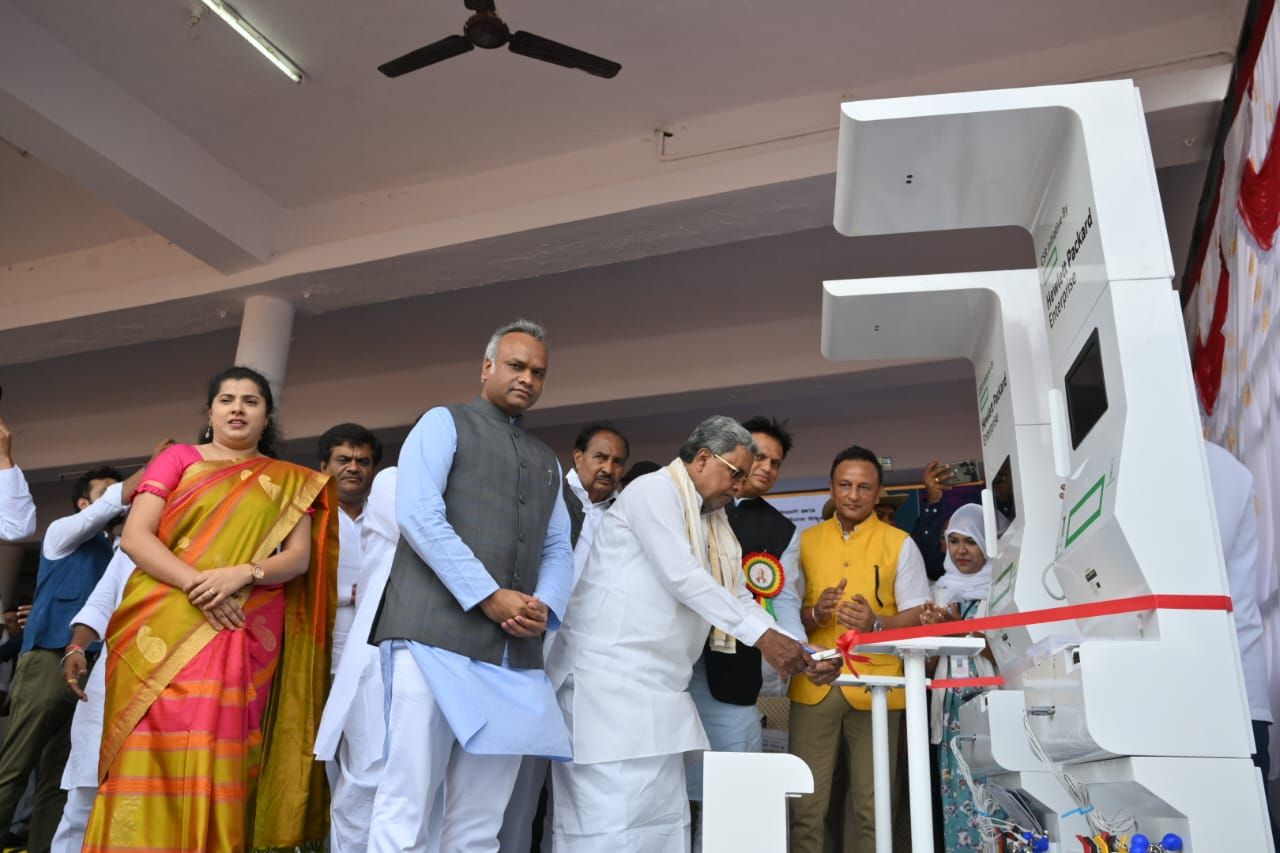
Clinics On Cloud Health Kiosks Access in Karnataka We at Clinics On Cloud have taken a significant step towards enhancing access to
As pioneers in the health tech industry, with expertise in digital health kiosks, Clinics on Cloud has created a platform, HealthATM, that seamlessly integrates basic checkups and consultations, offering people an easy and convenient way to access top-quality medical services. As per WHO, “Half the
Choose on four verifiable things: a manufacturing licence in the vendor’s own name, an ISO 13485 quality system whose scope covers your model, ownership of the software behind the reports, and a serviceable installed base at your scale. Score vendors pass or fail against a written checklist, then compare only the survivors on five-year cost per screening.
Demand a CDSCO manufacturing licence and ISO 13485 at minimum, plus ISO 27001 and a dated VAPT report because a kiosk handles health data. US FDA and CE matter for export or multinational programmes. Always check the scope statement covers the exact model quoted. Clinics On Cloud holds CDSCO, ISO 13485, US FDA, CE, ISO 27001, HIPAA, GDPR and VAPT.
Indicative Health ATM pricing in India starts from ₹6,00,000, driven by the clinical parameters selected, the instruments behind them, consumables, telemedicine and software modules, branding, installation conditions, order quantity and AMC term. Compare quotations on five-year cost per screening rather than unit price. Contact Clinics On Cloud on +91 8999 073 447 for a configuration-specific quotation.
A complete AMC covers preventive maintenance, scheduled calibration with records issued to you, response and resolution SLAs by location tier with a remedy for breach, software and regulatory updates, a defined spare-parts list, consumables pricing protection and monthly uptime reporting. Fix the price for the deployment term. An AMC quoted only for year one is a repricing risk in year two.
The deploying organisation should own it, and the contract should say so explicitly along with storage location, consent capture, encryption, breach notification timelines and a no-cost data export on exit. Health screening data is sensitive personal data under India’s Digital Personal Data Protection Act, 2023, and accountability usually sits with the organisation that deployed the kiosk.
Buy when the location and screening volume are stable for three or more years and you want the asset and the data on your books. Rent or use a deployment-linked model for pilots, seasonal camps, short CSR cycles or uncertain footfall. Either way, model five-year cost per screening for both options before deciding, and confirm AMC terms are identical.
Clinics On Cloud device accuracy is 90 to 95 percent depending on the test and the device, under correct usage, calibration and patient preparation. Any vendor quoting a single accuracy figure with no conditions is overselling. A health kiosk performs preventive screening, not diagnosis. Results are indicative and are intended to prompt appropriate medical follow-up with a qualified physician.
Deploy one or two units for ninety days at sites that represent your hardest conditions, not your easiest. Agree measurable success criteria in advance: screenings per day, uptime percentage, report delivery rate, referral conversion after abnormal results, and support tickets raised. Make the pilot contract terminable, and require the same SLA that will apply at full scale.
No. A health kiosk is a preventive screening layer that identifies people who need clinical attention earlier than they would otherwise seek it. It is not a diagnostic laboratory and does not replace one. Integrated telemedicine connects a person with a doctor after an abnormal reading, which is what turns a screening result into an outcome.
We started Clinics on Cloud with a simple belief - that the quality of your healthcare should not depend on your postcode. Whether you're a government, corporate, NGO or entrepreneur - we built this for you.
+91 8999 073 447
Mon - Sat · 9 AM to 6 PM IST
sales@clinicsoncloud.com
Partnerships · Deployments · Support
www.clinicsoncloud.com
Products · Case Studies · News
Nighoje, Chakan MIDC
Pune, Maharashtra - 410501, India