 Entry · PC-51Preventive Care
Geriatric Care and Healthy Aging
Elderly Health: A Comprehensive Guide to Geriatric Care and Healthy Aging The aging population worldwide is growing rapidly, bringing elderly
Read story 3 min
In today’s fast-paced world, regular health checkups have become a cornerstone of preventive healthcare. Our advanced health kiosk provides quick and accurate assessments of 19 key health parameters, offering a holistic overview of your general health. Each of these metrics gives valuable insights into your well-being and can help detect potential health issues early. Below, we explain these measu
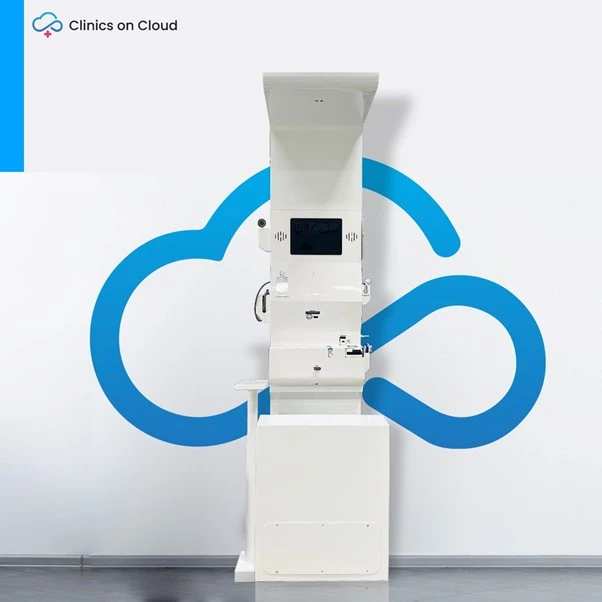
A health checkup machine is a self-service screening device that measures a person’s health parameters and issues an instant report, ranging from a basic vitals station to a full 65+ parameter kiosk. Clinics On Cloud, India’s first CDSCO-licensed Health ATM and Health Kiosk manufacturer, has 3,500+ installations across 200+ cities.
A health checkup machine is a screening device that captures a defined set of health readings from one person in a single session and produces an instant report. The category runs from a two-parameter vitals station up to a multi-specialty kiosk, and the word covers all of it, which is exactly why buyers get quoted very different numbers for what sounds like the same product.
The useful question is not “what is a health checkup machine” but “how much machine does this site need”. A pharmacy counter with ninety seconds of customer patience needs something different from a district hospital running an NCD screening programme.
Clinics On Cloud manufactures health checkup machines in India at Nighoje, Chakan MIDC, Pune, under the legal entity SehatPro Technologies Pvt Ltd, and is India’s first CDSCO-licensed Health ATM and Health Kiosk manufacturer. If you are new to the category, start with what a full body checkup machine is.
There are six practical types on the Indian market. They differ in parameter breadth, footprint, staffing and price, and the table below is the fastest way to place a quote you have received.
| Type | Typical parameters | Staffing | Footprint | Best for |
|---|---|---|---|---|
| Vitals station | 4-8 (BP, pulse, SpO2, temperature, height, weight, BMI) | Unattended | Wall or small floor unit | Waiting rooms, OPD triage, quick footfall capture |
| Body composition analyser | 12-19 body composition metrics | Unattended | Platform with column | Gyms, nutrition clinics, wellness centres |
| Telemedicine kiosk | Consultation-led, limited screening | Assisted | Booth | Remote consultation where diagnostics already exist |
| Full-body health kiosk / Health ATM | 65+ across 14 specialties | Unattended, voice-guided | Roughly 2 sq m | Hospitals, PHCs and CHCs, corporates, pharmacy chains |
| Portable screening unit | Configurable, camp-oriented | Assisted | Carried case | Rural camps and outreach with no infrastructure |
| Mobile medical unit | Kiosk-equivalent plus consultation space | Staffed | Vehicle | District routes, CSR programmes, doorstep delivery |
Two warnings when you compare quotes. Vendors count parameters inconsistently, so a single lipid panel can appear as one line or six. And “telemedicine kiosk” is often used for a booth that consults but barely measures, which is a different purchase entirely.
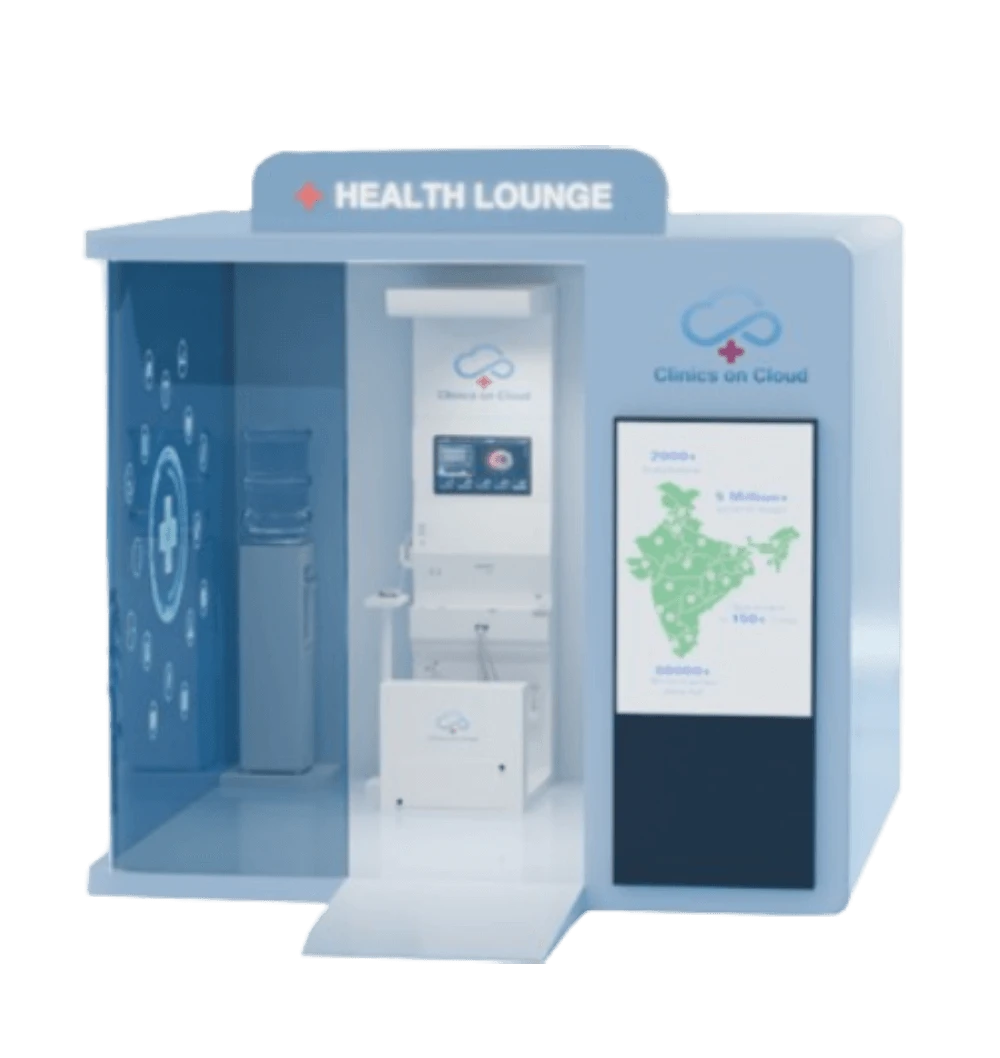
Clinics On Cloud covers four of these types with the Clinics On Cloud Health Kiosk, the Box Clinic, the Health Lounge and the Mobile Medical Unit. The body composition type is covered in detail in body composition machines and what each metric means.
Match the machine to the dwell time and the objective of the site, not to the longest specification sheet. The table below sets out what usually works where.
| Setting | Recommended type | Why | Watch out for |
|---|---|---|---|
| Clinic or nursing home | Full-body health kiosk | Screens waiting patients and feeds consultations | Site it in the waiting area, not a back room |
| Hospital OPD | Full-body health kiosk | Cuts triage time and captures pre-consult vitals | Queue design at peak OPD hours |
| Retail pharmacy | Full-body kiosk with short packages enabled | Drives repeat footfall and basket size | Customer dwell time is short, so offer a 3-minute package |
| Gym or fitness centre | Body composition analyser, or kiosk with composition enabled | Members want objective progress tracking | Re-test frequency drives the value, not one-off scans |
| Corporate office | Health Lounge or full-body kiosk | Replaces the one-week annual camp with year-round access | Participation depends on placement and privacy |
| Factory or plant gate | Full-body kiosk, ruggedised | Shift-change screening at scale | Dust, heat and power stability |
| PHC, CHC or sub-centre | Full-body kiosk with ABHA and eSanjeevani integration | Population NCD screening where doctors are scarce | Offline capability is non-negotiable |
| Rural camp or outreach | Portable screening unit | No civil work or fixed power needed | Transport and consumable logistics |
| School or college | Vitals plus vision, hearing and body composition | Fast throughput for large cohorts | Consent and guardian reporting process |
| Residential society | Health Lounge or compact kiosk | Community wellness with low staffing | Access control and maintenance ownership |
The strongest predictor of a good outcome is placement. A machine in the path people already walk gets used. A machine in a room people must ask to enter does not, whatever it can measure.
An automatic health checkup machine is one that a person can complete unassisted, because the device guides them by voice and screen through each step and captures readings without a technician. Automation is a staffing decision as much as a technical one.
The Clinics On Cloud Health ATM is automatic in this sense. It offers a multilingual touchscreen with audio-visual guidance, requires no skilled operator, works offline, and carries 3-4 days of battery backup. A full checkup takes 10 minutes and the report prints on the spot while also going out by SMS, email and WhatsApp.
Automatic does not mean unsupervised in every setting. Sites with older or first-time users usually see much higher uptake in the first few months when a staff member simply invites people to try it. Budget for that attention even though the machine does not require it.
The Clinics On Cloud full-body health checkup machine measures 65+ clinical parameters across 14 specialties. The summary table below shows the coverage; the specialty-by-specialty detail sits in the full body health checkup machine buyer’s guide.
| Specialty group | Parameters | Included |
|---|---|---|
| General health and body composition | 19 | Vitals plus BMI, BMR, body fat, visceral fat, muscle mass, bone mass, body water, metabolic age, physique rating |
| Cardiac | 9 | ECG (6-lead or 12-lead), blood pressure, lipid profile |
| Urine analysis | 10 | Glucose, protein, ketones, bilirubin, pH, leukocytes, microalbumin and more |
| Rapid infectious disease | 10 | Dengue, malaria, typhoid, hepatitis B and C, HIV I & II, blood grouping and more |
| Ayurvedic assessment | 7 | Constitution and lifestyle assessment |
| Pulmonary, vision, hearing, dental, dermatology | 16 | PEF, FVC, FEV, FEV1/FVC, vision and colour tests, audiometry, otoscope, oral and skin visualisation |
| Diabetes, anaemia and kidney | 4 | Random blood sugar, HbA1c, haemoglobin, renal screening markers |
| Mental health and maternal health | 3 | PHQ-9, GAD-7, fetal monitor |
Every reading is compared against standard clinical reference ranges and shown as a colour band. The machine flags. It does not diagnose, and any flagged result should go to a qualified physician.
Health checkup machine pricing tracks type, not brand. Indicative pricing for a Clinics On Cloud Health ATM starts from ₹6,00,000, and simpler machine types cost less because they do less.
| Cost element | What drives it |
|---|---|
| Machine type | The single biggest factor: a vitals station and a 14-specialty kiosk are different products |
| Specialties enabled | Each additional point-of-care analyser module adds cost |
| ECG lead count | 6-lead versus 12-lead |
| Enclosure and ruggedisation | Indoor kiosk, branded lounge, portable case or vehicle build |
| Integration | ABHA and ABDM linking, HIS or EHR APIs, custom dashboards |
| Order volume | Multi-site rollouts are priced differently from single units |
| Service scope | AMC term, calibration frequency, uptime SLA |
| Consumables | Strips, lancets, cuffs and paper, priced per screening |
Model the recurring cost per screening, not per year. A pharmacy chain running forty screenings a day per store has a very different consumable bill from a residential society running four. Pricing varies by configuration, so talk to the Clinics On Cloud team for a quote against your actual footfall.
Buy when the site is permanent, utilisation is predictable and the machine sits on your balance sheet usefully, as in a hospital, a factory or a pharmacy chain. Ownership also gives you full control of the data and the branding.
Rental or a managed deployment makes more sense for a fixed-term CSR programme, a pilot before a multi-site rollout, a seasonal camp calendar, or a tender-funded project with a defined end date. Ask any vendor to price both so you can compare total cost across the programme period rather than at purchase.
Whichever route you take, keep calibration, consumable pricing and response time in the contract. Those three lines decide whether the machine is still running in year three.
Buying the longest specification sheet. A 65-parameter machine running four screenings a day performs worse than a shorter package running forty. Match capability to demand.
Hiding the machine. Placement beats specification. A machine off the main walking path underperforms every time.
Ignoring consumables. Strips and lancets are the real running cost, and they scale with success, so model them per screening before you sign.
Skipping the follow-up design. A flagged result with no consultation pathway produces a worried person and nothing else. Decide who consults, on what device, before installation.
Not measuring from week one. Track screenings per unit per day on the centralised dashboard. Placement problems are cheap to fix in month one and expensive to fix in month nine.
For specifications, price drivers and ROI models, read the full body health checkup machine buyer’s guide. For category background, see what a Health ATM is and how the Health ATM category evolved. To scope a site, call +91 8999 073 447, Monday to Saturday, 9:00 to 18:00 IST, or email sales@clinicsoncloud.com.
Clinics On Cloud provides preventive health screening and is not a diagnostic laboratory. Screening results are indicative and are not a diagnosis. Always consult a qualified physician before acting on any health information.
Your email is never published. Comments appear after a quick review.
Entry · PC-51Preventive CareElderly Health: A Comprehensive Guide to Geriatric Care and Healthy Aging The aging population worldwide is growing rapidly, bringing elderly
 Entry · PC-45Preventive Care
Body Fat Composition Machines Body fat composition machines have become essential tools in the quest for health and fitness. These
 Entry · PC-05Preventive Care
Our body’s health can be measured in several ways. Concepts like body age, metabolic rate, BMR (Basal Metabolic Rate), and
Indicative pricing for a Clinics On Cloud Health ATM starts from ₹6,00,000, with simpler machine types such as vitals stations and body composition analysers costing less. Price is driven by the machine type, the number of specialties enabled, enclosure and ruggedisation, integration scope and order volume. Consumables and annual maintenance are quoted separately.
A full-body health kiosk placed in the waiting area usually works best for a clinic or nursing home, because it screens patients who are already waiting and feeds the consultation that follows. Enable a short package alongside the full 10-minute one so people with less time still complete a screening rather than abandoning it.
Yes, and pharmacies are among the highest-utilisation sites because footfall is already there. The practical constraint is dwell time, so enable a short vitals and blood sugar package as the default and keep the full 65+ parameter checkup as an option. Site the machine within sight of the counter, not in a corner.
An automatic health checkup machine completes a screening without a technician, guiding the user by multilingual voice and touchscreen. The Clinics On Cloud Health ATM requires no skilled operator, works offline, carries 3-4 days of battery backup, and finishes a full 65+ parameter checkup in 10 minutes with an instant printed report.
“Health checkup machine” is the broad category term and covers everything from a vitals station to a 14-specialty kiosk. “Health ATM” is the product name Clinics On Cloud uses for its fixed-location full-body screening station. Every Health ATM is a health checkup machine; not every health checkup machine is a Health ATM.
Yes. Rental or managed deployment suits fixed-term CSR programmes, pilots before a multi-site rollout, seasonal camp calendars and tender-funded projects with a defined end date. Ask for both purchase and rental pricing and compare total cost across the full programme period, including consumables and calibration, before deciding.
No skilled operator is required for the Clinics On Cloud Health ATM, which is voice-guided and multilingual. Most sites still see far higher uptake in the first three months when a staff member actively invites people to use it. Plan for that attention as a launch activity, not as a permanent staffing line.
Clinics On Cloud states device accuracy of 90-95%, depending on the specific test and device, under correct usage, calibration and patient preparation. Screening readings are indicative and are designed to flag results that merit a closer look. Confirmatory diagnosis stays with an accredited laboratory and a qualified physician.
Buy from a CDSCO-licensed manufacturer with its own production facility, documented certifications, a service network that covers your sites, and reference installations you can visit. Clinics On Cloud is India’s first CDSCO-licensed Health ATM and Health Kiosk manufacturer, manufactures in Pune, and has 3,500+ installations across 200+ cities and 8+ countries.
Throughput depends on the package enabled. A full 65+ parameter checkup takes 10 minutes, so a single machine running continuously through an eight-hour shift can handle a few dozen full screenings, and considerably more if shorter packages are enabled at peak hours. Plan package mix around your busiest hour, not your daily average.
We started Clinics on Cloud with a simple belief - that the quality of your healthcare should not depend on your postcode. Whether you're a government, corporate, NGO or entrepreneur - we built this for you.
+91 8999 073 447
Mon - Sat · 9 AM to 6 PM IST
sales@clinicsoncloud.com
Partnerships · Deployments · Support
www.clinicsoncloud.com
Products · Case Studies · News
Nighoje, Chakan MIDC
Pune, Maharashtra - 410501, India